If you’re trying to decide between Pepperstone vs Deriv, you’re not alone. Both brokers are popular among traders worldwide, but they cater to very different styles, experience levels, and trading goals.
In this guide, you’ll get a clear, no-fluff breakdown of how these two platforms compare based on real trading factors like costs, platforms, regulation, and overall usability. By the end, you’ll know which one actually fits your needs.
Click Here To Join our Telegram Community
Pepperstone vs Deriv Comparison Table
| Feature | Pepperstone | Deriv |
|---|---|---|
| Regulation | FCA, ASIC, CySEC, DFSA, CMA | MFSA, VFSC, Labuan FSA, FSC |
| Minimum Deposit | $0–$200 (recommended ~$200) | From $5 |
| Trading Platforms | MT4, MT5, cTrader, TradingView | Deriv X, MT5, cTrader, Deriv Trader |
| Account Types | Standard, Razor, Swap-Free | Standard, Financial STP, Synthetic, Options |
| Spread | From 0.0 pips (Razor), ~1.0 pip (Standard) | From ~0.5 pips (variable) |
| Leverage | Up to 1:500 | Up to 1:1000 |
| Commission | Yes (Razor account ~$3.5/lot/side) | No commission on most trades |
| Copy Trading | Yes (Myfxbook, MT signals, cTrader Copy) | Limited / Not widely available |
| Deposit/Withdrawal Methods | Bank transfer, cards, PayPal, Skrill, Neteller | Cards, e-wallets, crypto, bank transfer |
| Customer Support | 24/5 (chat, phone, email) | 24/7 (chat, email) |
| ✅ Get Started | ✅ Trade with Pepperstone | ✅ Open Account with Deriv |
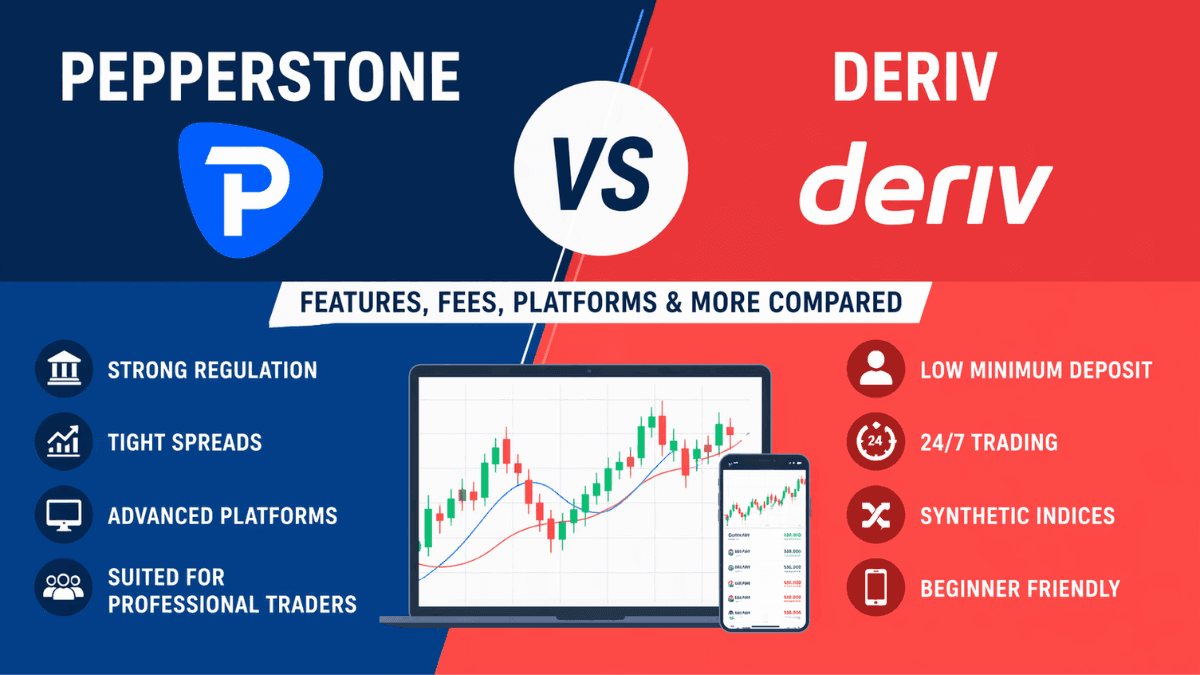
Quick Insight
- Pepperstone stands out for regulation, tight spreads, and professional tools.
- Deriv is better for beginners, low deposits, and unique markets like synthetic indices.
Overview of Pepperstone vs Deriv
Before diving into the details, it helps to understand what each broker is built for and who they serve best.
Pepperstone is a globally recognized forex and CFD broker known for tight spreads, fast execution, and professional-grade platforms. It’s designed with serious traders in mind.
Deriv, on the other hand, focuses on accessibility and flexibility. It offers unique synthetic indices, simplified trading apps, and lower entry barriers, making it appealing to beginners and casual traders.
That difference alone shapes almost everything else.
Regulation and Safety
Trust is non-negotiable when choosing a broker, so let’s start with how each company is regulated.
Pepperstone Regulation
Pepperstone is regulated by top-tier financial authorities, including:
- FCA (UK)
- ASIC (Australia)
- CySEC (Europe)
This level of oversight means stricter compliance, better client protection, and higher transparency. Your funds are typically held in segregated accounts, reducing risk.
Deriv Regulation
Deriv operates under multiple jurisdictions, including:
- MFSA (Malta)
- Labuan FSA (Malaysia)
- VFSC (Vanuatu)
While Deriv is regulated, some of its licenses are considered offshore. That doesn’t automatically mean unsafe, but it does mean fewer protections compared to top-tier regulators.
Bottom line: If regulation is your top priority, Pepperstone has the stronger edge.
Trading Platforms
The trading platform you use can make or break your experience, especially once you start executing real strategies.
Pepperstone Platforms
Pepperstone supports industry-standard platforms:
- MetaTrader 4 (MT4)
- MetaTrader 5 (MT5)
- cTrader
- TradingView integration
These platforms are known for advanced charting, automation (via Expert Advisors), and deep customization.
Deriv Platforms
Deriv offers a mix of proprietary and third-party platforms:
- Deriv MT5
- Deriv X
- Deriv Trader (web-based)
- Deriv GO (mobile)
Deriv’s platforms are simpler and more beginner-friendly, but they lack the depth and flexibility of cTrader or full MT5 setups.
Verdict: Pepperstone is better for advanced tools; Deriv is easier for beginners.
Account Types and Accessibility
Choosing the right account type affects your trading costs and overall experience.
Pepperstone Accounts
Pepperstone offers two main accounts:
- Standard Account – no commission, spreads slightly higher
- Razor Account – ultra-low spreads + commission
These are ideal for traders who want flexibility based on strategy.
Deriv Accounts
Deriv simplifies things with fewer account variations, but offers flexibility across its platforms. You can trade:
- Forex
- Synthetic indices
- Options (like digital options)
The entry barrier is low, making it accessible even with small capital.
Key difference: Pepperstone gives structured professional accounts, while Deriv focuses on simplicity and variety.
Spreads, Fees, and Commissions
Costs matter especially if you trade frequently.
Pepperstone Pricing
Pepperstone is known for tight spreads:
- EUR/USD spreads from 0.0 pips (Razor account)
- Commission applies (typically $3.5 per lot per side)
This setup is ideal for scalpers and high-frequency traders.
Deriv Pricing
Deriv typically offers:
- No commissions on most trades
- Slightly wider spreads depending on the asset
For synthetic indices, pricing is structured differently and not always directly comparable to forex spreads.
Takeaway: Pepperstone is cheaper for serious traders; Deriv is simpler but may cost more over time.
Leverage Options
Leverage can amplify both profits and losses, so it’s important to understand how each broker handles it.
- Pepperstone: Up to 1:500 (varies by regulation)
- Deriv: Up to 1:1000 (depending on account type and region)
Higher leverage at Deriv might look attractive, but it also increases risk significantly—especially for beginners.
Assets and Market Range
What you can trade often determines which broker suits you better.
Pepperstone Markets
Pepperstone offers:
- Forex pairs
- Commodities
- Indices
- Shares (CFDs)
- Cryptocurrencies
This is a traditional CFD offering focused on real-world markets.
Deriv Markets
Deriv includes:
- Forex
- Commodities
- Cryptos
- Synthetic indices (unique to Deriv)
Synthetic indices are simulated markets that run 24/7 and are not affected by real-world news.
Important note: Some traders love synthetic indices for consistency, while others prefer real-market exposure.
Deposit and Withdrawal Methods
Getting money in and out smoothly is often overlooked, but it matters.
Pepperstone
- Bank transfer
- Credit/debit cards
- E-wallets (Skrill, Neteller, etc.)
Processing is reliable, but may take longer depending on the method.
Deriv
- Bank cards
- E-wallets
- Cryptocurrencies
Deriv is often faster with withdrawals, especially when using crypto or e-wallets.
Customer Support
Support can be a lifesaver when something goes wrong.
- Pepperstone: 24/5 support via live chat, email, and phone
- Deriv: 24/7 support, mainly via live chat and help center
Deriv has the edge in availability, but Pepperstone is often praised for more knowledgeable responses.
Pepperstone vs Deriv: Key Differences Summary
Here’s what really separates these two brokers:
- Pepperstone is built for serious, strategy-driven traders
- Deriv is designed for accessibility and flexible trading styles
- Pepperstone excels in regulation, spreads, and professional tools
- Deriv stands out with synthetic indices and low entry barriers
Which Broker Should You Choose?
Your decision depends on how you trade, not just what the brokers offer.
Choose Pepperstone if:
- You want tight spreads and fast execution
- You use advanced strategies or automated trading
- You value strong regulation and security
Choose Deriv if:
- You’re a beginner or trading with small capital
- You want simple platforms and a quick setup
- You’re interested in synthetic indices or 24/7 trading
Final Thoughts on Pepperstone vs Deriv
There’s no universal winner in the Pepperstone vs Deriv comparison; it comes down to fit.
If you treat trading like a serious craft and need precision tools, Pepperstone is the better choice. If you’re experimenting, learning, or prefer a more flexible approach, Deriv offers an easier entry point.
The smartest move? Match the broker to your strategy, not the other way around.
FAQs About Pepperstone vs Deriv
1. Is Pepperstone better than Deriv for beginners?
Pepperstone can be beginner-friendly, but it’s generally better suited for traders who want to grow into more advanced strategies. Its platforms, like MT4 and MT5, come with a learning curve. Deriv, on the other hand, is easier to start with thanks to simpler interfaces and lower minimum deposit requirements, making it more appealing for complete beginners.
2. Which broker is safer: Pepperstone or Deriv?
Pepperstone is widely considered safer due to its regulation by top-tier authorities like the FCA and ASIC. These regulators enforce strict rules on client fund protection and transparency. Deriv is also regulated, but mainly through offshore jurisdictions, which typically offer fewer investor protections.
3. What is the main difference between Pepperstone and Deriv?
The biggest difference in the Pepperstone vs Deriv comparison is their target audience. Pepperstone focuses on professional-grade trading with tight spreads and advanced tools, while Deriv emphasizes accessibility, offering simplified platforms and unique products like synthetic indices for flexible trading.
4. Does Deriv have lower fees than Pepperstone?
Deriv often promotes zero-commission trading, which can seem cheaper at first glance. However, its spreads can be wider depending on the asset. Pepperstone offers very tight spreads, especially on its Razor account, but charges a commission. For active traders, Pepperstone may actually be more cost-effective overall.
5. Can I trade forex on both Pepperstone and Deriv?
Yes, both Pepperstone and Deriv offer forex trading with a wide range of currency pairs. Pepperstone provides a more traditional forex trading environment with deep liquidity and professional tools, while Deriv offers forex alongside other products like synthetic indices and options.
6. Which platform is better: Pepperstone or Deriv?
Pepperstone offers industry-standard platforms like MetaTrader 4, MetaTrader 5, and cTrader, which are ideal for technical analysis and automated trading. Deriv provides its own proprietary platforms that are simpler and easier to use but lack the advanced features experienced traders often need.
Trade on the Go. Anywhere, Anytime
If you’re ready to apply what you’ve learned, consider trading with a globally recognized forex and CFD broker like XM .
The platform offers competitive spreads, fast execution, and access to advanced trading tools, including real-time charts and flexible account types, making it suitable for both beginners and experienced traders. Open a trading account for free and start trading today and join millions of traders and investors on the global forex market.
Trading involves risk. Ensure you understand how the markets work before investing.

Vincent Nyagaka is the founder of Chweya, where he breaks down complex financial topics into simple insights. A trader since 2015, he uses his market experience to help readers better understand investing, trading, and personal finance.