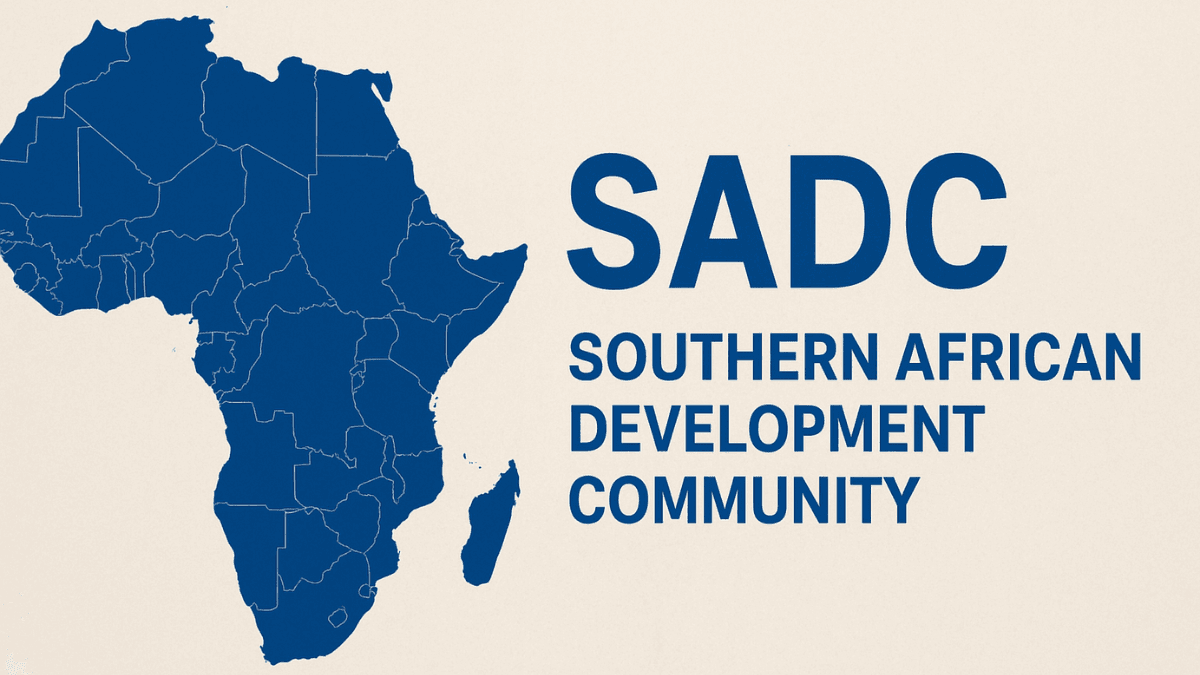
The Southern African Development Community (SADC) is a regional organization that aims to promote economic growth, peace, and cooperation among countries in Southern Africa. Established to strengthen unity and collective self-reliance, SADC focuses on improving the quality of life for the people in the region through sustainable development and regional integration.
This community is more than just a political or economic alliance—it represents the shared vision of a peaceful, stable, and prosperous Southern Africa.

History and Formation of SADC
To understand SADC’s current role, it’s important to look at its origins.
SADC was formed in 1992, succeeding the Southern African Development Coordination Conference (SADCC), which had been established in 1980. The earlier organization’s main goal was to reduce economic dependence on apartheid-era South Africa and encourage mutual cooperation among neighboring states.
After the end of apartheid, SADC evolved into a more comprehensive regional body focused on deeper economic integration, political stability, and social progress. The transformation into SADC marked a new chapter for the region—one that emphasized partnership and collective growth.
Member States of SADC
SADC is composed of 16 member countries, each contributing to the region’s shared vision. These members are:
- Angola
- Botswana
- Comoros
- Democratic Republic of the Congo (DRC)
- Eswatini
- Lesotho
- Madagascar
- Malawi
- Mauritius
- Mozambique
- Namibia
- Seychelles
- South Africa
- Tanzania
- Zambia
- Zimbabwe
Together, these nations represent over 360 million people and cover a wide range of natural resources, cultural diversity, and economic potential.
Key Objectives of SADC
SADC’s mission is to promote sustainable and equitable economic growth and socioeconomic development through deeper regional integration. Below are some of its main objectives:
1. Economic Integration
SADC works to create a common market and promote free movement of goods, services, and people. This integration strengthens trade among member states and helps them compete globally.
2. Peace and Security
The organization plays a vital role in maintaining peace and stability through its Organ on Politics, Defence and Security Cooperation, which mediates conflicts and supports democratic governance.
3. Infrastructure Development
SADC supports the building of regional transport networks, power grids, and communication systems to enhance connectivity and economic growth.
4. Social and Human Development
It promotes access to quality education, health care, and gender equality across member countries.
5. Environmental Sustainability
SADC encourages joint action on environmental protection, natural resource management, and climate change adaptation.
Structure and Governance of SADC
SADC’s structure ensures that all member states have an active role in decision-making.
- Summit of Heads of State and Government: The highest decision-making body, responsible for setting overall policies and priorities.
- Council of Ministers: Oversees implementation of policies and advises the Summit.
- Secretariat: Based in Gaborone, Botswana, it handles the day-to-day administrative functions and coordination of programs.
- Sectoral Committees: Focus on specific areas like energy, trade, and health.
This organized structure allows SADC to operate efficiently and address the region’s challenges effectively.
Major Achievements of SADC
Over the years, the Southern African Development Community has made significant progress in regional cooperation.
1. SADC Free Trade Area (FTA)
Launched in 2008, the FTA eliminated import duties on most goods traded among member states, boosting intra-regional trade and industrial growth.
2. Peacekeeping and Mediation
SADC has played a key role in peace missions in countries like the Democratic Republic of the Congo, Lesotho, and Mozambique, helping stabilize the region.
3. Infrastructure Expansion
The Regional Infrastructure Development Master Plan (RIDMP) has improved road networks, energy projects, and cross-border power sharing.
4. Gender and Development
SADC has promoted gender equality through the SADC Protocol on Gender and Development, encouraging female participation in leadership and education.
Challenges Facing SADC
Despite its success, SADC still faces several challenges that affect its goals:
- Unequal economic development among member states
- Dependence on foreign aid for project financing
- Bureaucratic delays in implementing agreements
- Political instability in certain regions
- Impact of climate change on agriculture and water resources
Overcoming these challenges requires stronger political will, efficient coordination, and active participation from all members.
Future Outlook of SADC
The future of SADC looks promising, with a growing focus on digital transformation, youth empowerment, and green energy. Efforts are being made to strengthen trade under the African Continental Free Trade Area (AfCFTA) and enhance cooperation in technology and education.
By 2050, SADC aims to achieve a fully integrated, peaceful, and prosperous Southern Africa, driven by innovation and inclusive development.
Conclusion
The Southern African Development Community (SADC) stands as a symbol of regional unity, peace, and shared prosperity. Through collaboration in trade, governance, and sustainable development, it continues to shape a better future for millions across Southern Africa.
SADC’s work proves that regional integration is not just a political ideal—it’s a pathway to real progress and collective success.
Frequently Asked Questions (FAQs)
1. What is the main goal of SADC?
SADC’s main goal is to promote sustainable economic growth and regional integration among its 16 member countries in Southern Africa.
2. When was SADC formed?
SADC was officially established in 1992, succeeding the Southern African Development Coordination Conference (SADCC).
3. Where is SADC’s headquarters located?
The SADC Secretariat is located in Gaborone, Botswana.
4. How many countries are in SADC?
There are 16 member states in the Southern African Development Community.
5. What are the key achievements of SADC?
SADC has achieved major progress in trade integration, peacekeeping, infrastructure development, and gender equality.
Trade on the Go. Anywhere, Anytime
If you’re ready to apply what you’ve learned, consider trading with a globally recognized forex and CFD broker like XM .
The platform offers competitive spreads, fast execution, and access to advanced trading tools, including real-time charts and flexible account types, making it suitable for both beginners and experienced traders. Open a trading account for free and start trading today and join millions of traders and investors on the global forex market.
Trading involves risk. Ensure you understand how the markets work before investing.