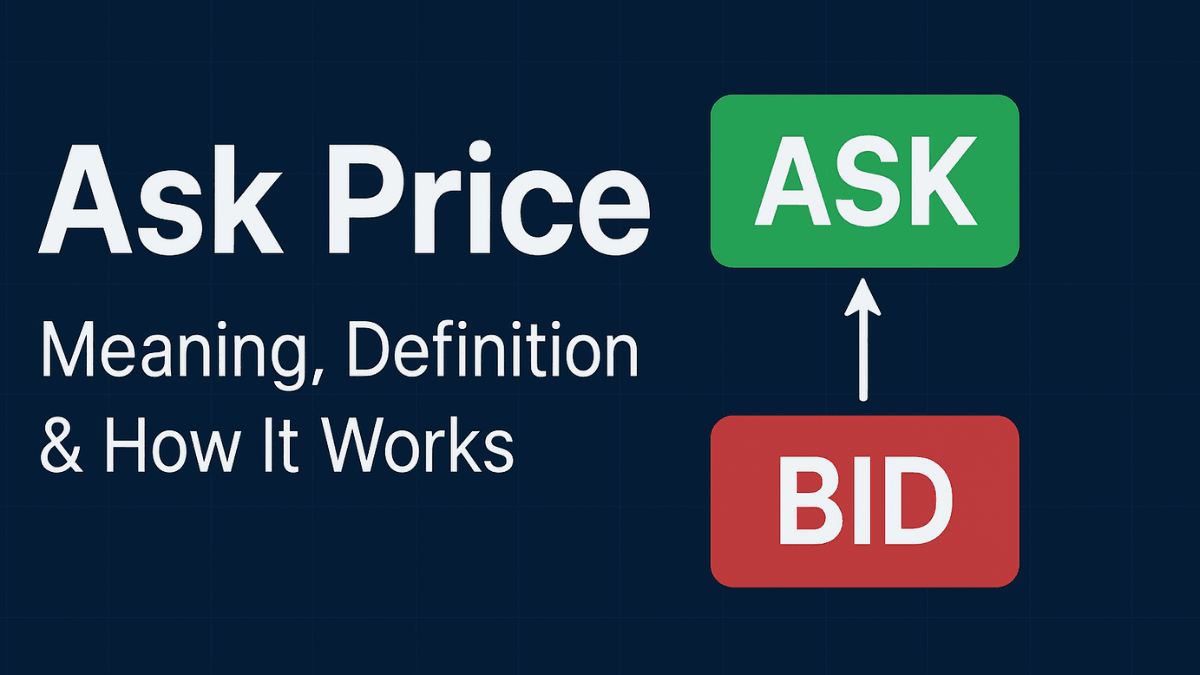
Understanding basic market terms is important for any trader, and the keyword ask price appears everywhere—whether in forex, stocks, commodities, or crypto. The ask price is one of the first concepts beginners must learn because it directly affects the cost of entering a trade and the spread between buying and selling prices.
To help you understand the ask price clearly, this guide explains its meaning, how it works, and why it matters in real trading situations.
Click Here To Join our Telegram Community
What Is the Ask Price?
Before exploring examples and trading applications, it helps to start with the core idea. The ask price (also called the offer price) is the lowest price a seller is willing to accept for an asset at a particular moment. When you want to buy a currency pair, stock, or commodity, you pay the ask price.
The ask price appears alongside the bid price—the price buyers are willing to pay—forming the basis of every market quotation.
Why the Ask Price Matters in Trading
Now that you know what the ask price means, it is important to understand why traders pay attention to it. The ask price does more than just show a selling price; it influences the cost of entry, the spread, and trade efficiency.
1. It Determines Your Entry Price When Buying
When you place a buy order in forex or stocks, you are matched with the seller’s best ask price. This means your trade opens at the ask, not the bid.
2. It Helps Form the Bid–Ask Spread
The difference between the bid and ask is called the spread. A small spread usually signals strong liquidity and high trading activity, while a wider spread can indicate low liquidity or high volatility.
3. It Affects Overall Trading Costs
Even though spreads may seem small, they are part of your total trading costs. A higher ask price widens the spread, which means you start your trade slightly negative.
How the Ask Price Works in the Market
To fully understand the role of the ask price, it helps to look at how it functions behind the scenes. Markets operate on supply and demand, and the ask price changes constantly based on these conditions.
Ask Price in Forex
In forex trading, brokers display currency pairs with two prices: the bid and the ask. For example:
- EUR/USD: 1.1050 / 1.1052
Here:
- 1.1050 is the bid price
- 1.1052 is the ask price
If you choose to buy, your order executes at 1.1052.
Ask Price in Stocks
Stock exchanges operate similarly. The ask reflects the lowest price at which someone is selling shares. High liquidity stocks often have tight spreads, while low-volume stocks have wider gaps between bid and ask prices.
Ask Price in Cryptocurrency
Crypto markets also use bid and ask quotes. However, spreads can be more volatile due to liquidity differences between exchanges and trading pairs.
What Influences the Ask Price?
Before examining examples, it is useful to understand why ask prices move. Several market forces shift the ask price throughout the day.
1. Supply and Demand
If more traders want to buy, sellers may increase their ask price. When selling pressure rises, the ask price may drop.
2. Market Liquidity
Highly liquid markets have more active sellers, leading to tighter spreads and stable ask prices.
3. Volatility
During news releases or unexpected events, the ask price may rise sharply as sellers adjust to market uncertainty.
4. Broker or Exchange Models
Different platforms use different pricing models—market makers, ECN brokers, and decentralized exchanges all influence how ask prices appear.
Examples of Ask Price in Real Trading
Examples make the concept clearer and show how the ask price works in practice.
Example 1: Forex Trade
Quotation: GBP/USD 1.2500 / 1.2503
If you click BUY, your trade opens at 1.2503.
The spread is 0.0003, or 3 pips.
Example 2: Stock Market
If Apple stock shows:
Bid: $180.00 | Ask: $180.05
Buying at the market will fill your trade at $180.05.
Example 3: Cryptocurrency
BTC/USDT may show a wider spread during low liquidity hours, such as:
Bid: 94,500 | Ask: 94,700
Here, buying Bitcoin immediately costs 94,700 USDT.
Ask Price vs Bid Price
Before discussing practical usage, it helps to compare these two terms since they always appear together.
| Term | Meaning |
| Ask Price | The lowest price a seller accepts |
| Bid Price | The highest price a buyer offers |
| Spread | Difference between bid and ask |
The ask price applies when buying, while the bid price applies when selling.
How Traders Use the Ask Price
Understanding the ask price helps traders make better decisions, especially when entering or exiting the market.
1. Timing the Entry
Traders may avoid periods of wide spreads, such as major news releases, to reduce costs.
2. Placing Limit Orders
A buy limit order allows you to set your desired entry price, often below the current ask.
3. Managing Trading Costs
Lower spreads mean lower overall costs. Monitoring the ask price helps traders avoid unnecessary expenses.
4. Evaluating Market Liquidity
A stable and tight ask price often signals a healthy market with adequate liquidity.
Common Misconceptions About the Ask Price
Before concluding, it is important to clear up the misunderstandings many beginners have.
“The ask price is the final trade price.”
Not always. It is the price available now, but limit orders can execute at better prices.
“The ask price stays stable.”
It changes constantly due to supply, demand, and volatility.
“The ask price is always higher than the bid.”
Yes, but the distance between them varies depending on market conditions.
Conclusion
The ask price is a simple but essential term that affects buying costs, spreads, and market conditions across forex, stocks, commodities, and crypto. By understanding how it works, traders can manage costs better, choose good entry points, and avoid trading during periods of unnecessary volatility.
Whether you are a beginner or an experienced trader, knowing how the ask price interacts with bids, spreads, and liquidity helps you make more informed trading decisions.
Trade on the Go. Anywhere, Anytime
If you’re ready to apply what you’ve learned, consider trading with a globally recognized forex and CFD broker like XM .
The platform offers competitive spreads, fast execution, and access to advanced trading tools, including real-time charts and flexible account types, making it suitable for both beginners and experienced traders. Open a trading account for free and start trading today and join millions of traders and investors on the global forex market.
Trading involves risk. Ensure you understand how the markets work before investing.