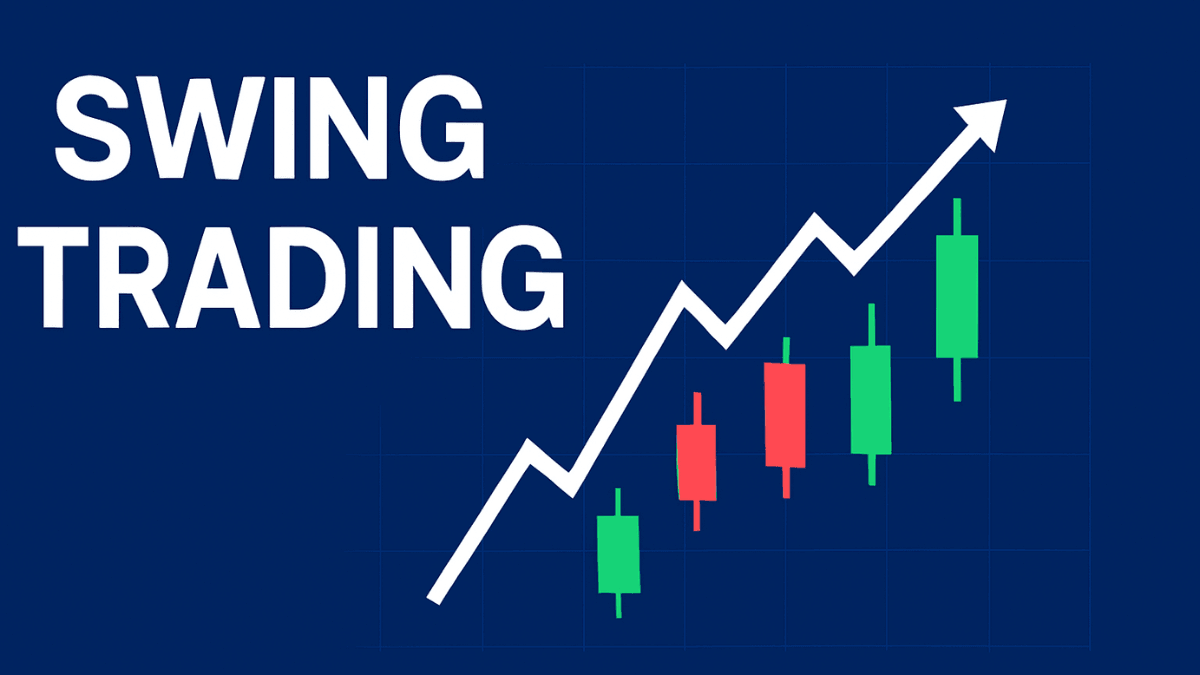
Understanding financial terms is important when learning about the markets, and one of the most widely used terms among traders is Swing Trading. Swing trading is a popular trading style that aims to capture price movements that happen over several days or weeks. Traders use this method to take advantage of natural market “swings” while avoiding the stress of minute-by-minute price action.
Before going deeper, it helps to build a simple foundation of what swing trading really means and why investors and traders rely on it.

What Is Swing Trading?
Swing trading is a trading approach where traders aim to profit from short- to medium-term price movements. These movements, known as “swings,” occur as markets rise and fall over time. Unlike day traders, who open and close trades on the same day, swing traders hold their positions for longer periods, usually 2 days to 3 weeks.
This method focuses on identifying trends, corrections, breakouts, and reversals. Traders combine technical analysis with market psychology to find good entry and exit points. Because swing traders look for clear setups rather than constant fast-paced decisions, the style is popular among people who want to trade part-time or with less screen time.
How Swing Trading Works
Before applying swing trading strategies, it is useful to understand how the process works. Swing traders rely on price charts, historical patterns, and indicators to predict where the market might move next. They identify the general trend, wait for a temporary pullback, and then enter the trade when the price shows signs of continuing the trend.
Swing trading works on the idea that markets rarely move in a straight line. Instead, prices move in waves as buyers and sellers balance each other. Swing traders try to catch these waves at the right time, maximizing profit while limiting risk.
Key Principles of Swing Trading
To understand swing trading better, here are the main principles that guide this trading approach:
1. Trend Identification
Swing traders study trends to determine whether the market is moving up, down, or sideways. They use tools like trendlines, moving averages, and price structure to make these decisions.
2. Entry at Pullbacks
Instead of entering at random points, swing traders wait for pullbacks. This improves the risk-to-reward ratio and increases the chances of capturing a strong move.
3. Use of Technical Indicators
Technical indicators help confirm entries and exits. The most common tools include:
- Moving Averages
- Relative Strength Index (RSI)
- MACD
- Fibonacci Levels
4. Risk Management
Swing traders protect their accounts using stop-loss orders. They also size their trades properly to avoid unnecessary losses.
Common Swing Trading Strategies
Before choosing a strategy, traders need a clear structure to follow. Below are the most widely used strategies in swing trading:
1. Trend Following Strategy
This strategy involves trading in the direction of the main trend. Traders buy in an uptrend and sell in a downtrend. A trend is confirmed using higher highs and higher lows (uptrend) or lower highs and lower lows (downtrend).
2. Breakout Strategy
A breakout happens when the price moves above resistance or below support. Swing traders enter the trade early to benefit from the momentum that follows the breakout.
3. Pullback Strategy
This is a simple and effective approach. Traders wait for the price to temporarily reverse within a trend, then enter when the trend continues. This strategy often provides good entry accuracy.
4. Support and Resistance Strategy
Swing traders watch strong price levels where markets repeatedly react. They buy near support and sell near resistance.
Advantages of Swing Trading
Before deciding if swing trading is a suitable approach, it helps to understand its key advantages:
1. Less Time-Consuming
Swing traders do not need to monitor charts all day. Checking the market a few times a day is often enough, making this style ideal for part-time traders.
2. Good Risk-to-Reward Ratio
Swing trading setups normally allow for tight stop losses and clear profit targets. This helps traders grow their accounts steadily.
3. Works in Different Market Conditions
Swing trading can be applied in trending, ranging, or volatile markets. This flexibility makes it one of the most versatile trading styles.
4. Reduced Emotional Stress
Since traders hold positions for longer and avoid high-speed trading, swing trading reduces pressure and emotional decision-making.
Disadvantages of Swing Trading
Understanding the risks helps traders make informed choices. Swing trading has a few downsides:
1. Overnight and Weekend Risk
Because positions are held for days, unexpected news or gaps can affect the market price.
2. Requires Patience
Trades may take days to develop. Traders must avoid closing trades too early.
3. Market Noise Can Cause Confusion
Short-term fluctuations may trigger stop losses even when the overall trend is still valid.
Swing Trading vs Day Trading
It is helpful to compare swing trading with day trading, especially for beginners trying to choose a trading style.
Swing Trading
- Positions last several days
- Less screen time
- Lower stress
- Relies on technical analysis over medium timeframes
Day Trading
- Positions closed within the same day
- Requires high focus
- Fast decision-making
- Higher transaction costs
Swing trading is more beginner-friendly, while day trading suits traders who prefer fast-paced environments.
Is Swing Trading Good for Beginners?
Swing trading is considered beginner-friendly because it allows new traders to learn at a moderate pace. It provides enough time to analyze trades, manage risk, and understand market behavior without pressure. However, beginners need discipline, proper risk management, and a solid trading plan.
Final Thoughts
Swing trading is a powerful trading style that focuses on capturing short-to-medium-term market movements. It combines technical analysis, strategy, and discipline to identify profitable price swings. This glossary definition clarifies its meaning, working principles, strategies, and benefits to help traders understand how it fits into the broader world of financial markets.
When done correctly, swing trading can be an effective approach for traders who want flexibility, manageable risk, and steady growth without constant chart monitoring.
Trade on the Go. Anywhere, Anytime
If you’re ready to apply what you’ve learned, consider trading with a globally recognized forex and CFD broker like XM .
The platform offers competitive spreads, fast execution, and access to advanced trading tools, including real-time charts and flexible account types, making it suitable for both beginners and experienced traders. Open a trading account for free and start trading today and join millions of traders and investors on the global forex market.
Trading involves risk. Ensure you understand how the markets work before investing.