Understanding a base currency is essential for anyone learning about currency trading, finance, or international transactions. Because exchange rates are quoted using a base currency, it becomes the foundation for comparing the value of one currency to another. This simple concept affects trade, investment, accounting, and even everyday travel.
Before we look at how it works, let’s first understand what the term truly means.

What Is a Base Currency?
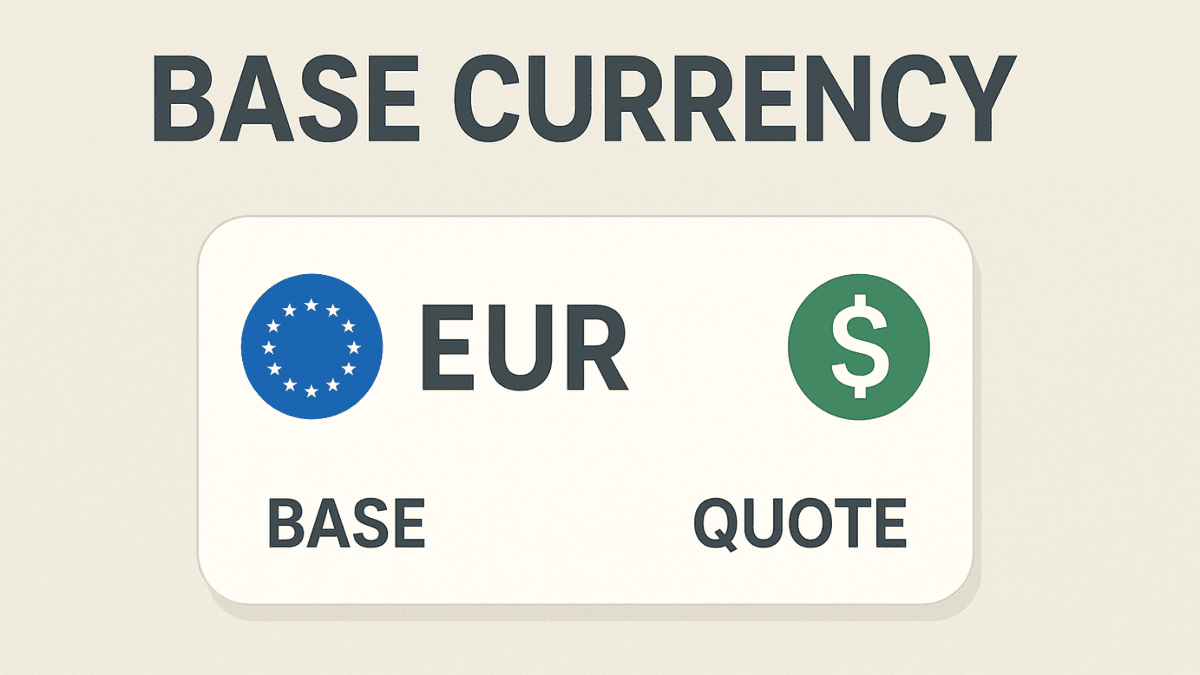
In finance and foreign exchange (forex), the base currency is the first currency listed in any currency pair. It shows the currency being valued against another currency, which is called the quote or counter currency. The exchange rate tells you how much one unit of the base currency is worth in the quote currency.
For example, in the pair EUR/USD, the euro (EUR) is the base currency and the US dollar (USD) is the quote currency. If the exchange rate is 1.10, it means 1 euro equals 1.10 US dollars.
This structure helps traders, businesses, and financial institutions compare currencies using a consistent standard.
Why the Base Currency Matters
Before looking at examples and deeper details, it’s important to understand why the base currency plays such a central role in currency markets. It provides clarity and consistency by acting as the starting point in currency valuations. Without it, exchange rates would be confusing or difficult to compare.
How the Base Currency Works in Currency Pairs
Currency pairs are always written in the same format: BASE / QUOTE.
To better understand how base currencies work, let’s look at how they structure exchange rate information.
1. Base Currency Represents ‘One Unit.’
The base currency always equals 1 unit, no matter how strong or weak the currency is.
Example:
- GBP/USD = 1.25 means 1 British pound equals 1.25 US dollars.
2. The Quote Currency Shows the Value
The quote currency answers the question: “How much of this currency is needed to equal one unit of the base currency?”
3. The Base Currency Determines Direction
When you buy a currency pair, you are buying the base currency.
When you sell, you are selling the base currency.
This definition helps traders express decisions clearly without confusion.
Examples of Base Currencies in Forex
To make the concept clearer, let’s look at a few common forex pairs and identify the base currency:
- USD/JPY → Base currency: USD
- AUD/USD → Base currency: AUD
- GBP/JPY → Base currency: GBP
- EUR/CHF → Base currency: EUR
Notice that the base currency is always the first in the pair, regardless of region or economic size.
Base Currency vs. Quote Currency
Before moving into practical uses, it helps to clarify the difference between these two terms.
Base Currency
- First currency in the pair
- Represents 1 unit
- The currency being bought or sold
Quote Currency
- The second currency in the pair
- Shows the value of the base
- Used to measure price changes
Understanding this difference is essential for reading charts, entering trades, and analyzing financial news.
How Businesses Use a Base Currency
Companies that operate internationally or deal with multiple currencies often choose a base currency for accounting and reporting. This helps keep financial records clear and consistent.
Practical examples
- An airline may use USD as its base currency for fuel purchases.
- An international e-commerce store may choose EUR to compare revenue across markets.
- A global corporation may use a base currency to prepare annual financial reports.
By converting all income and expenses into one base currency, businesses avoid confusion and reduce exchange-rate risk.
How Central Banks and Governments Use Base Currencies
Governments and central banks also use base currencies when tracking macroeconomic indicators. For example:
- Comparing the value of local currency against major currencies
- Reporting foreign reserves
- Setting monetary policy based on global currency flows
Using a base currency ensures consistency in economic measurement.
Why the Base Currency Is Important for Traders
Before exploring common mistakes, let’s understand why the base currency matters so much in trading.
1. It Affects Profit and Loss Calculations
Your trading results depend on how the base currency moves relative to the quote currency.
2. It Influences Market Sentiment
If traders expect the base currency to strengthen, the pair usually rises. If they expect it to weaken, the pair falls.
3. It Helps With Risk Management
Knowing which currency you are actually buying or selling improves clarity in risk analysis.
Common Mistakes Beginners Make With Base Currencies
Understanding the base currency may seem simple, but new traders often make mistakes that affect their trading decisions.
1. Confusing Which Currency Is Being Bought
Some beginners assume they are buying both currencies. In reality, they buy the base currency.
2. Misreading Exchange Rate Movements
If EUR/USD rises, it means the euro strengthened, not the dollar.
3. Choosing the Wrong Account Base Currency
Some traders open accounts in currencies they rarely use, leading to unnecessary conversion fees.
How to Identify the Base Currency Quickly
If you ever feel unsure, simply look at the pair:
- The first currency is always the base
- It always represents one unit
- The price always shows its value in the quote currency
No exceptions.
Base Currency in Crypto Trading
Cryptocurrency exchanges also use the base currency model. In pairs like BTC/USDT, Bitcoin (BTC) is the base currency and USDT is the quote currency.
Just like in forex, traders buy or sell the base currency using the quote currency.
Final Thoughts
A base currency is the foundation of how exchange rates are quoted across global markets. Whether you are a beginner learning forex, a business handling international payments, or a traveler exchanging money, understanding base currencies helps you make smarter financial decisions.
It brings clarity, consistency, and structure to a world where currencies constantly change in value.
Trade on the Go. Anywhere, Anytime
If you’re ready to apply what you’ve learned, consider trading with a globally recognized forex and CFD broker like XM .
The platform offers competitive spreads, fast execution, and access to advanced trading tools, including real-time charts and flexible account types, making it suitable for both beginners and experienced traders. Open a trading account for free and start trading today and join millions of traders and investors on the global forex market.
Trading involves risk. Ensure you understand how the markets work before investing.