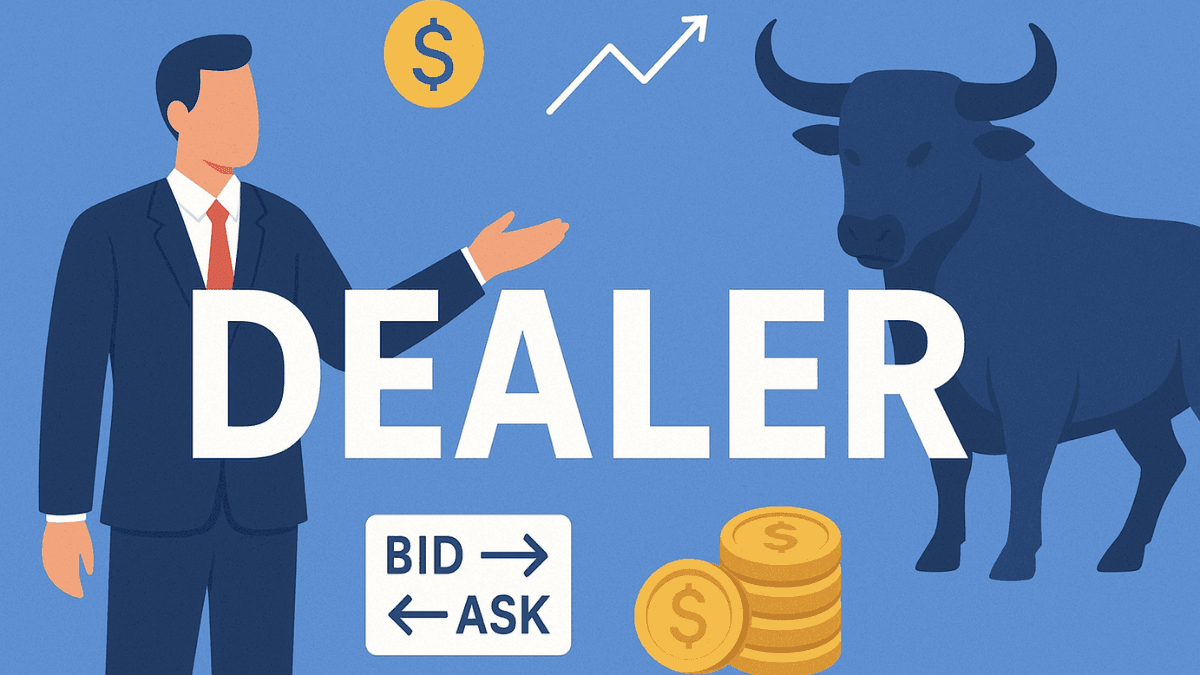
Understanding the term dealer is essential for anyone learning about trading or financial markets. A dealer refers to a person or firm that buys and sells financial instruments for its own account. This might sound simple, but the dealer plays a very important role in market liquidity, pricing, and daily trading activity. In modern financial systems, dealers help keep the markets running smoothly by making sure buyers and sellers can always find a price.
What Is a Dealer?
A dealer is an individual or company that buys and sells securities, currencies, commodities, or other financial products using their own capital. They take ownership of the assets they trade, which means they also accept all the risks. Dealers are different from brokers, even though some firms act as both. A broker only facilitates trades for clients, while a dealer trades directly for themselves.
How Dealers Work in Financial Markets
To understand how a dealer operates, it helps to look at the core actions they take. Dealers quote buy and sell prices, hold inventory, and stand ready to make a trade at almost any moment. This makes them central to maintaining liquidity. When a trader wants to buy, the dealer may sell from their own inventory. When someone wants to sell, the dealer might buy and hold the asset until they can sell it later.
Dealers Provide Liquidity
Before we explore their responsibilities, you should know why liquidity matters. Liquidity means how easily an asset can be bought or sold without affecting its price too much. Dealers play a major role by always being available to quote prices. This helps keep markets active, stable, and predictable.
Dealers Quote Bid and Ask Prices
To maintain a fair market environment, dealers publish two prices:
- Bid price: The price they are willing to pay to buy an asset.
- Ask price: The price they want to receive when selling it.
The difference between these two prices is called the spread, which often becomes part of the dealer’s profit. This pricing process is fundamental because it affects how much a trader pays or receives during a transaction.
Dealer vs. Broker: Key Differences
To understand the dealer’s unique role, it helps to compare them with a broker. Many new traders confuse the two, but there is an important distinction. A broker arranges trades between buyers and sellers and charges a commission or fee. A dealer, on the other hand, uses their own money to trade and earns through spreads or price changes.
Why the Difference Matters
This difference shapes both risk and responsibility. A broker does not hold inventory and therefore has less financial exposure. A dealer, however, takes on risk with every position they hold. Because of this, dealers must manage inventory carefully to avoid losses during sudden price movements.
Types of Dealers in Financial Markets
Before diving into the risks and benefits, it is helpful to understand the different types of dealers. Each category serves a unique function within the financial system.
1. Securities Dealers
These dealers trade shares, bonds, ETFs, or other financial instruments. They often work within investment banks or specialized trading firms.
2. Forex Dealers
Forex dealers buy and sell currency pairs. They may act as market makers, offering bid and ask prices around the clock to support the global currency market.
3. Commodity Dealers
These dealers trade items like gold, oil, or agricultural products. They play a key role in pricing commodities used by manufacturers and global businesses.
4. Crypto Dealers
In the digital asset world, crypto dealers hold coins or tokens and quote prices to buyers and sellers. They help reduce price volatility by maintaining liquidity in crypto markets.
How Dealers Make Money
To understand why the dealer business model is so important, you should examine how they generate revenue. Dealers make money through the spread, price changes, and sometimes through additional services.
Primary Income Sources
- Bid/Ask Spread: They earn the difference between buying low and selling high.
- Inventory Profits: When the market moves in their favor, their inventory becomes more valuable.
- Market-Making Fees: Some exchanges pay dealers for providing liquidity.
This income structure rewards dealers for being active participants who help stabilize prices.
Risks Dealers Face
Before concluding, it is important to recognize that the role of a dealer comes with significant risk. Dealers can lose money when markets move against their inventory. They also face sudden price shocks, liquidity shortages, and regulatory requirements. Because they trade with their own capital, they must use risk management strategies such as hedging or position limits.
Common Risks
- Market risk: Prices may move unexpectedly.
- Inventory risk: Unsold assets may decline in value.
- Liquidity risk: Dealers may struggle to exit positions during volatile periods.
- Regulatory risk: Complex rules can affect how they operate.
Despite these challenges, dealers are essential to healthy, functioning markets worldwide.
Why Dealers Matter in Financial Markets
As financial systems grow more complex, the contribution of dealers becomes even more valuable. They help ensure that assets can be bought and sold easily. They support price discovery by continuously quoting prices. They absorb short-term market imbalances and help prevent extreme volatility. Without dealers, markets could become slow, unstable, and difficult for everyday traders to navigate.
Final Thoughts
A dealer plays a critical role in trading and financial markets by providing liquidity, quoting prices, and taking risks to maintain the flow of transactions. By understanding what a dealer is and how they function, you gain a clearer picture of how modern markets operate behind the scenes. Whether you are a trader, investor, or student, this knowledge helps you make more informed decisions in an evolving financial landscape.
Trade on the Go. Anywhere, Anytime
If you’re ready to apply what you’ve learned, consider trading with a globally recognized forex and CFD broker like XM .
The platform offers competitive spreads, fast execution, and access to advanced trading tools, including real-time charts and flexible account types, making it suitable for both beginners and experienced traders. Open a trading account for free and start trading today and join millions of traders and investors on the global forex market.
Trading involves risk. Ensure you understand how the markets work before investing.