
Blockchain has become essential in a world where digital transactions, online security, and decentralized systems are shaping the future of finance and technology. The term blockchain appears in discussions about cryptocurrencies, digital identity, supply chains, online payments, and even voting systems.
Before diving into details, let us understand that blockchain is not just about crypto. It is a technology designed to record information in a secure, transparent, and tamper-proof way. Once you know this, you can see why so many industries are exploring it.
Click Here To Join our Telegram Community
This article will take you step-by-step from the basics to advanced concepts, real-world applications, risks, challenges, future trends, and a detailed explanation of the transaction process, where you can add your image.
What Is Blockchain?
To understand blockchain, imagine a digital notebook that is shared among many computers around the world. Everyone can see the entries, but no one can erase or change previous records. Every new entry is connected to the one before it, forming a chain of blocks filled with information. Because many people share and verify it, the system becomes nearly impossible to tamper with.
In simple terms:
- Blockchain is a distributed database shared across multiple computers.
- It stores information in blocks that are linked together chronologically.
- Once a block is recorded, it cannot be changed without altering the entire chain.
- The system uses cryptography to protect data.
- It is transparent yet private, depending on how it is implemented.
This mix of transparency, security, and decentralization has made blockchain popular in many industries beyond cryptocurrency. Financial institutions, hospitals, governments, and logistics companies are exploring blockchain because it solves problems related to trust, fraud, and data management.
Why Blockchain Matters in Today’s Digital World
Before going deeper, it helps to understand why blockchain has become such an important topic globally. The digital world depends heavily on trust. People want to know that their money, identity, records, and data are handled securely. Traditional systems often rely on central authorities like banks, governments, or large corporations. Although these organizations work hard to maintain trust, they can still fail due to human errors, corruption, hacking, or outdated systems.
Blockchain offers a different model:
- Instead of one central authority, many independent computers maintain the system.
- Transactions must be verified by multiple participants.
- Data cannot be secretly changed or deleted.
- Every action is recorded transparently.
This shift from central control to distributed control is one of the biggest technological transformations of the last decade. It is reshaping how people think about ownership, identity, finance, and digital interactions.
The Core Components of Blockchain
Understanding how blockchain works requires examining several key components. These elements work together to ensure security, transparency, and reliability.
1. Blocks
A block is like a page in a digital ledger. Each block contains:
- A list of transactions or data entries
- A timestamp
- A cryptographic hash (a unique fingerprint)
- The hash of the previous block
These elements ensure that blocks link together tightly, forming a secure chain.
2. The Chain
Blocks connect to each other in a fixed sequence. Because each block contains the previous block’s hash, changing one block would require altering every block after it. This makes blockchain extremely resistant to tampering.
3. Nodes
Nodes are computers that participate in the blockchain network. They maintain copies of the ledger, validate transactions, and ensure the system runs smoothly.
4. Consensus Mechanisms
Since there is no central authority, blockchain uses special methods to agree on valid transactions. The two most common are:
- Proof of Work (PoW) – used by Bitcoin
- Proof of Stake (PoS) – used by many newer blockchains
These mechanisms ensure that only legitimate transactions enter the chain.
5. Cryptography
Blockchain uses advanced mathematical algorithms to secure data, protect identities, and verify ownership.
Together, these components create a secure, transparent, and decentralized system.
Types of Blockchains
Blockchain is not one single technology. There are several types, each designed for different needs.
Before listing them, it’s helpful to understand that the type of blockchain you choose depends on whether you want a fully open system, a controlled one, or something in between.
Public Blockchain
A public blockchain is open to anyone. Anyone can join the network, read data, send transactions, or help verify blocks. These blockchains are decentralized and offer strong security due to the large number of participants.
Examples:
- Bitcoin
- Ethereum
Private Blockchain
A private blockchain is controlled by one organization. Only approved members can access or use it. These blockchains are faster and more efficient but less decentralized.
Examples:
- Hyperledger Fabric
- R3 Corda
Hybrid Blockchain
A hybrid blockchain combines both public and private features. Organizations can keep some information private while making specific data public.
Consortium Blockchain
This type is managed by a group of organizations rather than a single entity. It is common in supply chain networks and banking collaborations.
Blockchain vs Traditional Databases
Before discussing blockchain uses, it is helpful to understand how it differs from traditional databases. Many people confuse them, but they serve different purposes.
Key Differences:
- Traditional databases are controlled by a central administrator, while blockchain distributes control across many participants.
- Databases allow data modification and deletion, but blockchain entries cannot be changed once added.
- Blockchain is ideal for tracking assets, maintaining audit trails, and proving authenticity.
- Traditional databases are better for frequent updates and large, real-time operations.
These differences explain why blockchain is not a replacement for databases but rather a complement used for specific purposes.
Blockchain Transaction Process
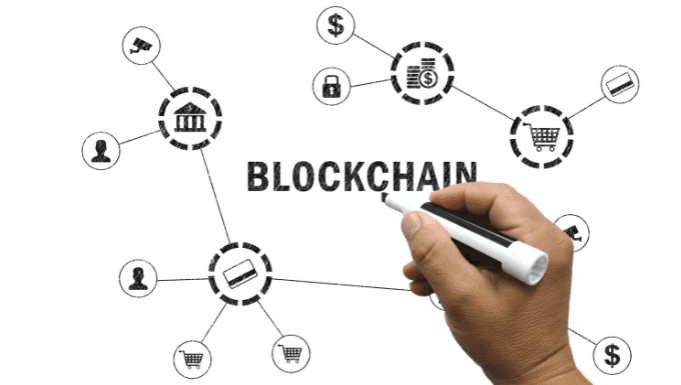
Blockchain transactions may sound complex, but they follow a transparent and predictable process. Understanding this process helps you see why the system is secure and transparent. Every transaction must go through several steps before it is added to the blockchain, and each step adds a layer of protection.
How a Transaction Works Step-by-Step
- Transaction Creation
A user initiates a transaction, such as sending cryptocurrency or updating data. The transaction is signed with the user’s private key to prove authenticity. - Broadcast to the Network
The transaction is shared with nodes on the blockchain network. These nodes check whether the transaction is valid. - Validation by Nodes
Nodes use a consensus mechanism to verify transactions. They check digital signatures, account balances, and other rules. - Inclusion in a Block
Once validated, the transaction is grouped with others to form a block. - Block Verification
Nodes either compete or collaborate to verify the block, depending on the consensus mechanism (e.g., PoW or PoS). After verification, the block is approved. - In addition to the Blockchain
The verified block is added to the existing chain. Once it becomes part of the blockchain, it cannot be changed. - Confirmation
Users receive confirmation that their transaction is complete and permanently recorded.
This process ensures that all transactions are trustworthy, transparent, and irreversible.
Real-World Applications of Blockchain
Before exploring each application, it helps to understand that blockchain is not limited to cryptocurrency. Many sectors are adopting it to improve transparency, reduce fraud, and automate processes.
1. Finance and Banking
Blockchain has transformed financial transactions by reducing intermediaries, lowering costs, and increasing transparency.
Uses include:
- Cross-border payments
- Smart contracts
- Asset tokenization
- Instant settlement systems
2. Supply Chain Management
Supply chains often struggle with fraud, delays, and a lack of transparency. Blockchain ensures that every step from production to delivery is trackable.
Examples:
- Tracking food safety
- Verifying product authenticity
- Monitoring inventory movement
3. Healthcare
Healthcare records are sensitive and often scattered across different systems. Blockchain provides secure patient data management.
Uses:
- Unified medical records
- Drug authenticity checks
- Secure data exchange
4. Government and Public Services
Governments are using blockchain to improve trust, reduce corruption, and enhance service delivery.
Applications:
- Land registry
- Digital identity
- Transparent voting systems
5. Real Estate
Blockchain helps simplify property transactions, reduce fraud, and create clear ownership records.
6. Entertainment and Digital Rights
Musicians, artists, and creators use blockchain to prove ownership and receive fair payments.
7. Energy Industry
Blockchain supports peer-to-peer energy trading and improves grid management.
8. Education
Schools and universities use blockchain to store certificates and verify credentials.
Benefits of Blockchain Technology
Before listing the benefits, it’s important to understand that blockchain’s value comes from combining transparency, security, and decentralization. These qualities solve problems that many industries have struggled with for decades.
Key Benefits
- Security
Blockchain records cannot be changed without detection, reducing fraud and hacking. - Transparency
All participants can view transactions, increasing trust. - Decentralization
No single authority controls the network, reducing risks of misuse or failure. - Efficiency
Smart contracts automate agreements without intermediaries. - Traceability
Every step of a process can be tracked, improving accountability. - Lower Costs
Removing middlemen reduces transaction fees.
Challenges and Limitations of Blockchain
Before exploring the challenges, it helps to understand that no technology is perfect. Blockchain is powerful, but it also has limitations that businesses must consider.
Key Challenges
- Scalability Issues
Some blockchains process transactions slowly when many users join. - Energy Consumption
Proof of Work systems use significant energy. - Regulatory Uncertainty
Governments are still figuring out how to regulate blockchain. - Complexity
Many people and businesses find the technology difficult to understand. - Data Privacy
Public blockchains store information that may not be fully private. - Integration with Existing Systems
Many companies struggle to connect blockchain with old infrastructure.
These challenges do not mean blockchain is ineffective. They simply show that the technology is evolving, and improvements continue to be made.
Blockchain vs. Cryptocurrency
Many people think blockchain and cryptocurrency are the same, but they are different. Blockchain is the technology, while cryptocurrency is one of its applications. Bitcoin was the first major example of blockchain in action, demonstrating how digital money could operate without banks.
Cryptocurrencies use blockchain to:
- Verify ownership
- Record transactions
- Prevent double-spending
- Maintain security
While cryptocurrencies brought blockchain into the spotlight, the technology is now being used far beyond digital currencies.
Future of Blockchain Technology
Before looking at future trends, it’s worth noting that blockchain is still in its early stages. The next decade will bring major changes as adoption grows.
Predicted Trends
- More government adoption
- Expansion of CBDCs (Central Bank Digital Currencies)
- Growth of tokenized assets
- AI and blockchain integration
- Mainstream use in healthcare and education
- More efficient consensus algorithms
- Greater focus on privacy solutions
Blockchain is expected to play a key role in digital transformation across industries.
Is Blockchain Secure?
Blockchain is one of the most secure digital systems today. Its security comes from several factors:
- Decentralization reduces single points of failure.
- Cryptography protects data from tampering.
- Consensus mechanisms ensure valid transactions.
- A transparent structure makes suspicious activity easy to detect.
Although blockchain is secure, the surrounding systems wallets, exchanges, or apps may still be vulnerable. It’s important to use strong security practices.
Blockchain Myths and Misconceptions
Before addressing common myths, it is important to understand that misinformation often spreads faster than facts. Many people either overestimate or underestimate blockchain.
Common Myths
- Myth: Blockchain is only for crypto.
Fact: It is used in many industries. - Myth: All blockchain data is public.
Fact: Many blockchains are private or permissioned. - Myth: Blockchain is unhackable.
Fact: While extremely secure, supporting systems can be attacked. - Myth: Blockchain replaces all databases.
Fact: It complements them but does not replace them entirely.
Conclusion
Blockchain is more than a technological trend. It is a foundational system that changes how information is stored, shared, and protected. By offering transparency, security, and decentralization, blockchain builds trust in digital systems in a way that traditional methods cannot. As industries continue adopting it, blockchain will become a critical part of everyday life.
Whether you are learning for personal interest, business adoption, or future opportunities, understanding blockchain now puts you ahead of a global transformation already in motion. With its wide range of uses, growing adoption, and ongoing development, blockchain will continue shaping the future of technology, finance, and digital trust for many years to come.
Trade on the Go. Anywhere, Anytime
If you’re ready to apply what you’ve learned, consider trading with a globally recognized forex and CFD broker like XM .
The platform offers competitive spreads, fast execution, and access to advanced trading tools, including real-time charts and flexible account types, making it suitable for both beginners and experienced traders. Open a trading account for free and start trading today and join millions of traders and investors on the global forex market.
Trading involves risk. Ensure you understand how the markets work before investing.