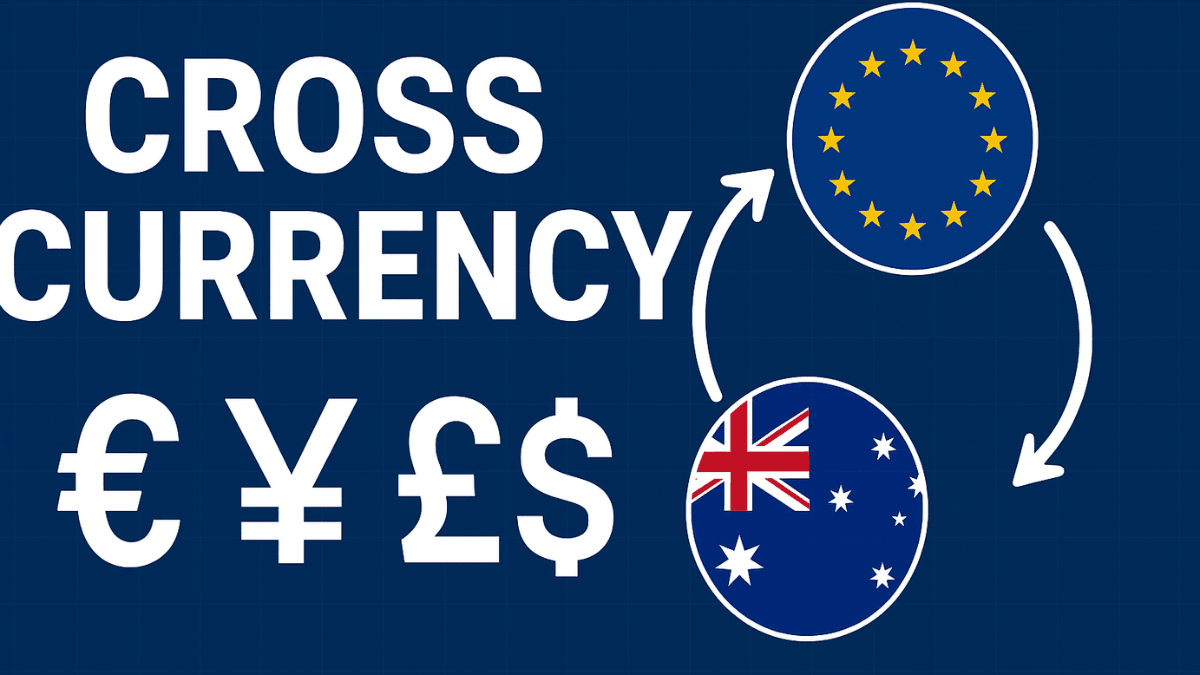
It’s good to understand how money moves across borders, which is essential for traders, businesses, and anyone dealing with international finance. A cross-currency is at the center of many of these transactions, and it plays a massive role in forex trading and global trade. In this guide, you will learn what a cross-currency pair is, how it works, why it matters, and how traders can benefit from cross-currency pairs.
What Is a Cross Currency?
Before diving deeper, it helps to understand a key question: what makes a currency pair a “cross” currency pair?
A cross-currency is any currency pair that does not include the US dollar (USD). These pairs allow people to exchange one foreign currency directly for another without first converting into USD.

This is different from major currency pairs like EUR/USD or GBP/USD, where the US dollar is always involved. Cross-currencies remove that middle step and can sometimes offer greater efficiency, lower costs, and unique trading opportunities.
Why the Concept of Cross-Currency Exists
To appreciate the importance of cross currencies, it’s helpful to remember that the US dollar has historically been the world’s primary reserve and settlement currency. For decades, most international transactions required converting into USD first.
Cross-currencies were introduced to simplify this process and enable more direct exchange between two non-dollar currencies.
Examples of Popular Cross-Currency Pairs
Cross-currency pairs exist across all regions, but some are more commonly traded than others.
Here are the most popular categories:
1. European Crosses
These pairs involve two European currencies.
- EUR/GBP
- EUR/CHF
- GBP/CHF
2. Commodity Crosses
These involve currencies from countries that export natural resources.
- AUD/NZD
- AUD/JPY
- NZD/JPY
3. Yen Crosses
The Japanese Yen is heavily traded in cross pairs.
- EUR/JPY
- GBP/JPY
- AUD/JPY
Each cross pair behaves differently depending on economic conditions, trading sessions, and regional news.
How Cross-Currency Trading Works
Before trading a cross currency pair, it’s helpful to understand how the market calculates its rate.
In most cases, a cross-currency rate is derived from two major USD-based pairs. For example:
- EUR/JPY is based on EUR/USD and USD/JPY
- GBP/CHF is derived from GBP/USD and USD/CHF
The USD acts as the “bridge” behind the scenes, even though it does not appear in the pair. This ensures pricing stays consistent across global markets.
Why Cross Currencies Matter in Global Finance
Cross currencies are more than just trading instruments. They play an essential role in global economics and international business.
Below are the main reasons they matter:
1. They simplify international transactions
Businesses can exchange two foreign currencies directly, avoiding extra conversion fees through USD.
2. They reduce dependency on the US dollar
With more countries trading directly, financial systems become more balanced and flexible.
3. They provide additional trading opportunities
Forex traders use cross pairs to access:
- Higher volatility
- More diverse market movements
- Regional macroeconomic trends
4. They support regional economic relationships
For example, AUD/JPY is often influenced by trade ties between Australia and Japan.
Advantages of Trading Cross-Currency Pairs
Cross currencies offer unique benefits that major pairs sometimes cannot deliver.
Less influence from the US economic news
Since USD is not included, major US reports such as Non-Farm Payroll, CPI, or Fed decisions often have a smaller impact.
More trading opportunities
Cross pairs reflect regional news, allowing traders to diversify beyond USD-based moves.
Potential for bigger price swings
Many cross pairs, such as GBP/JPY, are known for high volatility, which can create strong trading setups for skilled traders.
Risks Involved in Cross-Currency Trading
Like any financial instrument, cross currencies come with risks. Understanding these risks helps traders make better decisions.
Higher spreads
Cross pairs often have wider spreads than major pairs, especially during low-volume periods.
Increased volatility
While volatility creates opportunity, it also increases risk, especially for new traders.
Dependence on multiple economies
Since the USD is not involved, the pair reacts directly to economic data from both countries.
When Should Traders Use Cross-Currency Pairs?
It’s helpful to know when cross-currency trading makes sense. Traders commonly use these pairs in the following situations:
1. When USD-driven markets are flat
If the major USD pairs are moving sideways, cross currencies may offer more active price action.
2. During strong regional trends
Cross pairs reflect regional shifts, such as:
- European monetary policy (affecting EUR/GBP)
- Japanese economic data (affecting JPY crosses)
- Commodity prices (affecting AUD/NZD)
3. To diversify a trading portfolio
Adding cross pairs reduces reliance on USD and spreads out risk.
How Businesses Use Cross-Currencies
Cross currencies are not only for traders. Global companies also rely on them for:
- Paying international suppliers
- Managing currency risk (hedging)
- Receiving revenue from foreign branches
- Converting profits from overseas markets
By avoiding USD conversions, businesses often reduce costs and improve efficiency.
Tips for Trading Cross-Currency Pairs Successfully
To trade cross-currencies effectively, consider the following best practices:
Understand the regional economies
Know what affects both currencies in the pair.
For example, EUR/GBP reacts to economic news from both the Eurozone and the UK.
Watch market sessions
Cross pairs move differently depending on the timing of trading sessions.
For instance:
- EUR pairs are active during the London session
- JPY pairs are most active during the Asian session
Use wider stop losses for volatile pairs
Cross pairs like GBP/JPY require a risk management strategy that considers large price movements.
Check spreads before placing trades
Spread costs can affect profitability, especially for intraday traders.
Final Thoughts
Cross currencies are essential tools in modern forex trading and global finance. They offer more flexibility, broader opportunities, and reduced reliance on the US dollar. Whether you’re a trader looking for new setups or a business managing international payments, understanding cross-currency pairs can help you make smarter financial decisions.
By learning how these pairs work and when to use them, you gain a clearer picture of the global market and how currencies interact beyond the US dollar.
Trade on the Go. Anywhere, Anytime
If you’re ready to apply what you’ve learned, consider trading with a globally recognized forex and CFD broker like XM .
The platform offers competitive spreads, fast execution, and access to advanced trading tools, including real-time charts and flexible account types, making it suitable for both beginners and experienced traders. Open a trading account for free and start trading today and join millions of traders and investors on the global forex market.
Trading involves risk. Ensure you understand how the markets work before investing.