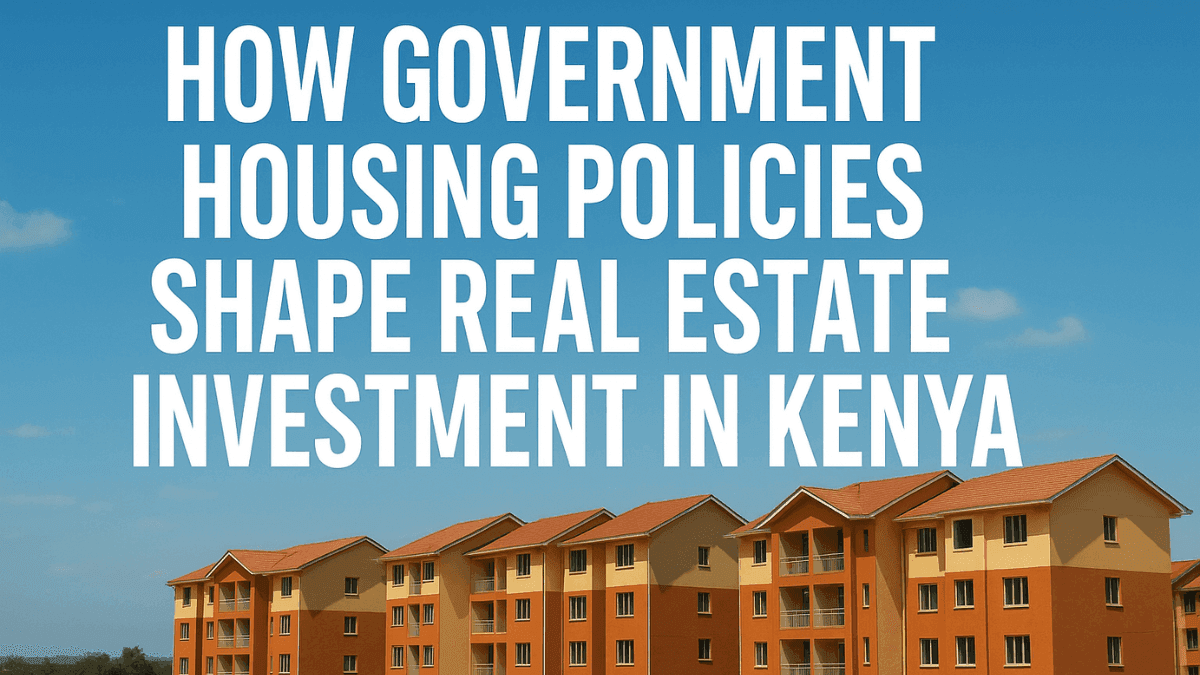
Real estate investors in Kenya closely watch national housing initiatives because government housing policies are increasingly shaping real estate investment in Kenya. These policies influence investor confidence, construction costs, housing demand, and even the types of developments that succeed. As the government pushes for affordable housing and urban development, investors must understand how these decisions affect both short-term opportunities and long-term market trends.
Understanding the Role of Government Housing Policies
Before exploring the impact on investment flows, it helps to understand why government housing policies matter. Kenya’s housing deficit, rapid urbanisation, and infrastructure gaps mean the government plays an active role in shaping the property market. These policies guide land use, construction financing, taxation, and housing affordability, all of which influence investor returns.

Affordable Housing Programme (AHP) and Investor Opportunities
The Affordable Housing Programme has become one of Kenya’s most significant policy drivers. Its focus on reducing the national housing deficit has transformed development patterns across major cities.
How AHP Influences Real Estate Investment
The programme affects investors in several important ways. It channels public and private partnerships into large-scale developments that create a ripple effect across surrounding areas. When affordable housing is developed, nearby land values often rise as infrastructure improves. Developers also experience lower entry barriers through incentives such as reduced fees and faster approvals.
Investor Advantages Under AHP
Some of the most notable benefits include:
- Lower financing and construction costs for developers partnering on AHP projects
- Increased demand from middle- and low-income buyers
- New investment zones created through government-driven urban expansion
- Predictable housing demand due to Kenya’s large young population
These advantages make AHP-linked investments attractive for both local and foreign investors seeking stable returns.
Tax Policies and Their Influence on Investment Returns
Taxation plays a major role in shaping investment decisions. When the government adjusts taxes related to land, rental income, or construction materials, it changes the cost of doing business.
Key Tax Policies Affecting Investors
Several tax measures directly affect real estate profitability. Changes to VAT on construction materials influence project budgets, sometimes making developments more expensive. Land taxation policies shape the carrying cost for investors holding plots for appreciation. Rental income tax structures also guide whether investors pursue residential or commercial units.
Why These Policies Matter
These tax rules determine whether an investment becomes viable or unattractive. When taxes are favourable, investors can scale projects more easily. When they increase, developers must adjust pricing, project scope, or target market to maintain profitability. Understanding these shifts helps investors make strategic decisions and avoid losses.
Infrastructure Development and Its Real Estate Impact
Housing policies often go hand in hand with infrastructure commitments. Roads, water systems, power lines, and public transport projects are usually prioritised in areas targeted for government housing initiatives.
How Infrastructure Growth Affects Investors
New infrastructure generally increases property demand and boosts land prices. When the government invests in roads like the Nairobi Expressway or expands basic utilities in emerging towns, previously ignored areas become hotspots for development. Investors can benefit by purchasing land early or launching projects before these areas mature.
Long-Term Benefits for the Real Estate Market
Improved infrastructure encourages organised urban expansion. It also attracts businesses, schools, and retail centres, which increases property values. Investors who understand these patterns can position themselves ahead of major growth waves.
Public–Private Partnerships (PPPs) and Their Influence
To expand housing supply, the government relies heavily on partnerships with private developers. These partnerships reduce project risks and offer developers incentives that improve project feasibility.
Why PPPs Matter to Investors
PPPs provide access to land, subsidies, or reduced administrative barriers. Developers also gain public sector support, which can reduce approval bottlenecks. Through PPPs, more investors can participate in large-scale projects that would otherwise be costly or complicated.
Land Policies and Urban Planning Regulations
Land ownership laws and planning regulations have long shaped real estate growth in Kenya. Zoning rules, property registration processes, and land titling reforms directly affect investor confidence.
How These Regulations Shape Investment
Clear land titles provide developers with security, enabling them to invest in large projects with minimal legal risk. Urban planning rules determine the types of buildings allowed in certain zones, such as high-rise apartments, mixed-use buildings, or low-density estates. These policies guide investors on where to channel funds for optimal returns.
Housing Finance Policies and Mortgage Accessibility
The government has been pushing for greater mortgage access through institutions such as the Kenya Mortgage Refinance Company (KMRC). These efforts aim to strengthen homeownership and stimulate housing demand.
Impact on Investors
More accessible mortgages allow more Kenyans to purchase homes rather than rent. This increases demand for residential developments, encouraging more construction projects. Investors who specialise in residential housing benefit as mortgage uptake expands.
Challenges Facing Investors Due to Housing Policies
Despite the benefits, certain government policies can create challenges. Some policies increase compliance costs or extend approval timelines. Others can limit the types of developments allowed in specific zones.
Common Challenges
- Frequent regulatory changes that disrupt long-term planning
- High compliance costs for licenses and approvals
- Delays in infrastructure rollouts that affect project timelines
- Restrictions on land use in urban or conservation areas
Investors need to adapt to these challenges by conducting thorough due diligence and partnering with professionals who understand regulatory requirements.
The Future of Real Estate Investment in Kenya Under Evolving Policies
Kenya’s real estate market will continue to evolve as government housing policies expand. The push for affordable housing, improved infrastructure, and stronger financing frameworks is expected to attract more investors. Urban centres will keep growing, and new satellite towns will emerge as infrastructure spreads outward.
Investors who stay informed about policy changes, understand their long-term effects, and adapt quickly will remain ahead of the competition. As the government continues shaping the housing landscape, opportunities will grow for those who recognise the direction of policy-driven development.
Trade on the Go. Anywhere, Anytime
If you’re ready to apply what you’ve learned, consider trading with a globally recognized forex and CFD broker like XM .
The platform offers competitive spreads, fast execution, and access to advanced trading tools, including real-time charts and flexible account types, making it suitable for both beginners and experienced traders. Open a trading account for free and start trading today and join millions of traders and investors on the global forex market.
Trading involves risk. Ensure you understand how the markets work before investing.

Vincent Nyagaka is the founder of Chweya, where he breaks down complex financial topics into simple insights. A trader since 2015, he uses his market experience to help readers better understand investing, trading, and personal finance.