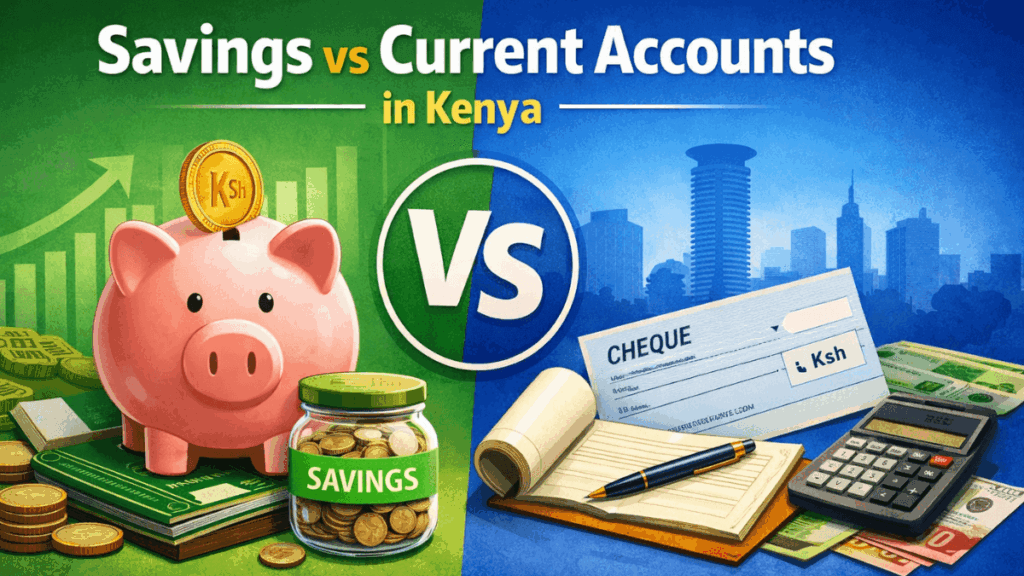
Understanding the difference between savings and current accounts in Kenya is essential when choosing the right bank account for your personal or business needs. While both accounts allow you to store money safely in a bank, they are designed for very different purposes and daily usage patterns. Making the wrong choice can lead to unnecessary fees, limited access to funds, or missed financial opportunities.
This guide explains the key differences clearly and practically, using real Kenyan banking practices so you can confidently decide which account suits you best.
Click Here To Join our Telegram Community
What Is a Savings Account in Kenya?
A savings account in Kenya is designed for individuals who want to store money securely while earning interest over time. It encourages disciplined saving by limiting frequent withdrawals and offering interest on deposited funds.
Most savings accounts are easy to open and operate, making them popular among students, salaried employees, and individuals building emergency or long-term savings.
Key Features of a Savings Account
A savings account comes with features that prioritize saving rather than daily spending. These features vary slightly by bank, but the core structure remains the same.
- Earns interest on deposited funds
- Low minimum opening balance
- Limited number of withdrawals per month
- Suitable for personal and household savings
Because of these limits, savings accounts help account holders avoid unnecessary spending while steadily growing their money.
Interest Rates on Savings Accounts in Kenya
Savings accounts in Kenya earn interest, usually calculated daily and paid monthly or quarterly. The interest rate depends on the bank, account type, and balance maintained.
While interest rates are not very high, they still provide value by helping savings grow gradually without risk. Some banks offer tiered interest, where higher balances earn better rates.
What Is a Current Account in Kenya?
A current account in Kenya is designed for frequent transactions rather than saving. It is commonly used by businesses, traders, professionals, and individuals who need regular access to their money.
Unlike savings accounts, current accounts focus on flexibility, allowing unlimited deposits and withdrawals without restrictions.
Key Features of a Current Account
Current accounts are structured for daily financial activity and cash flow management. They prioritize convenience over interest earnings.
- Unlimited withdrawals and deposits
- No interest earned in most cases
- Higher minimum balance requirements
- Access to cheque books and overdraft facilities
These features make current accounts ideal for handling business payments, supplier transactions, and regular expenses.
Transaction Flexibility in Current Accounts
One major advantage of a current account is the freedom to make transactions. Account holders can make multiple withdrawals, transfers, and payments without penalty.
This flexibility is especially useful for businesses that receive and pay money daily, as it prevents delays and limits on transactions.
Difference Between Savings and Current Accounts in Kenya
The main difference between savings and current accounts in Kenya lies in purpose, usage frequency, and cost structure. Each account type serves a specific financial need, and understanding these differences prevents costly mistakes.
Purpose and Intended Use
Savings accounts are designed to hold money and earn interest over time. They suit individuals who want financial security and controlled access to funds.
Current accounts are meant for daily transactions and cash flow management. They suit people or businesses that need constant access to money.
Interest Earnings
Savings accounts earn interest, which helps money grow gradually. The interest may be modest, but it rewards consistency and long-term saving habits.
Current accounts generally do not earn interest. The focus is on convenience and transaction speed rather than returns.
Withdrawal and Transaction Limits
Savings accounts often limit the number of free withdrawals per month. Exceeding these limits may attract charges.
Current accounts allow unlimited transactions, making them suitable for frequent payments and withdrawals without restrictions.
Fees and Charges
Savings accounts usually have low maintenance fees or none at all. This makes them affordable for individuals with modest incomes.
Current accounts tend to have higher charges, including ledger fees, cheque processing fees, and minimum balance penalties.
Who Should Open a Savings Account in Kenya?
A savings account is ideal for individuals who want to manage money responsibly and build financial stability. It suits people whose main goal is to save rather than transact frequently.
This account works well for students, employees, and anyone planning for emergencies, education, or future investments.
Everyday Use Cases for Savings Accounts
Savings accounts are practical for structured financial goals. They help separate savings from daily spending money.
Typical uses include emergency funds, school fees savings, personal goals, and short-term financial planning.
Who Should Open a Current Account in Kenya?
A current account is best for people or organizations that handle money daily. It supports smooth operations where regular transactions are unavoidable.
Business owners, freelancers, landlords, and professionals often rely on current accounts for efficiency.
Common Use Cases for Current Accounts
Current accounts are widely used for operational purposes. They simplify the handling of frequent payments and collections.
Common uses include business transactions, salary processing, rent collection, supplier payments, and cheque-based payments.
Can You Have Both Accounts in Kenya?
Many Kenyans choose to operate both a savings and a current account. This approach allows better financial control by separating savings from spending.
Using both accounts helps you earn interest on saved funds while still enjoying transaction flexibility for daily expenses or business needs.
How to Choose Between a Savings Account and a Current Account
Choosing the right account depends on how you handle money and what you need it for. A clear understanding of your financial habits makes the decision easier.
If your priority is saving and earning interest, a savings account is the better option. If your priority is frequent transactions and easy access to funds, a current account is more suitable.
Final Thoughts
The difference between savings and current accounts in Kenya goes beyond simple banking terms. It affects how you manage money, control spending, and plan for the future.
By choosing the right account or combining both, you can reduce unnecessary fees, improve financial discipline, and align your banking with your personal or business goals. Always review individual bank terms, as features and charges can vary across Kenyan banks.
 Join Our Telegram Channel

Vincent Nyagaka is the founder of Chweya, where he breaks down complex financial topics into simple insights. A trader since 2015, he uses his market experience to help readers better understand investing, trading, and personal finance.