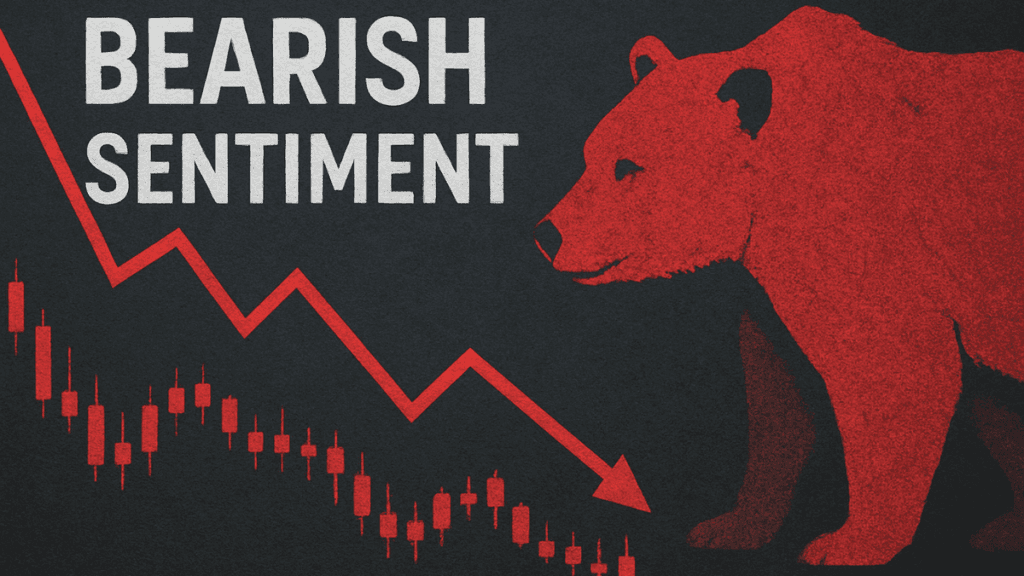
Understanding how markets move is essential for every trader and investor. Bearish sentiment often emerges when fear rises, economic data weakens, or investors anticipate lower prices ahead. It can shape trends, influence market psychology, and guide important trading decisions that define risk and opportunity.
Before exploring how it works, it is helpful to understand why sentiment matters and how it affects market behavior across different timeframes.
What Is Bearish Sentiment?
Before diving into deeper concepts, it is important to clarify what bearish sentiment means in financial markets.
Bearish sentiment refers to a negative outlook among investors. It reflects expectations that prices will fall in the near or medium term. When this feeling spreads widely, it reduces demand for risky assets and increases the preference for defensive positions.
This mood does not always come from price action alone. Sometimes it emerges from economic uncertainty, geopolitical tensions, or weak corporate earnings. In other cases, it may simply reflect a shift in confidence.
What Causes Bearish Sentiment?
To understand why markets turn negative, we must consider the factors that usually trigger fear or caution among investors.
1. Weak Economic Data
Markets often react negatively to slowing economic growth. Poor GDP numbers, high unemployment, or weak consumer spending reduce confidence that businesses will perform well.
2. Rising Interest Rates
When interest rates increase, borrowing becomes expensive. This reduces business expansion and consumer spending. Higher rates also make bonds more attractive than stocks, contributing to bearish conditions.
3. Geopolitical Tensions
Conflicts, political instability, or global uncertainty can erode confidence quickly. Investors often retreat to safe assets when risk appears too high.
4. Negative Earnings Results
When companies report lower profits or give weaker guidance, investors may expect further declines. This can trigger a broader shift in sentiment across sectors.
5. Market Bubbles and Overvaluation
When asset prices rise too far beyond fundamentals, traders anticipate a correction. This expectation alone can generate bearish sentiment.
How Bearish Sentiment Appears in the Market
Before analyzing how traders react, it is important to recognize the signs of a negative mood shift.
1. Falling Prices Across Multiple Assets
A broad downturn shows that investors are reducing exposure. This usually confirms that the bearish view is not confined to a single sector.
2. Increased Trading Volume During Sell-Offs
Large sell orders and heavy volume often signal strong conviction behind the negative outlook.
3. Safe-Haven Buying
Investors move toward gold, government bonds, or stable currencies when confidence weakens.
4. Bearish Indicators and Chart Patterns
Technical analysts see bearish sentiment through patterns such as:
- Head and shoulders
- Lower highs and lower lows
- Bearish divergence in RSI or MACD
These tools help traders identify when momentum is fading.
How Traders Interpret Bearish Sentiment
Before applying strategies, traders must first understand how sentiment affects decision-making.
Short-Term Traders
Short-term traders often look for momentum-based opportunities. They may follow the trend downward or wait for short-lived pullbacks to enter at better prices.
Swing Traders
Swing traders analyze whether the bearish move is a correction or the start of a longer trend. They rely on market structure and sentiment signals to avoid entering too early.
Long-Term Investors
Investors with long horizons see bearish sentiment differently. They often treat downturns as opportunities to buy quality assets at lower prices. However, they do so with caution and research to avoid catching falling markets.
Benefits and Risks of Trading in Bearish Sentiment
Before applying strategies, it is useful to consider the advantages and challenges of trading during negative conditions.
Benefits
- Lower entry prices for long-term investors
- Opportunities for short selling
- Clearer trends during strong down moves
Risks
- Higher volatility
- Unexpected reversals
- Emotional decision-making driven by fear
Understanding these points helps traders stay balanced and avoid impulsive choices.
Strategies for Trading During Bearish Sentiment
Before selecting an approach, traders must consider risk tolerance, time horizon, and market knowledge.
1. Short Selling
Short selling allows traders to profit from falling prices. It requires discipline and strong risk management because losses can grow quickly if the market reverses.
2. Using Put Options
Put options give traders the right to sell an asset at a specific price. This provides protection and leverage without the high risk of short selling.
3. Trend-Following Strategies
Many traders follow the direction of the trend using moving averages or momentum indicators. When bearish sentiment is strong, the trend often remains consistent for longer periods.
4. Defensive Investing
Long-term investors may shift into:
- Bonds
- Dividend-paying stocks
- Stable sectors like utilities or healthcare
These positions help protect portfolios during downturns.
How to Manage Risk During Bearish Conditions
Before implementing any strategy, traders should prepare a robust risk plan.
1. Use Stop-Loss Orders
Stop losses prevent large losses during fast declines. They create structure and prevent emotional decisions when markets move quickly.
2. Avoid Overtrading
Bearish markets may create anxiety and urgency. Keeping a disciplined approach helps protect capital.
3. Diversify Positions
Spreading investments reduces exposure to a single failing asset or sector.
4. Stay Updated
Market conditions change quickly during negative sentiment. Reliable news and analysis help traders adjust early.
Bearish Sentiment vs. Bear Market
Before concluding, it is important to distinguish between these two terms, as they are often confused.
Bearish sentiment is the mood or expectation of falling prices. A bear market is a confirmed decline of 20% or more across a major index.
Sentiment can shift within days, while bear markets are longer and usually reflect structural economic issues.
Final Thoughts
Bearish sentiment is a natural part of the market cycle. It reflects caution, fear, and expectations of falling prices. Understanding why it happens and how it appears helps traders make more informed decisions. With proper analysis, strong discipline, and balanced strategies, bearish conditions can provide opportunities rather than just risks.
If you stay aware of market signals and follow a reliable plan, you can manage downturns effectively and position yourself for the next recovery.
 Join Our Telegram Channel