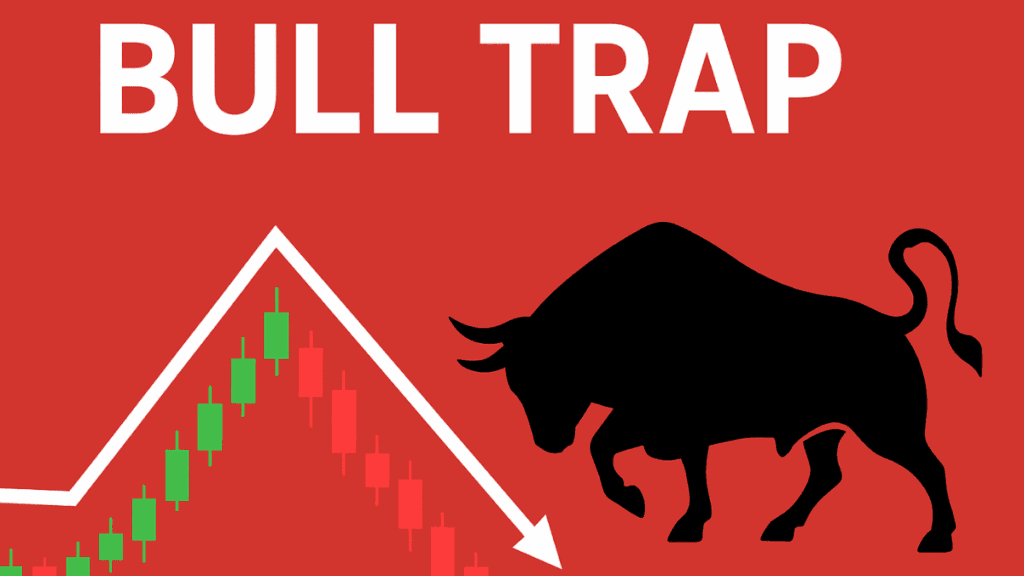
A bull trap is one of the most painful experiences a trader can face, especially for those who buy into a market believing a strong upward move has begun. At first, everything looks bullish: prices break resistance, momentum appears strong, and confidence grows. Then suddenly, the market reverses sharply, trapping buyers in losing positions.
Understanding the bull trap is essential for anyone involved in trading stocks, forex, crypto, or commodities. This guide explains what a bull trap is, how it forms, why it happens, and how you can protect yourself from falling into one.
Click Here To Join our Telegram Community
What Is a Bull Trap?
A bull trap is a false bullish signal that occurs when the price appears to break above a key resistance level, only to quickly reverse downward. Traders who enter long positions expecting continuation are “trapped” as the market moves against them.
This pattern is common in all financial markets. It often appears during periods of uncertainty when buyers are eager for a trend reversal, but the underlying market strength is weak.
Before exploring examples, it helps to understand why bull traps are so convincing in real time.
Why Bull Traps Are So Effective
Bull traps work because they exploit trader psychology. Markets do not move based only on charts; they move on expectations, emotions, and positioning.
Several factors make bull traps convincing:
- Traders fear missing out on a new uptrend
- Breakouts are widely taught as buy signals
- Short sellers are forced to cover, pushing the price higher briefly
Once buying pressure fades, large sellers or institutions step in, and the price reverses sharply.
How a Bull Trap Forms in the Market
Bull traps do not appear randomly. They usually follow a clear structure that repeats across timeframes.
Strong Resistance Level
Before a bull trap forms, the price often struggles at a well-known resistance level. This level may come from previous highs, trendlines, or psychological round numbers.
Traders watch these levels closely, which makes breakouts more emotional and crowded.
False Breakout Above Resistance
Price briefly moves above resistance, often with increased volume or strong candles. This breakout attracts breakout traders and retail buyers who believe a new trend has started.
At this stage, sentiment turns optimistic very quickly.
Sudden Reversal and Breakdown
Instead of continuing higher, the price stalls and then drops back below the broken resistance. Once this happens, buyers realize the breakout failed, and panic selling begins.
The former resistance now acts as resistance again, accelerating the drop.
Bull Trap vs Bear Trap
Understanding the difference between traps helps traders stay neutral and objective.
A bull trap tricks buyers into going long before the price falls.
A bear trap tricks sellers into going short before the price rises.
Both traps rely on false breakouts and emotional reactions. The key difference is the direction of the deception.
Common Bull Trap Scenarios
Bull traps appear in many market conditions, but some environments make them more frequent.
Bull Traps in Downtrends
In a strong downtrend, short-term rallies often fail. These relief rallies break minor resistance levels, giving false hope before the main trend resumes downward.
This is one of the most common locations for bull traps.
Bull Traps During Low Liquidity
During low-volume periods, the price can be pushed above resistance easily. Without strong participation, breakouts lack follow-through and often reverse quickly.
This is common in crypto markets and during off-peak trading hours.
Bull Traps Around News Events
Markets sometimes spike higher on headlines, economic releases, or rumors. If the news fails to change the broader outlook, price can reverse aggressively once excitement fades.
Key Signs That a Bull Trap May Be Forming
No signal is perfect, but certain warning signs increase the risk of a bull trap.
- Weak volume on the breakout
- Breakout candle followed by hesitation or long wicks
- Price is failing to hold above the resistance
- Momentum indicators are showing divergence
When several of these appear together, caution is necessary.
How to Avoid Falling Into a Bull Trap
Avoiding bull traps is not about avoiding breakouts entirely. It is about waiting for confirmation and managing risk wisely.
Wait for a Retest
Instead of buying the first breakout, wait for the price to retest the broken resistance. A genuine breakout often holds above the level and continues higher.
False breakouts usually fail this test.
Use Multiple Timeframes
A breakout that looks strong on a lower timeframe may be weak on a higher one. Always check the broader trend before entering a trade.
Bull traps are more likely when higher timeframes remain bearish.
Combine Price Action With Indicators
Indicators like RSI, MACD, or moving averages can help confirm strength. If price breaks out but momentum does not support it, the risk of a bull trap increases.
Indicators should support the move, not contradict it.
Always Use a Stop Loss
Even experienced traders fall into bull traps. A stop loss limits damage and keeps one mistake from becoming a large loss.
Risk management matters more than being right.
Real-World Example of a Bull Trap
Imagine a stock trading below a major resistance level for months. One day, price breaks above the level, social media turns bullish, and traders rush in. Within hours or days, the price drops back below resistance and continues lower.
Those who bought the breakout are now stuck, while patient traders wait for clearer confirmation or trade the reversal.
This pattern repeats daily across global markets.
Why Professional Traders Respect Bull Traps
Experienced traders do not chase breakouts blindly. They understand that markets often test emotions before revealing direction.
Bull traps teach discipline, patience, and respect for confirmation. Over time, recognizing these traps becomes a competitive advantage rather than a setback.
Final Thoughts
A bull trap is not just a chart pattern; it is a lesson in market psychology. It reminds traders that not every breakout leads to profit and that patience often pays more than speed.
By understanding how bull traps form, recognizing warning signs, and applying proper risk management, traders can avoid costly mistakes and trade with greater confidence.
In trading, survival comes before profit. Avoiding bull traps is one of the smartest ways to stay in the game long enough to succeed.
 Join Our Telegram Channel