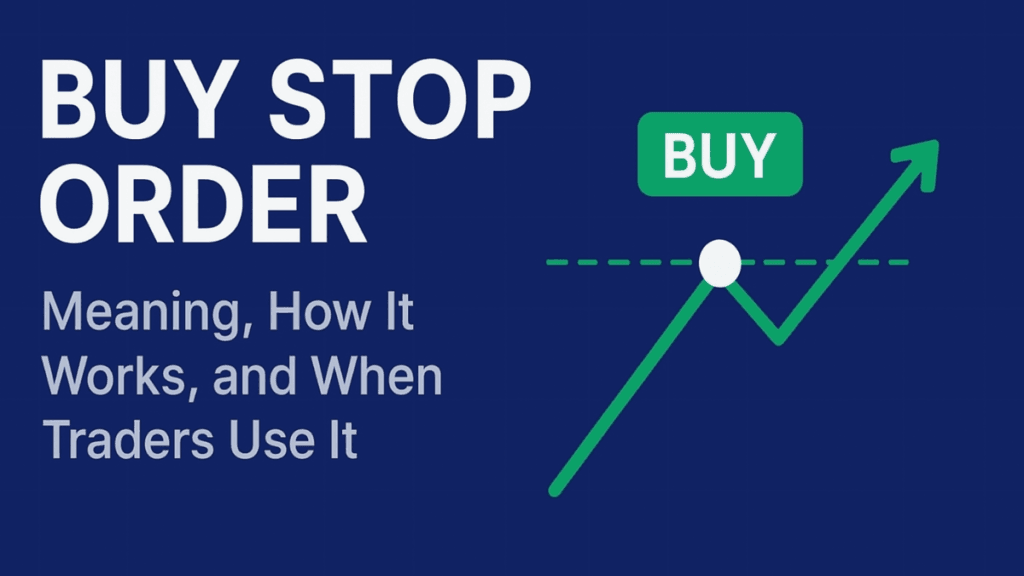
Understanding how a buy stop order works is important for anyone trading in fast-moving markets. This type of order helps traders enter positions only when the market shows strength, making it a useful tool for breakout traders and risk-conscious investors.
What Is a Buy Stop Order?
Before we dive deeper into its uses, it’s good to understand that a buy stop order is an instruction to buy an asset only after its price rises to a specific level, known as the stop price. This type of order is designed to catch upward momentum. It allows traders to wait for confirmation that a market is moving in the desired direction before entering a trade.
A buy stop order is different from a market order or limit order because it becomes active only when the price reaches the stop level. Once triggered, it converts into a market order and executes at the best available price.
How a Buy Stop Order Works
To follow how a buy stop order behaves, imagine setting a stop price above the current market price. The market must rise to that exact level for the order to activate. This mechanism gives traders more control, especially in volatile conditions, because it prevents premature entries.
Once activated, the order typically fills quickly since it becomes a market order. However, traders should understand that the final execution price may differ slightly from the stop price in fast markets due to slippage.
Why Traders Use Buy Stop Orders
Using a buy stop order is not only about entering at a higher price. Traders rely on this order type for strategy, discipline, and risk management. It offers a way to avoid emotional decisions by automating entries based on price action rather than guesswork.
Many professional traders see a rising price as a sign of strength. They prefer entering trades only after momentum is confirmed and resistance levels are cleared.
Common Reasons Traders Choose Buy Stop Orders
- To enter trades during breakouts above resistance
- To avoid buying too early in an uncertain trend
- To automate entries in momentum-based strategies
- To reduce emotional or impulsive trading
- To confirm bullish strength before committing capital
These advantages make the buy stop order a helpful tool when used properly, especially in fast-moving markets where manual entries may be too slow.
Example of a Buy Stop Order
Imagine a stock trading at $90. You believe that if the price breaks above $95, it could continue rising. Instead of buying at $90, you place a buy stop order at $95. If the price hits $95, your order becomes active and executes at the next available price.
This approach keeps you out of the trade unless the price shows real strength. It also helps you avoid entering before a breakout actually happens.
When to Use a Buy Stop Order
Knowing when to use a buy stop order is just as important as knowing how it works. Traders often use it in situations where they expect a strong upward continuation or want to avoid false breakouts. It is also common in automated and algorithmic strategies that rely on clear price triggers.
Ideal Situations for Buy Stop Orders
- Breakout trading: When the price approaches a strong resistance level
- Trend continuation: When traders expect the trend to resume after a pullback
- News trading: When high-impact events may trigger big upward moves
- Technical confirmation: When indicators suggest momentum will build above a certain price
Using the order correctly helps traders maintain discipline and follow structured rules instead of reacting emotionally to market noise.
Buy Stop Order vs. Buy Limit Order
New traders often confuse buy stop orders with buy limit orders, but these two serve different purposes. A buy limit order is used to buy lower, while a buy stop order is used to buy higher.
A buy limit order sets a target below the current market price, meaning you want a discount. A buy stop order sets a target above the market price, meaning you want confirmation of strength.
Key Differences
- Buy Stop Order: Executes above the market price
- Buy Limit Order: Executes below the market price
- Stop Order Uses: Momentum and breakout entries
- Limit Order Uses: Buying dips and retracements
Understanding this difference helps you choose the right tool for your trading style.
Advantages of Using Buy Stop Orders
A buy stop order offers traders several important benefits, especially when dealing with unpredictable price movements. It helps automate trading decisions and ensures entries happen only under specific conditions.
Main Benefits
- Helps enter trades during confirmed upward momentum
- Reduces emotional decision-making
- Protects traders from entering trades prematurely
- Useful for breakout and trend-following strategies
- Allows automated execution without constantly monitoring the market
These advantages make the buy stop order valuable for both new and experienced traders.
Risks and Limitations of Buy Stop Orders
While a buy stop order is useful, traders should also understand its risks. When the market is highly volatile, slippage may occur, causing execution at a less favorable price. This is not a flaw in the system but a natural behavior of market orders during rapid price movements.
Another limitation is the risk of false breakouts, where the price briefly touches the stop level and then reverses. Traders often combine buy stop orders with technical analysis to reduce such risks.
Best Practices for Using Buy Stop Orders
With the right approach, buy stop orders can improve your trading strategy. The goal is to set smart stop levels and combine them with other market signals to reduce unnecessary losses.
Practical Tips
- Place stop levels above meaningful resistance zones
- Combine stop orders with trend analysis or chart patterns
- Avoid setting stops too close during high volatility
- Consider adding protective stop-loss orders after entry
- Review past price behavior to choose better trigger points
Following these practices helps traders use buy stop orders safely and effectively.
Conclusion
A buy stop order is a powerful trading tool that helps traders enter markets only when prices show clear upward momentum. By waiting for confirmation, it supports disciplined trading and helps reduce premature entries. While it has risks like slippage and false breakouts, proper planning and technical analysis can make it highly effective.
Whether you trade stocks, forex, crypto, or commodities, understanding how to use buy stop orders can improve your strategy and help you make more informed decisions in any market.
 Join Our Telegram Channel