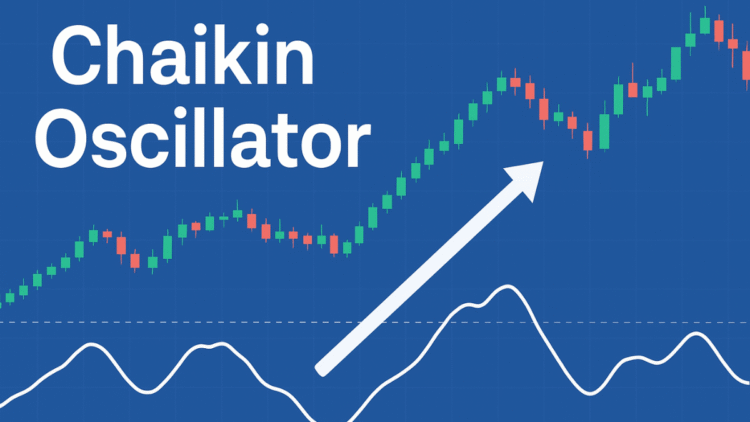
The Chaikin Oscillator is a powerful volume-based indicator that helps traders understand whether money is flowing into or out of a market. Unlike many indicators that focus only on price, the Chaikin Oscillator combines price movement and trading volume, giving traders deeper insight into market strength and momentum.
In this guide, you will learn what the Chaikin Oscillator is, how it works, how to use it correctly, and how to avoid common mistakes. The explanations are clear and practical, making this article useful for both beginners and experienced traders.
Click here to connect with us on Telegram
What Is the Chaikin Oscillator?
To understand the Chaikin Oscillator, it helps to know why volume matters in trading. Price can move without real strength, but volume shows whether large traders are actively participating.
The Chaikin Oscillator measures the momentum of the Accumulation/Distribution Line (ADL). It shows whether buying pressure (accumulation) or selling pressure (distribution) is increasing or decreasing over time.
This indicator was developed by Marc Chaikin, a well-known market analyst who believed that volume often moves before price.
How the Chaikin Oscillator Works
Before using the Chaikin Oscillator in real trading, it is important to understand how it is calculated and what it represents.
The Core Concept Behind the Indicator
The Chaikin Oscillator is calculated by subtracting a longer-term exponential moving average (EMA) of the Accumulation/Distribution Line from a shorter-term EMA of the same line.
In simple terms:
- It tracks money flow momentum
- It compares short-term pressure vs long-term pressure
- It helps identify potential trend changes early
Because of this structure, the indicator reacts faster than many traditional volume indicators.
Reading the Chaikin Oscillator Correctly
Once the indicator is applied to a chart, traders must know how to interpret its signals properly.
Positive and Negative Values Explained
The Chaikin Oscillator moves above and below a zero line:
- When it is above zero, buying pressure is stronger than selling pressure
- When it is below zero, selling pressure is dominating
However, the direction and change of the indicator are often more important than the exact value.
Rising and Falling Momentum
A rising Chaikin Oscillator suggests that accumulation is increasing. A falling oscillator shows growing distribution, even if the price has not yet reacted.
This makes the indicator useful for spotting early momentum shifts before major price moves occur.
How Traders Use the Chaikin Oscillator
The Chaikin Oscillator is flexible and can be used in different trading strategies. Understanding its main applications helps traders use it with confidence.
Identifying Trend Strength
When the oscillator stays above zero during an uptrend, it confirms that the trend is supported by strong buying volume. The same logic applies to downtrends when the oscillator stays below zero.
This confirmation helps traders avoid false breakouts that lack volume support.
Spotting Potential Reversals
One of the most valuable uses of the Chaikin Oscillator is spotting potential reversals early. If the price continues to rise while the oscillator starts to fall, it may signal weakening buying pressure.
These situations often appear before market tops or bottoms form.
Bullish and Bearish Divergence Signals
Divergence occurs when the price and the indicator move in opposite directions. This is one of the most powerful signals provided by the Chaikin Oscillator.
Bullish Divergence
Bullish divergence forms when:
- Price makes lower lows
- The Chaikin Oscillator makes higher lows
This suggests selling pressure is decreasing, and a possible upward reversal may follow.
Bearish Divergence
Bearish divergence appears when:
- Price makes higher highs
- The Chaikin Oscillator makes lower highs
This signals weakening buying pressure and a potential downward move.
Divergence works best when combined with support, resistance, or trend analysis.
Best Timeframes for the Chaikin Oscillator
Choosing the right timeframe is essential for accurate signals.
The Chaikin Oscillator works well on:
- Daily charts for swing trading
- 4-hour charts for short-term trend analysis
- Weekly charts for long-term market direction
Lower timeframes can produce more signals, but they also increase noise and false readings.
Combining the Chaikin Oscillator with Other Indicators
While the Chaikin Oscillator is powerful, it should not be used alone. Combining it with other tools improves accuracy and reduces risk.
Effective Indicator Combinations
The Chaikin Oscillator works well with:
- Moving averages for trend direction
- RSI for overbought and oversold conditions
- Support and resistance levels for confirmation
Using volume-based and price-based tools together creates a balanced trading approach.
Common Mistakes Traders Make
Even strong indicators can lead to losses if used incorrectly.
One common mistake is using the Chaikin Oscillator as a standalone buy or sell signal. Another is ignoring the overall market trend and focusing only on oscillator movements.
Successful traders always confirm signals with price action and market structure.
Advantages and Limitations of the Chaikin Oscillator
Understanding both strengths and weaknesses builds realistic expectations.
Key Advantages
- Incorporates volume and price together
- Detects momentum changes early
- Useful for divergence analysis
Key Limitations
- Can give false signals in low-volume markets
- Works best in trending conditions
- Requires confirmation from other tools
Knowing these limitations helps traders avoid overconfidence.
Is the Chaikin Oscillator Suitable for Beginners?
Yes, the Chaikin Oscillator is beginner-friendly when explained properly. Its zero-line structure and clear momentum signals make it easier to understand than many complex indicators.
However, beginners should practice using it on demo accounts before applying it to live trading.
Final Thoughts
The Chaikin Oscillator is a valuable tool for traders who want to understand what volume is really saying about the market. By focusing on accumulation and distribution, it reveals hidden strength or weakness behind price movements.
When used with proper confirmation and sound risk management, the Chaikin Oscillator can significantly improve trading decisions and market timing.
 Join Our Telegram Channel