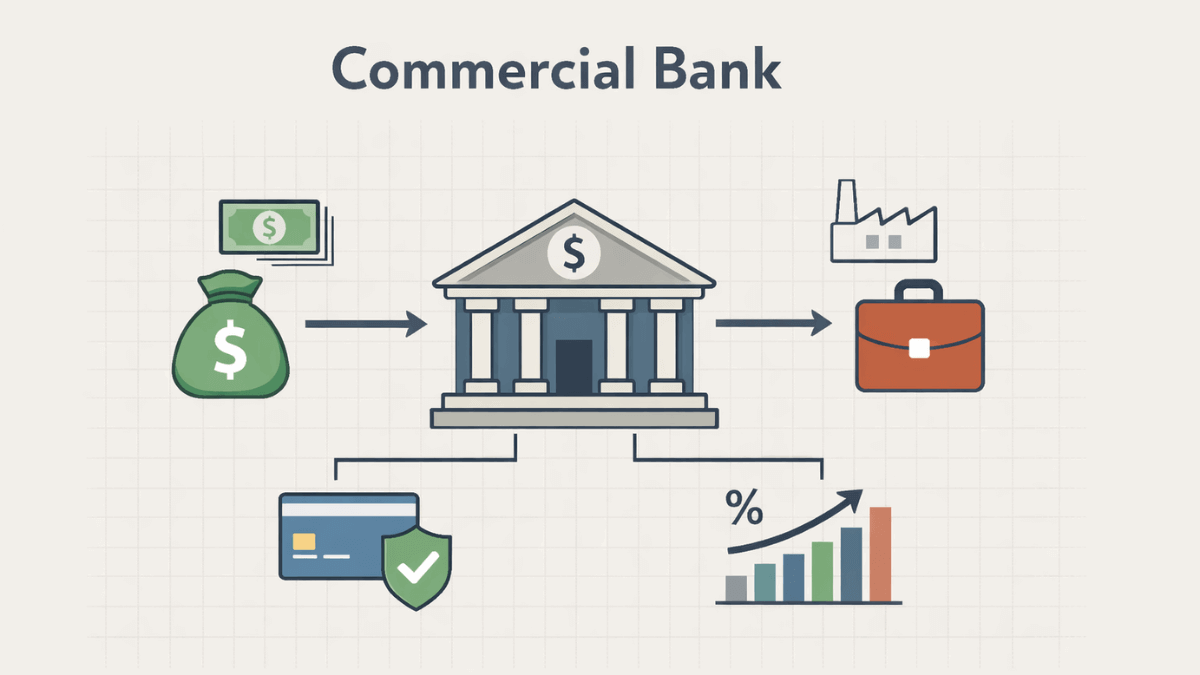
A Commercial Bank is a financial institution that accepts deposits from the public and provides loans and other financial services to individuals, businesses, and organizations. In practical terms, it is the type of bank most people interact with daily for savings, payments, and borrowing.
Commercial banks operate with the primary goal of supporting economic activity while earning profit through interest and service fees.
Click Here To Join our Telegram Community
In the first interaction with a bank account, many customers are already using a commercial bank without realizing the formal definition. These banks act as intermediaries, channeling funds from savers to borrowers in a regulated, structured manner. This role places commercial banks at the center of modern financial systems.
The Core Functions of a Commercial Bank
The main functions of a commercial bank revolve around safeguarding money, enabling transactions, and providing credit. These functions are designed to efficiently serve both personal and business financial needs.
Commercial banks help maintain trust in the financial system by ensuring that deposits are accessible, payments are processed smoothly, and credit is extended responsibly. Their activities are closely regulated to protect customers and the wider economy.
Accepting Deposits
Accepting deposits is the foundation of commercial banking operations. Customers place their money in accounts with the expectation that it will be safe and available when needed.
These deposits may be held in different account types depending on how often the customer wants to access the funds and whether they expect to earn interest. By pooling deposits, banks create a stable source of funds for lending.
Providing Loans and Credit
Lending is a key income-generating activity for a commercial bank. The bank earns interest by lending deposited money to individuals and businesses at agreed terms.
Loans support everyday needs such as education, housing, and business expansion. Careful assessment of borrowers helps banks manage risk while ensuring credit reaches productive areas of the economy.
Facilitating Payments and Transactions
Commercial banks play a vital role in processing payments. From card transactions to bank transfers, they ensure money moves securely between accounts.
This service reduces the need for cash and supports digital commerce. Reliable payment systems also improve efficiency for businesses and consumers alike.
Types of Accounts Offered by a Commercial Bank
Commercial banks provide several account options designed for different financial goals. Each account type balances accessibility, security, and returns in a specific way.
Choosing the right account depends on how often money will be used and whether the customer wants to earn interest. Understanding these differences helps customers manage their finances more effectively.
Savings Accounts
Savings accounts are designed for storing money while earning interest. They are commonly used for emergency funds and short-term goals.
These accounts usually have withdrawal limits, which encourage saving while still allowing access when needed. Interest rates may vary depending on market conditions and bank policy.
Current or Checking Accounts
Current accounts are intended for frequent transactions. Individuals and businesses widely use them for daily payments and receipts.
These accounts often come with debit cards, online banking, and payment services. While they may earn little or no interest, they offer high convenience and flexibility.
Fixed Deposit Accounts
Fixed deposit accounts require customers to lock in their money for a specified period. In return, the bank offers a higher interest rate.
These accounts suit customers with surplus funds who do not need immediate access. Early withdrawal may attract penalties, so planning is essential.
Services Beyond Basic Banking
A modern commercial bank offers more than deposits and loans. Additional services help customers manage, grow, and protect their finances.
These services increase convenience and create long-term relationships between banks and customers. They also diversify the bank’s income sources.
Digital and Online Banking
Digital banking allows customers to access their accounts through mobile apps and web platforms. This service enables balance checks, transfers, and bill payments without visiting a branch.
Online banking improves efficiency and saves time. Strong security measures, such as encryption and authentication, protect customer data and transactions.
Foreign Exchange and International Transfers
Commercial banks facilitate currency exchange and cross-border payments. These services support international trade, travel, and remittances.
By offering competitive exchange rates and secure transfer channels, banks help customers manage global financial needs with confidence.
Advisory and Support Services
Some commercial banks provide financial advice to individuals and businesses. This guidance may cover savings strategies, borrowing decisions, or cash flow management.
While not the same as independent financial advisory firms, bank-provided support can still help customers make informed choices.
How a Commercial Bank Makes Money
Understanding how a commercial bank earns revenue helps customers see why certain fees and conditions exist. Banks operate as businesses while balancing customer service and regulatory obligations.
Profitability ensures banks remain stable and capable of supporting economic growth. Transparent income sources also build trust with customers.
Interest Income
Interest income comes from the difference between interest earned on loans and interest paid on deposits. This difference is known as the interest margin.
Managing this margin carefully allows banks to remain competitive while covering operational costs and risks.
Fees and Service Charges
Commercial banks charge fees for specific services such as account maintenance, transfers, and card issuance. These charges support service delivery and infrastructure.
Clear disclosure of fees helps customers understand the cost of banking services and avoid unexpected expenses.
Regulation and Oversight of Commercial Banks
Commercial banks operate under strict regulatory frameworks to protect customers and maintain financial stability. Regulators set rules on capital requirements, lending practices, and consumer protection.
These regulations reduce the risk of bank failure and financial crises. They also promote transparency and accountability within the banking sector.
Capital and Liquidity Requirements
Banks are required to hold sufficient capital and liquid assets. This requirement ensures they can absorb losses and meet withdrawal demands.
Strong capital positions increase confidence among depositors and investors. Liquidity rules also prevent excessive risk-taking.
Consumer Protection Rules
Consumer protection regulations safeguard customer rights. They address issues such as fair lending, data privacy, and clear communication.
These rules help ensure customers are treated fairly and have access to complaint resolution mechanisms.
Benefits of Using a Commercial Bank
Using a commercial bank offers several advantages that support financial security and growth. These benefits apply to both individuals and businesses.
By centralizing financial activities, banks simplify money management and reduce risk. Trust and reliability remain key reasons people choose formal banking.
Safety and Security of Funds
Depositing money in a commercial bank is safer than holding cash. Banks use secure systems and are often backed by deposit protection schemes.
This security provides peace of mind and encourages saving. It also supports broader financial inclusion.
Access to Credit and Financial Tools
Commercial banks provide access to loans, payment systems, and financial products. These tools enable customers to plan, invest, and grow.
For businesses, access to bank credit can mean the difference between stagnation and expansion.
Risks and Limitations of Commercial Banks
While commercial banks offer many benefits, they also have limitations. Understanding these risks helps customers make informed decisions.
Awareness of potential downsides encourages responsible use of banking services. It also highlights the importance of comparing options.
Fees and Charges
Banking services may involve fees that add up over time. Without careful review, customers may end up paying for services they rarely use.
Reading account terms and monitoring statements helps control costs and avoid surprises.
Credit Approval Constraints
Access to loans depends on creditworthiness and bank policies. Not all applicants qualify, and approval may take time.
This limitation can be challenging for new businesses or individuals without established financial histories.
Choosing the Right Commercial Bank
Selecting the right commercial bank requires thoughtful consideration. The best choice depends on personal or business needs, not just brand recognition.
Comparing services, fees, and support quality helps customers find a bank that aligns with their goals. A well-chosen bank becomes a long-term financial partner.
Evaluating Services and Accessibility
Customers should consider branch availability, digital tools, and customer support. Easy access improves convenience and satisfaction.
Reliable service channels also reduce stress during urgent financial situations.
Comparing Costs and Transparency
Clear fee structures and transparent terms build trust. Customers benefit from banks that communicate openly about charges and conditions.
Comparing multiple banks before opening an account can lead to better value and fewer frustrations.
The Role of Commercial Banks in the Economy
Commercial banks play a critical role in economic development. By mobilizing savings and financing investment, they support growth and stability.
Their activities influence employment, trade, and innovation. A strong banking sector often reflects a healthy economy.
Supporting Businesses and Entrepreneurs
Banks provide capital that enables businesses to start, operate, and expand. This support creates jobs and drives productivity.
Entrepreneurs rely on commercial banks for working capital and long-term financing.
Promoting Financial Inclusion
Commercial banks contribute to financial inclusion by offering accessible accounts and services. Inclusion helps individuals participate fully in the economy.
When more people use formal banking, economies become more resilient and transparent.
Conclusion
Understanding how a commercial bank works empowers individuals and businesses to make better financial decisions. Knowledge reduces uncertainty and builds confidence when managing money.
A commercial bank is more than a place to store funds. It is a key partner in daily life, long-term planning, and economic progress when wisely chosen and used.