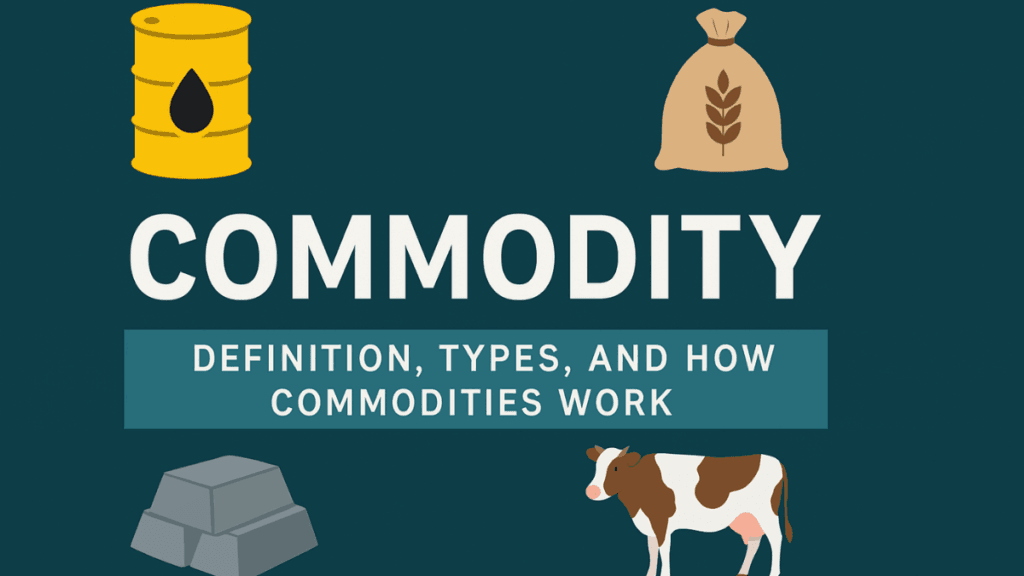
Understanding the term commodity is important for anyone learning about trading, investing, or global markets. A commodity is a basic good used in commerce, and the keyword appears naturally in this first paragraph to help you connect with the topic. Commodities are essential to everyday life because they form the building blocks of the world economy—from the oil that fuels transportation to the wheat used to bake bread.
Before exploring how commodities influence prices, markets, and economies, it helps to understand their core features and why they play such a big role in global trade.
What Is a Commodity?
To understand this glossary term clearly, we must start with its most accepted definition. A commodity is a raw material or primary agricultural product that can be bought, sold, or traded. What makes a commodity unique is that its value does not depend on who produced it. Instead, it is considered interchangeable, meaning one unit is the same as another of equal grade.
This standardization ensures fairness in trading, especially on commodity exchanges where prices move based on supply and demand.
Key Characteristics of Commodities
Before looking at specific categories, it is helpful to recognize the features that define all commodities. These shared traits make them suitable for large-scale global trading.
Standardization
Every commodity must have a uniform quality. For example, gold is traded based on purity, while crude oil is classified by grade. This allows buyers to know exactly what they are receiving.
Interchangeability
One unit of a commodity is identical to another. This is different from manufactured goods where brands matter.
Market-Driven Prices
Commodity prices change based on global factors such as supply, demand, weather, politics, and economic conditions.
Bulk Trading
Commodities are often traded in large quantities or lots to keep markets efficient and prices consistent.
Types of Commodities
Now that the key features are clear, we can explore the major categories. Each type influences industries and consumers differently, making them essential for the global economy.
1. Energy Commodities
Energy products power industries, homes, and transport systems. They are among the most actively traded assets.
Common examples include:
- Crude Oil (Brent and WTI)
- Natural Gas
- Gasoline
- Heating Oil
2. Metal Commodities
Metals are important for manufacturing, electronics, construction, and investment.
They can be grouped into:
- Precious Metals: Gold, Silver, Platinum, Palladium
- Industrial Metals: Copper, Aluminum, Nickel, Zinc
3. Agricultural Commodities
Agriculture forms the backbone of food systems. These commodities are grown, harvested, and consumed worldwide.
Examples include:
- Wheat
- Corn
- Coffee
- Sugar
- Soybeans
- Cotton
4. Livestock and Meat
These commodities come from animal farming and are critical to the global food supply.
Examples include:
- Live Cattle
- Lean Hogs
- Feeder Cattle
How Commodity Markets Work
To understand how commodities are traded, it helps to look at how prices move and where transactions happen. These markets are designed to connect producers, buyers, investors, and speculators.
Spot Markets
Spot trading involves buying or selling a commodity for immediate delivery. Prices move quickly based on real-time demand.
Futures Markets
Most commodities are traded through futures contracts. A futures contract is an agreement to buy or sell a commodity at a specific price and date in the future.
Futures help:
- Manage price risk
- Protect producers from uncertain markets
- Allow traders to speculate on price movements
Exchanges
Commodities are traded on organized exchanges with strict rules for quality and delivery. Major exchanges include:
- Chicago Mercantile Exchange (CME)
- New York Mercantile Exchange (NYMEX)
- London Metal Exchange (LME)
Why Commodities Matter
Before diving into trading, it is useful to understand the economic importance of commodities. These basic goods influence national budgets, inflation, and international relations.
Support for Global Industries
Commodities supply materials for all major industries, including manufacturing, agriculture, transport, and construction.
Inflation Indicator
Rising commodity prices often signal inflation. For example, higher oil prices increase transport and production costs.
Economic Stability
Countries that produce or import commodities rely on them to maintain stable markets and economic growth.
Portfolio Diversification
Investors use commodities to diversify their portfolios, especially during uncertain economic periods.
Commodity Trading Explained
Although trading commodities may sound complex, understanding the general process helps simplify it. Traders can participate through futures, options, ETFs, or direct physical purchase.
How People Trade Commodities
There are several common approaches:
- Buying futures contracts
- Trading commodity ETFs
- Investing in commodity stocks (like mining companies)
- Holding physical metals such as gold
Each method has different risks and strategies.
Price Movement Factors
Commodity prices react to multiple global forces. The most common include:
- Weather patterns (affect agricultural output)
- Political instability
- Production levels
- Global crises
- Economic growth or slowdown
These factors make commodities both appealing and risky.
Risks of Commodity Trading
Before trading, it is important to understand the risks involved. Markets can move very quickly, and traders must be prepared.
Key risks include:
- High volatility
- Leverage exposure in futures
- Supply disruptions
- Seasonal changes
- Speculation from large market players
Managing risk requires careful analysis and a disciplined approach.
Conclusion
Commodities are essential elements of the global economy. They include energy, metals, agricultural goods, and livestock products that supply industries and consumers worldwide. Understanding what a commodity is, how it is traded, and why it matters helps investors, students, and professionals gain a clearer view of economic systems.
Whether used for investing, production, or consumption, commodities remain some of the most influential assets in the financial world. With this glossary explanation, you now have a clear and simple understanding of the term and its role in global markets.
 Join Our Telegram Channel