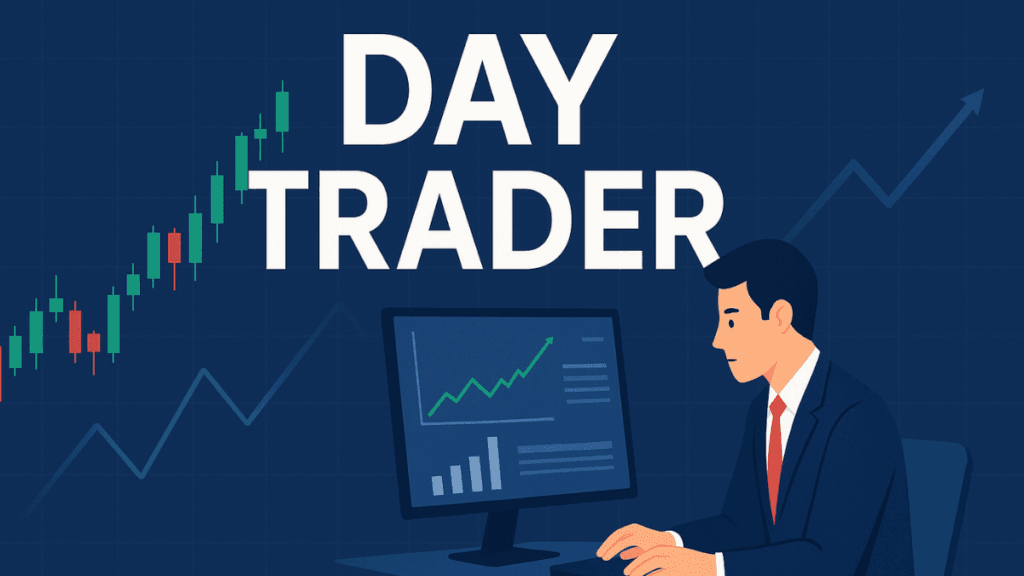
A day trader is a market participant who buys and sells financial instruments within the same trading day, aiming to profit from short-term price movements. Unlike long-term investors, a day trader does not hold positions overnight and relies on timing, discipline, and market behavior rather than long-term fundamentals. This approach requires focus, preparation, and a strong understanding of how markets function in real time.
Day trading attracts people because of its independence and potential for flexibility, but it also demands emotional control, risk awareness, and consistent decision-making. It is not a shortcut to easy income, and success often comes only after months or years of structured learning and practice.
What Is a Day Trader?
A day trader is an individual who enters and exits trades within the same trading session, usually within minutes or hours. The goal is to profit from small price fluctuations rather than long-term trends.
Day traders operate across many markets, including stocks, forex, cryptocurrencies, and futures. Their strategies depend on short-term price movements, volume changes, and market momentum rather than company fundamentals or long-term economic forecasts.
Unlike swing traders or investors, day traders end each day without open positions. This approach reduces overnight risk but increases exposure to intraday volatility.
How Day Trading Works
Day trading works by identifying short-term price movements and executing trades quickly to capture small gains that can add up over time. Each trade is planned around entry points, exit levels, and risk limits.
Traders rely heavily on real-time data, charts, and technical indicators. Decisions are often made within seconds or minutes, which makes speed, discipline, and consistency essential.
Most day traders focus on liquid markets because tight spreads and high volume allow smoother trade execution. Liquidity helps ensure that trades can be entered and exited without excessive slippage.
Markets Commonly Used by Day Traders
Day trading can be applied across several financial markets, each offering different opportunities and risks.
Stock Market
Stocks are popular among day traders due to their transparency and regulatory oversight. Traders focus on high-volume stocks, earnings releases, and news-driven volatility.
Forex Market
The foreign exchange market operates 24 hours a day and offers deep liquidity. Currency pairs often move in predictable intraday patterns, making forex attractive to technical traders.
Cryptocurrency Market
Crypto markets run continuously and are known for sharp price movements. While volatility creates opportunity, it also increases risk, especially during low-liquidity periods.
Futures Market
Futures contracts allow traders to speculate on commodities, indices, or currencies with leverage. These markets are highly regulated but require a strong understanding of margin and contract specifications.
Key Skills Every Day Trader Needs
Successful day trading depends more on skill and discipline than on luck. Several core abilities separate consistent traders from those who struggle.
Risk Management
Risk control is the foundation of long-term survival in day trading. Traders typically risk only a small percentage of their capital on each trade to avoid large losses.
Position sizing, stop-loss placement, and understanding risk-to-reward ratios are essential components of this skill.
Emotional Discipline
Emotional reactions can quickly derail a trading plan. Fear may cause early exits, while greed can lead to overtrading or ignoring risk limits.
Disciplined traders follow predefined rules and avoid making impulsive decisions based on short-term emotions.
Market Awareness
A strong day trader stays informed about market conditions, economic releases, and global events that can impact price movement. Awareness helps traders anticipate volatility and avoid unnecessary surprises.
Technical Analysis Skills
Day trading relies heavily on reading price charts, identifying trends, and recognizing patterns. Understanding indicators such as moving averages, support and resistance, and volume helps traders make informed decisions.
Common Day Trading Strategies
Day traders use structured strategies to guide their actions. Each approach suits different personalities and market conditions.
Scalping
Scalping involves making numerous small trades to capture tiny price movements. Trades often last seconds or minutes, requiring intense focus and quick execution.
This strategy works best in highly liquid markets where spreads are tight and price movements are frequent.
Momentum Trading
Momentum traders focus on assets that are moving strongly in one direction. They aim to enter during strong price movement and exit before momentum slows.
This strategy often relies on volume spikes, breakouts, and news-driven moves.
Range Trading
Range trading is based on identifying price levels where an asset repeatedly bounces between support and resistance. Traders buy near support and sell near resistance within a defined range.
This approach works best in stable markets without strong trends.
Breakout Trading
Breakout traders look for moments when the price moves beyond a defined support or resistance level. The goal is to enter early in a new trend and capture a strong directional move.
False breakouts are a common risk, making confirmation techniques important.
Tools and Technology Used by Day Traders
Modern-day trading relies heavily on technology. The right tools can improve execution speed and decision quality.
Trading Platforms
Professional platforms offer real-time charts, order execution, and customizable indicators. Speed and reliability are critical features.
Charting Tools
Advanced charting tools allow traders to analyze price action across multiple timeframes. Indicators help identify trends, momentum, and potential reversals.
Economic Calendars
Economic calendars track upcoming news releases such as interest rate decisions or employment reports. These events often cause sudden market volatility.
Risk Management Tools
Stop-loss orders, take-profit levels, and position size calculators help traders control downside risk and protect capital.
The Psychology of a Day Trader
Mental discipline is one of the most underestimated aspects of day trading. Even a solid strategy can fail if emotions are not managed properly.
Confidence must be balanced with humility. Overconfidence can lead to excessive risk-taking, while fear can prevent traders from acting on valid setups.
Successful traders develop routines that help maintain emotional balance, such as reviewing trades, taking breaks, and maintaining realistic expectations.
Common Mistakes New Day Traders Make
Many beginners struggle not because of a lack of intelligence but because of unrealistic expectations or poor habits.
Overtrading is one of the most common mistakes. Taking too many trades increases transaction costs and emotional fatigue.
Ignoring risk management is another frequent issue. A few large losses can erase weeks of progress if risk is not controlled.
Chasing losses, trading without a plan, and relying on tips or rumors often lead to inconsistent results.
Is Day Trading Profitable?
Day trading can be profitable, but it is far from guaranteed. Most traders experience losses during their early stages, and many never achieve consistent profitability.
Success depends on experience, discipline, risk control, and the ability to adapt to changing market conditions. It also requires realistic expectations and continuous learning.
Those who approach day trading as a professional skill rather than a quick income source have a higher chance of long-term success.
Legal and Regulatory Considerations
Different regions have specific rules governing day trading. Some markets impose minimum capital requirements or margin restrictions.
Traders must understand local regulations, tax obligations, and broker requirements before trading. Ignoring these factors can lead to unexpected costs or legal issues.
Day Trading vs Other Trading Styles
Day trading differs significantly from other approaches, such as swing trading or long-term investing.
Swing traders hold positions for several days or weeks, aiming to capture medium-term price moves. Long-term investors focus on fundamentals and hold assets for months or years.
Day trading offers faster feedback and more frequent opportunities but requires greater time commitment and emotional resilience.
Building a Sustainable Day Trading Routine
Consistency is more important than intensity. Successful traders often follow structured routines that include market analysis, execution, and review.
Keeping a trading journal helps identify patterns, strengths, and weaknesses over time. Reviewing past trades allows continuous improvement and accountability.
A balanced lifestyle, including adequate rest and stress management, also plays a role in long-term performance.
Final Thoughts
Becoming a successful day trader requires more than market knowledge. It demands discipline, patience, emotional control, and a commitment to continuous learning.
While the potential rewards can be attractive, the risks are real and should never be underestimated. Those who approach day trading with realistic expectations, proper education, and a structured plan stand the best chance of long-term success.
Day trading is not a shortcut to wealth, but for disciplined individuals willing to put in the work, it can become a skilled and structured way to participate in financial markets.
 Join Our Telegram Channel