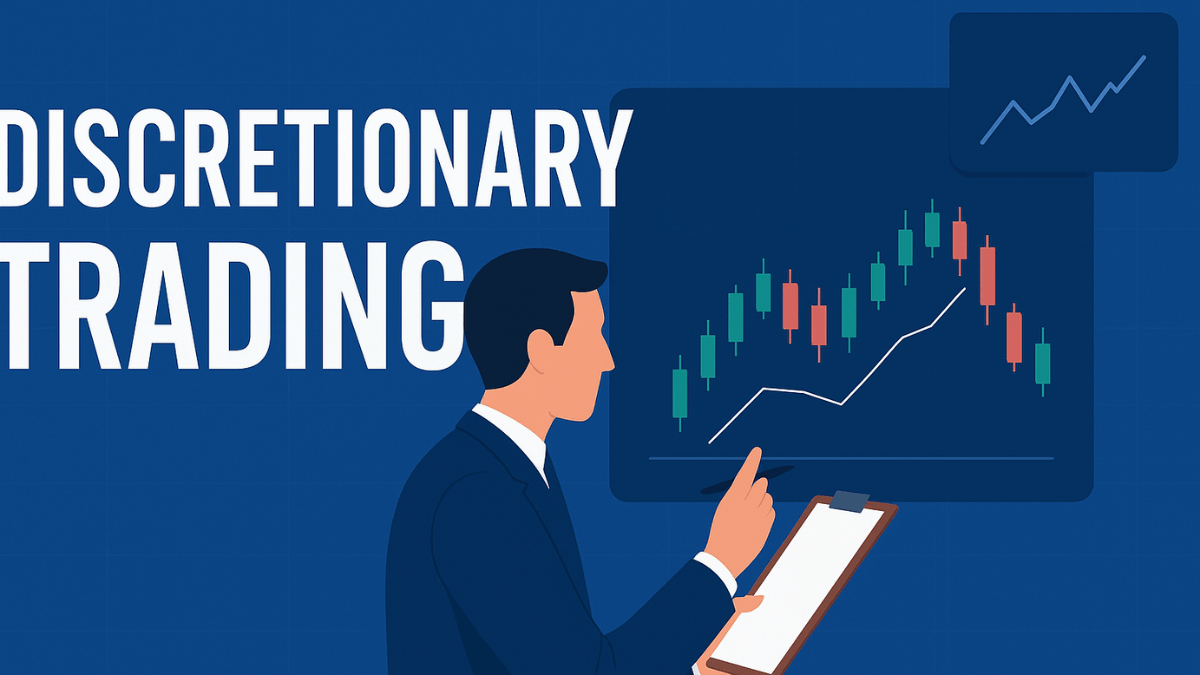
Discretionary trading is a trading style where decisions depend on a trader’s judgment instead of strict mechanical rules. This approach blends experience, market reading, and flexibility to create trading opportunities that automated strategies may miss. Many successful traders use discretionary methods because markets often need human interpretation, not just formulas.
What Is Discretionary Trading?
Discretionary trading refers to making trading decisions based on human judgment.
Instead of following a fixed set of rules, the trader decides:
- When to enter
- When to exit
- How much risk to take
- Whether market conditions look favorable or not
This trading style gives full control to the trader. It suits people who understand price action, market psychology, and fundamentals. However, it also requires discipline and emotional control.
How Discretionary Trading Works
Discretionary traders study the market in real time and evaluate conditions before acting. They analyze charts, news, and market behavior, then decide the best action for the moment.
A typical process may include:
- Checking market structure and trend direction
- Reviewing major support and resistance levels
- Considering economic data or news
- Watching price action signals (e.g., breakouts, reversals, candlestick patterns)
- Taking trades only when conditions match their judgment
Unlike automated trading, no two discretionary trades are exactly the same.
Discretionary Trading vs. Systematic Trading
1. Decision-making
- Discretionary: Made by the trader based on experience.
- Systematic: Made by predefined rules or algorithms.
2. Flexibility
- Discretionary: Highly flexible; adapts to fast-changing markets.
- Systematic: Limited; follows the system even when market behavior shifts.
3. Psychology
- Discretionary: Requires strong emotional control.
- Systematic: Reduces emotional involvement.
4. Consistency
- Discretionary: Can vary depending on the trader’s mindset and market reading.
- Systematic: More consistent but may miss contextual signals.
Key Advantages of Discretionary Trading
1. Flexibility
Markets are dynamic, and discretionary traders can adjust quickly to unexpected events.
2. Better Market Interpretation
Human judgment helps identify subtle patterns, sentiment shifts, or irregular behavior that algorithms might ignore.
3. Ability to Avoid Bad Signals
Automated systems may trigger trades during volatile conditions. A discretionary trader can avoid risky setups.
4. Works Well With Price Action
If you rely on candlestick patterns, chart reading, and momentum, discretionary trading fits naturally.
Disadvantages and Risks
1. Emotional Decisions
Fear, greed, or overconfidence can lead to losses if not controlled.
2. Inconsistent Performance
Results may vary day to day depending on the trader’s mental state or level of focus.
3. Hard to Backtest
Unlike systematic trading, discretionary setups are difficult to backtest because they depend on judgment, not fixed rules.
4. Requires Experience
New traders may struggle because they lack the skills to read the market effectively.
Who Should Use Discretionary Trading?
This approach is ideal for traders who:
- Prefer manual chart analysis
- Enjoy studying price action
- Want flexibility, not rigid rules
- Can manage emotions under pressure
- Have time to watch markets actively
It may not fit traders who want automation, simplicity, or passive strategies.
Essential Skills for Successful Discretionary Traders
1. Market Knowledge
Understanding trends, chart patterns, support/resistance, and indicators is critical.
2. Risk Management
A good discretionary trader never risks too much on a single trade.
3. Patience and Discipline
Waiting for the right setup is essential. Discretion does not mean trading impulsively.
4. Emotional Control
Good decisions come from a calm mind, not fear or excitement.
5. Flexibility
Markets change quickly. A successful trader adapts without breaking their plan.
Popular Discretionary Trading Strategies
1. Price Action Trading
Using candlesticks, market structure, breakouts, and reversals to make decisions.
2. Trend Following
Entering trades in the direction of the overall trend based on visual judgment.
3. Support and Resistance Trading
Buying near support and selling near resistance based on market behavior.
4. News and Fundamental Trading
Making decisions around earnings, economic releases, and geopolitical events.
5. Swing and Day Trading
Discretionary traders commonly apply judgment-based decisions in short to medium timeframes.
How to Build a Discretionary Trading Framework
Even though discretionary trading is flexible, having a personal framework is helpful.
1. Define Your Market
Choose forex, crypto, stocks, or indices.
2. Choose Timeframes
Many discretionary traders prefer:
- 4H for swing trading
- 1H or 15M for day trading
3. Establish Entry Criteria
For example:
- Trend direction
- Key levels
- Candlestick confirmations
- Momentum indicators
4. Set Risk Rules
Examples:
- Never risk more than 1–2% per trade
- Stop-loss must be placed before entering
- Use fixed R:R ratio (e.g., 1:2 or 1:3)
5. Keep a Trading Journal
Documenting trades helps remove emotional bias and improve consistency.
Is Discretionary Trading Better Than Systematic Trading?
There is no universal answer. It depends on the trader.
Discretionary trading is better if you enjoy:
- Manual analysis
- Decision-making
- Reading charts in real time
Systematic trading is better if you prefer:
- Automation
- Strict rules
- Reduced emotional involvement
Many professionals even combine both approaches.
Common Mistakes Discretionary Traders Should Avoid
- Trading without a risk plan
- Taking impulsive entries
- Overtrading during emotional moments
- Ignoring major news events
- Trading too many markets at once
- Changing strategy too frequently
Avoiding these mistakes can dramatically improve performance.
Final Thoughts
Discretionary trading is a powerful approach for traders who want full control over their decisions and trust their ability to read the market. It requires experience, discipline, and patience, but it can produce strong results when done correctly. By combining a solid understanding of price action, risk management, and emotional control, traders can use discretion to navigate both stable and volatile market conditions.
Whether you are a beginner or a professional, discretionary trading offers a flexible and rewarding way to trade—especially if you value human judgment over rigid rules.
 Join Our Telegram Channel