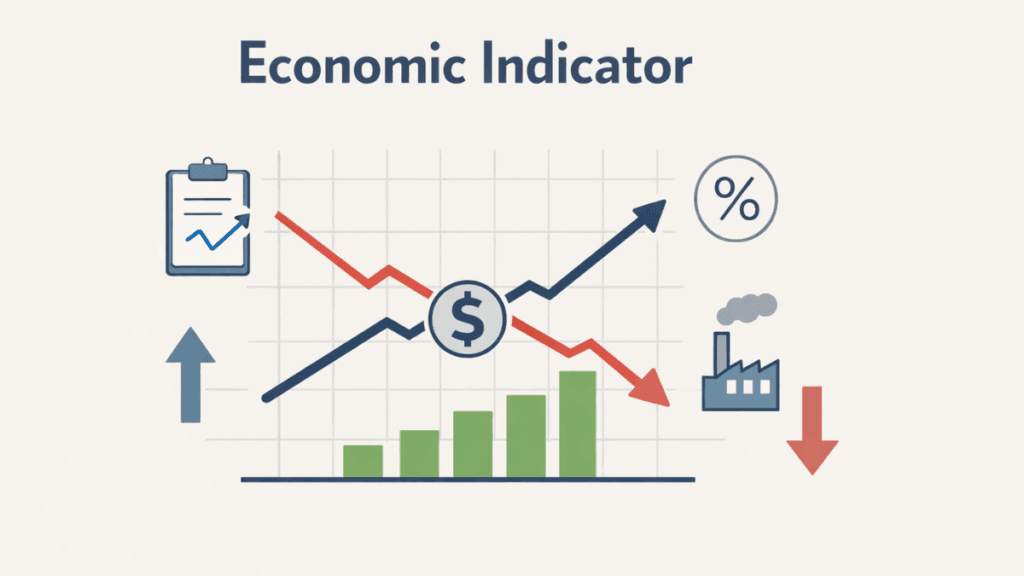
An economic indicator is a measurable piece of data that shows the current condition, direction, or momentum of an economy. In the first paragraph of any serious economic discussion, the economic indicator matters because it helps governments, businesses, investors, and households understand what is happening now and what may happen next.
These indicators translate complex economic activity into understandable signals. When read carefully and in context, they support better decisions about policy, investment, pricing, hiring, and long-term planning.
Click Here To Join our Telegram Community
What an Economic Indicator Means in Practice
An economic indicator represents real-world activity such as spending, production, employment, or prices. Each indicator focuses on a specific part of the economy, which is why no single data point can tell the full story.
Because economies are large and interconnected, indicators are best viewed as tools rather than answers. Their value comes from patterns over time, comparisons across indicators, and alignment with broader economic conditions.
Why Economic Indicators Matter
Economic indicators matter because they reduce uncertainty in decision-making. They provide shared reference points that allow different market participants to interpret economic health using the same data.
Clear indicators also improve accountability. Policymakers can be evaluated against inflation, growth, or employment outcomes, while businesses can adjust strategies based on demand and cost signals.
Main Types of Economic Indicators
Economic indicators are commonly grouped by timing, which describes how they relate to economic cycles. This classification helps users understand whether an indicator looks ahead, confirms trends, or reflects past conditions.
Leading Economic Indicators
Leading indicators are designed to signal future economic activity. They tend to change direction before the overall economy does.
Common examples include:
- Stock market performance
- New business permits or housing starts
- Consumer confidence surveys
These indicators are useful for forecasting but are not guarantees. They are most reliable when several move in the same direction.
Coincident Economic Indicators
Coincident indicators move at roughly the same pace as the overall economy. They describe what is happening right now rather than what might happen next.
Typical examples include employment levels, industrial production, and real income. Analysts use these indicators to confirm whether growth or contraction is currently underway.
Lagging Economic Indicators
Lagging indicators change after the economy has already shifted. They help confirm trends rather than predict them.
Examples include unemployment duration and corporate profit margins. These indicators are valuable for analysis and validation, but less helpful for early decision-making.
Common Examples of Economic Indicators
Many economic indicators are released on regular schedules by government agencies or independent institutions. Each focuses on a different aspect of economic performance.
Gross Domestic Product (GDP)
GDP measures the total value of goods and services produced in an economy. It is the most widely used indicator of overall economic size and growth.
Because GDP is reported quarterly and revised over time, it works best as a long-term benchmark rather than a real-time signal.
Inflation Indicators
Inflation indicators track changes in prices over time. Common measures include consumer price data and producer price data.
These indicators influence interest rates, wage negotiations, and purchasing power, making them central to economic planning.
Employment Indicators
Employment indicators measure labor market conditions such as job creation, unemployment rates, and workforce participation. They offer insight into income stability and consumer spending potential.
Strong employment data often supports economic growth, while weakening labor markets can signal slower activity ahead.
Interest Rate Indicators
Interest rates reflect the cost of borrowing and the stance of monetary policy. Central bank policy rates and government bond yields are closely watched indicators.
Changes in interest rates affect investment, housing, currency values, and overall financial conditions.
How Economic Indicators Are Used
Economic indicators are used differently depending on the user’s goals. Investors focus on indicators that influence asset prices, while policymakers focus on indicators tied to stability and growth.
Businesses rely on indicators to plan inventory, hiring, and expansion. Households may use them indirectly when making decisions about spending, saving, or borrowing.
Limitations of Economic Indicators
Economic indicators have limits that must be understood to avoid misuse. Data is often revised, delayed, or influenced by temporary factors.
Indicators also simplify reality. They cannot capture informal activity, regional differences, or sudden structural changes on their own.
Interpreting Economic Indicators Correctly
Correct interpretation starts with context. An indicator should be compared with its historical range, related indicators, and current economic conditions.
It is also important to avoid overreacting to single releases. Trends across multiple periods and indicators provide a more reliable picture than any one data point.
Economic Indicators vs. Economic Data
Economic indicators are a selected subset of economic data chosen for their signaling value. Not all data qualify as an indicator, even if it is economically relevant.
Indicators are defined by consistency, credibility, and usefulness in tracking economic change. This distinction helps analysts focus on what truly informs decisions.
Final Thoughts
An economic indicator is a practical tool for understanding how an economy is performing and where it may be heading. When used thoughtfully, it supports clearer analysis, better planning, and more informed choices.
The key to value lies not in memorizing indicators, but in understanding what they measure, why they matter, and how they fit into the broader economic picture.
 Join Our Telegram Channel