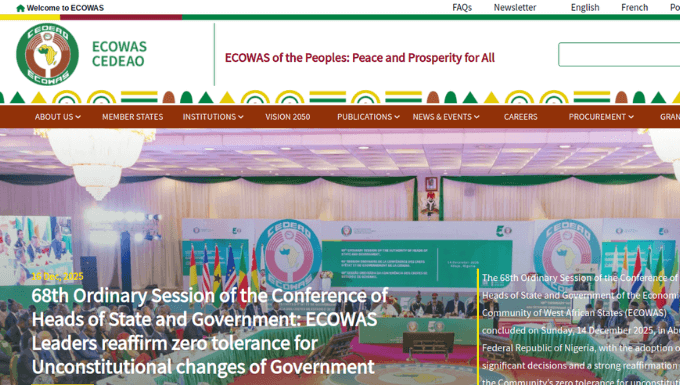
The Economic Community of West African States (ECOWAS) is a regional organization created to promote economic integration, peace, and cooperation among West African countries. It plays a major role in shaping trade policies, security, and development across the significantion.
Since its formation, ECOWAS has grown into one of Africa’s most influential regional blocs. It supports economic growth, free movement of people, and collective action during political or security crises.
Click here to connect with us on Telegram
What Is ECOWAS?
To understand ECOWAS clearly, it helps to look at its basic purpose and structure. ECOWAS is a regional political and economic union made up of countries in West Africa.
It was established to encourage cooperation in areas such as trade, finance, infrastructure, peacekeeping, and social development. Over time, its role has expanded beyond economics to include security and governance.
History and Formation of ECOWAS
The creation of ECOWAS did not happen by chance. It was the result of growing awareness that West African countries could achieve more by working together.
When and Why ECOWAS Was Established
ECOWAS was founded on 28 May 1975 through the Treaty of Lagos. The main aim was to create a common market and improve economic cooperation among member states.
At the time, many West African countries faced similar challenges, such as weak economies, poor infrastructure, and limited global influence. Regional unity was seen as a solution to these shared problems.
Evolution of ECOWAS Over Time
In 1993, ECOWAS revised its treaty to strengthen political cooperation and conflict management. This change marked a shift from a purely economic body to one that also focuses on peace and security.
Today, ECOWAS is actively involved in election monitoring, peacekeeping missions, and democratic governance across the region.
Member States of ECOWAS
Understanding the members of ECOWAS helps explain its regional influence. The organization consists of 15 West African countries.
These member states are:
- Benin
- Burkina Faso
- Cape Verde
- Côte d’Ivoire
- The Gambia
- Ghana
- Guinea
- Guinea-Bissau
- Liberia
- Mali
- Niger
- Nigeria
- Senegal
- Sierra Leone
- Togo
Together, these countries represent over 400 million people, making ECOWAS one of Africa’s largest regional blocs by population.
Main Objectives of ECOWAS
The goals of ECOWAS guide all its policies and programs. These objectives focus on improving the lives of people across West Africa.
Economic Integration and Trade
One of the core goals of ECOWAS is to promote economic integration. This includes removing trade barriers and encouraging regional commerce.
The organization works toward:
- A free trade area
- A customs union
- A single regional market
These efforts help businesses expand and reduce the cost of goods across borders.
Free Movement of People
ECOWAS allows citizens of member states to travel, live, and work in other member countries without a visa. This policy supports labor mobility and regional unity.
It also helps families, traders, and professionals access opportunities across borders more easily.
Peace, Security, and Stability
Economic growth cannot happen without peace. ECOWAS plays a strong role in maintaining regional stability through mediation and peacekeeping.
It has intervened in several political crises to restore order and protect democracy.
Key Institutions of ECOWAS
ECOWAS operates through several institutions that manage its daily activities and long-term goals. Each institution has a specific role.
ECOWAS Authority of Heads of State and Government
This is the highest decision-making body within ECOWAS. It sets policies and gives direction on major regional issues.
ECOWAS Commission
The ECOWAS Commission acts as the executive arm of the organization. It implements policies, manages programs, and represents ECOWAS internationally.
ECOWAS Parliament and Court of Justice
The ECOWAS Parliament promotes dialogue and representation of citizens. The ECOWAS Court of Justice ensures that member states follow community laws and protect human rights.
Role of ECOWAS in Peacekeeping and Democracy
ECOWAS is widely recognized for its active role in conflict resolution. This role sets it apart from many other regional organizations.
Peacekeeping Missions
ECOWAS has led peacekeeping operations in countries such as Liberia and Sierra Leone. These missions helped end civil wars and restore stability.
Promotion of Democratic Governance
The organization strongly opposes unconstitutional changes of government. It often imposes sanctions on countries that experience military coups.
By doing this, ECOWAS promotes democratic values and rule of law in the region.
Achievements of the Economic Community of West African States
ECOWAS has recorded several notable successes since its creation. These achievements show their importance in West Africa.
Some key achievements include:
- Visa-free travel for ECOWAS citizens
- Regional peacekeeping and mediation efforts
- Trade liberalization through the ECOWAS Trade Liberalization Scheme (ETLS)
- Improved regional cooperation in health, education, and infrastructure
These milestones have strengthened regional integration and cooperation.
Challenges Facing ECOWAS
Despite its successes, ECOWAS faces serious challenges that limit its effectiveness. These challenges require continuous effort and reform.
Political Instability
Frequent coups and political unrest in some member states weaken regional unity. They also strain ECOWAS resources and credibility.
Economic Disparities
Large economic differences among member states make integration difficult. Wealthier countries often progress faster than poorer ones.
Security Threats
Terrorism, cross-border crime, and insurgency remain major concerns in parts of West Africa. Addressing these threats requires coordinated regional action.
The Future of ECOWAS
Looking ahead, ECOWAS remains a vital institution for West Africa’s development. Its future success depends on stronger cooperation and commitment from member states.
With reforms, improved governance, and sustained peace efforts, ECOWAS can achieve deeper integration and greater economic growth for the region.
Conclusion
The Economic Community of West African States (ECOWAS) is more than a regional organization. It is a foundation for economic cooperation, peace, and unity in West Africa.
Through trade integration, free movement, and security initiatives, ECOWAS continues to shape the region’s future. Despite challenges, its role remains essential for long-term stability and development.
 Join Our Telegram Channel