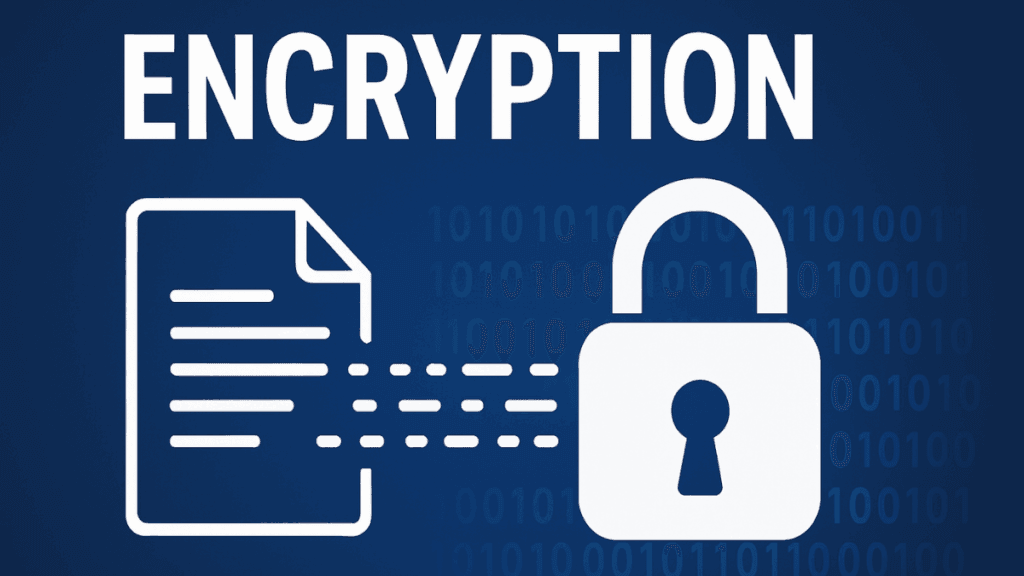
Encryption is a method of protecting information by converting it into unreadable code, and this makes encryption one of the most important tools in modern cybersecurity. It ensures that only the right people can access sensitive data, whether it is stored on a device or sent over the internet. Today, digital privacy depends heavily on how well information is encrypted, from personal messages to financial transactions.
What Is Encryption?
Before going deeper into the technical side, it helps to first understand the basic idea behind this glossary term.
Encryption is the process of converting plain, readable information into a scrambled format called ciphertext. This transformation uses a mathematical formula known as an encryption algorithm, along with a key that determines how the data is locked or unlocked.
Decryption reverses the process, turning ciphertext back into readable information, but only when the correct key is provided.
Why Encryption Exists
To understand the importance of encryption, we must look at the risks of unprotected data.
Cybercriminals, hackers, and even unauthorized users can easily access or intercept information if it is not protected. Encryption solves this by ensuring that even if the data is stolen, it cannot be understood or used without the proper key.
It is the backbone of online safety and protects billions of digital transactions every day.
How Encryption Works
With the basics covered, we can now explore the mechanics behind encryption.
Encryption works through algorithms—specialized mathematical procedures that transform readable data into ciphertext. These algorithms use encryption keys, which act like secret codes that control how the transformation happens. The strength of encryption depends on the length, complexity, and security of these keys.
During data transmission, encryption ensures that information remains protected from the moment it leaves the sender until the moment the receiver decrypts it.
Types of Encryption
Now that the process is clear, it is helpful to understand the main types of encryption used today.
1. Symmetric Encryption
This type uses one key for both encryption and decryption. It is fast and efficient, making it ideal for large amounts of data.
Examples include:
- AES (Advanced Encryption Standard)
- DES (Data Encryption Standard)
2. Asymmetric Encryption
This method uses two keys: a public key for encryption and a private key for decryption. It provides stronger security but is slower than symmetric encryption.
Common examples include:
- RSA
- ECC (Elliptic Curve Cryptography)
3. End-to-End Encryption (E2EE)
This form ensures that only the sender and receiver can read the messages. Even service providers cannot access the content.
It is widely used in messaging apps and email security.
Where Encryption Is Used
To show its real-world value, here are key areas where encryption plays a major role.
Encryption is used to protect:
- Online banking and mobile payments
- Email and messaging apps
- Cloud storage services
- Websites via HTTPS
- Device data such as phone storage and hard drives
- Wi-Fi networks
These everyday examples highlight how deeply encryption is woven into the digital world.
Benefits of Encryption
With the use cases established, it becomes clear why encryption is essential.
Protects Sensitive Data
Encryption ensures that personal, financial, and business information stays private, even if it is intercepted or stolen.
Maintains Trust
Businesses rely on encryption to build trust with customers by keeping their data safe and confidential.
Supports Legal and Compliance Requirements
Many industries must use encryption to meet data protection laws, including GDPR, HIPAA, and PCI-DSS.
Prevents Unauthorized Access
Even if a device is lost or hacked, encrypted data remains useless to unauthorized users without the correct key.
Risks and Limitations of Encryption
To form a complete understanding, it is important to recognize that encryption also has limits.
Key Management Challenges
Losing an encryption key can result in permanent loss of access to data, since the information cannot be recovered.
Performance Impact
Although encryption is essential, it can slow down processing or communication, especially if the encryption algorithm is complex.
Not a Full Security Solution
Encryption protects data, but it cannot stop malware, phishing, or human errors. It must be combined with other cybersecurity practices.
Why Encryption Matters in Today’s Digital World
As digital threats grow, encryption plays a critical role in protecting privacy and securing online activity. It helps individuals maintain control over their data and gives businesses a strong foundation for secure operations.
Without encryption, modern communication, online banking, e-commerce, and many digital services would be unsafe and unreliable.
FAQs About Encryption
1. What is encryption in simple terms?
Encryption is the process of turning readable data into unreadable code to keep it safe from unauthorized access.
2. Why is encryption important?
It protects personal, financial, and business information from hackers and ensures safe communication and online transactions.
3. What is the difference between encryption and decryption?
Encryption scrambles data into ciphertext, while decryption returns it to readable form using the correct key.
4. Is encryption fully secure?
Encryption is highly secure, but it must be used with strong passwords, safe key handling, and other security practices.
5. What is end-to-end encryption?
End-to-end encryption ensures that only the sender and receiver can read the messages, with no access for third parties.
Conclusion
Encryption is a powerful method of securing information by turning it into unreadable code that only authorized users can unlock. It protects personal data, supports safe communication, and strengthens digital trust across the internet. Understanding how encryption works and where it is used helps individuals and organizations stay safe in a world where cybersecurity threats continue to evolve.
 Join Our Telegram Channel