The European Economic Area (EEA) is an important agreement that connects European Union countries with several non-EU countries into a single market. In simple terms, the EEA allows people, goods, services, and capital to move freely across member states, creating one of the world’s largest and most integrated economic zones.
Understanding how the EEA works is essential for businesses, workers, students, and investors who interact with Europe. This guide explains the EEA clearly, using simple language while maintaining accuracy and authority.
Click here to connect with us on Telegram
What Is the European Economic Area (EEA)?
The European Economic Area (EEA) is an agreement that extends the EU’s Single Market to certain non-EU countries. These countries follow many EU economic rules without being full EU members.
This arrangement allows non-EU members to participate in the EU market while keeping some political independence. The goal is economic cooperation rather than political union.
Why the EEA Was Created
Before explaining who belongs to the EEA, it helps to understand why it exists. The EEA was created to strengthen economic ties across Europe and reduce barriers to trade.
Key reasons behind the EEA
- To allow free trade beyond EU borders
- To support economic growth across Europe
- To give non-EU countries access to the EU Single Market
The agreement officially came into force in 1994 and has played a major role in European economic integration ever since.
EEA Member Countries
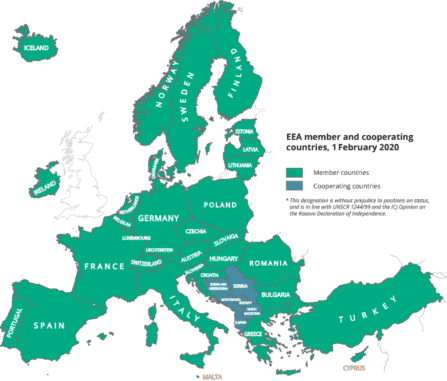
The EEA includes both EU and non-EU countries. Each group plays a different role within the agreement.
EU Countries in the EEA
All 27 European Union member states are automatically part of the EEA. They follow EU laws and policies as full members.
Non-EU Countries in the EEA
Three countries from the European Free Trade Association (EFTA) participate in the EEA:
- Norway
- Iceland
- Liechtenstein
These countries enjoy access to the EU Single Market but are not part of the EU itself.
Countries Not in the EEA
It is also important to clarify who is not included. Switzerland is an EFTA member but chose not to join the EEA. The United Kingdom left the EEA after Brexit.
How the EEA Single Market Works
The EEA operates around the concept of a single market. This system removes many economic barriers between member countries.
The four freedoms of the EEA
These freedoms form the foundation of the EEA:
- Free movement of goods
- Free movement of services
- Free movement of people
- Free movement of capital
Because of these freedoms, a business in Norway can trade with Germany almost as easily as a business inside the EU.
EEA Laws and Regulations
Although non-EU EEA countries are not EU members, they must follow many EU rules. This ensures fair competition and consumer protection across the market.
Areas covered by EEA rules
- Competition law
- Consumer protection
- Employment and labor standards
- Environmental regulations
However, EEA countries do not take part in EU decision-making bodies. They adopt rules but do not vote on them.
Benefits of the European Economic Area
The EEA offers significant advantages for individuals and organizations. These benefits explain why the agreement remains relevant decades after its creation.
Benefits for businesses
Businesses gain access to a large market with minimal trade barriers. This reduces costs and increases growth opportunities.
Benefits for individuals
Citizens can live, work, and study across EEA countries more easily. Professional qualifications are often recognized across borders.
Benefits for economies
The EEA promotes economic stability and cooperation. It encourages investment and supports long-term growth.
Responsibilities of EEA Countries
With benefits come obligations. EEA members must meet specific requirements to maintain market access.
Key responsibilities include
- Adopting relevant EU Single Market laws
- Contributing financially to EU programs
- Following common standards and regulations
These responsibilities help keep the market balanced and fair for all members.
Key Differences of EEA and EU
The EEA and EU are closely linked, but they are not the same. Understanding the difference avoids confusion.
Main differences
- EU members are part of a political union; EEA members are not
- EEA countries do not vote on EU laws
- EEA countries are not part of EU agriculture, fisheries, or monetary policy
This structure allows flexibility while maintaining economic cooperation.
Why the European Economic Area Matters Today
The European Economic Area remains crucial in today’s global economy. It supports trade, mobility, and cooperation in a region with diverse political systems.
For businesses, the EEA offers predictable rules and access to millions of consumers. For individuals, it provides freedom of movement and economic opportunity. These factors make the EEA a cornerstone of European economic integration.
Final Thoughts
The European Economic Area (EEA) is more than just a trade agreement. It is a practical system that connects countries, markets, and people across Europe under shared economic rules.
Whether you are a business owner, investor, student, or simply curious about European economics, understanding the EEA gives you a clear advantage. Its balance of cooperation and independence makes it one of the most successful economic frameworks in the world.
 Join Our Telegram Channel