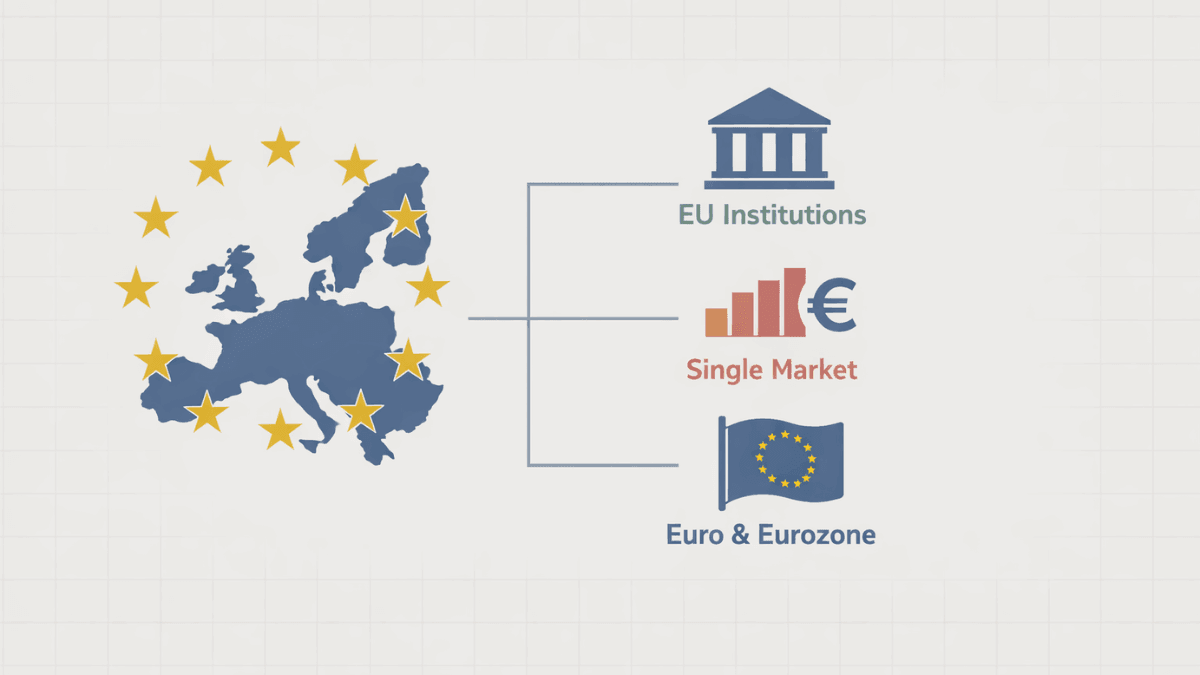
The European Union (EU) is one of the most influential political and economic partnerships in modern history. It connects countries across Europe through shared laws, trade agreements, economic cooperation, and political coordination. What began as a small effort to prevent another devastating European war has evolved into a powerful union shaping global trade, diplomacy, technology policy, climate action, and finance.
If you have ever wondered why EU countries use the same currency, how the bloc influences world markets, or why its policies matter far beyond Europe, this guide breaks it down clearly. You will learn how the European Union works, why it was created, what challenges it faces, and why it remains central to global politics and economics.

What Is the European Union?
The European Union is a political and economic union made up of European countries that cooperate on laws, trade, security, environmental policy, and many other areas. Its primary goal is to promote peace, stability, economic growth, and closer cooperation among member states.
Unlike a traditional country, the EU is not a single nation with one government controlling everything. Instead, member countries voluntarily share certain powers while keeping control over key national matters such as defense, taxation, and education.
Today, the EU plays a major role in:
- International trade
- Financial regulation
- Consumer protection
- Climate policy
- Digital privacy laws
- Human rights standards
- Regional security cooperation
The bloc has become one of the world’s largest economic powers, with hundreds of millions of citizens and a combined economy worth trillions of dollars.
The History of the European Union
To understand the EU properly, you need to look at Europe after World War II. The continent had suffered enormous destruction, economic collapse, and political instability. European leaders believed closer cooperation could reduce the risk of future wars.
Early Foundations After World War II
The first major step came in 1951 with the creation of the European Coal and Steel Community. Six countries agreed to jointly manage coal and steel production, industries that were essential for military power at the time.
Those six countries were:
- France
- West Germany
- Italy
- Belgium
- Netherlands
- Luxembourg
The idea was simple but powerful: countries that cooperate economically are less likely to fight each other.
Formation of the European Economic Community
In 1957, the Treaty of Rome established the European Economic Community (EEC). This agreement expanded economic cooperation and aimed to create a common market where goods, services, workers, and capital could move freely.
Over time, more countries joined, and cooperation deepened beyond trade alone.
Creation of the European Union
The modern European Union officially emerged in 1993 through the Maastricht Treaty. This agreement introduced stronger political integration and laid the groundwork for the euro currency.
The treaty also expanded cooperation into areas such as:
- Foreign policy
- Security
- Citizenship rights
- Justice systems
The EU continued expanding throughout the 1990s and 2000s, particularly after the fall of the Soviet Union, when many Eastern European countries sought membership.
Member Countries of the European Union
The European Union currently consists of 27 member states. These countries remain independent nations while participating in shared EU institutions and agreements.
Some of the largest and most influential EU countries include:
- Germany
- France
- Italy
- Spain
- Poland
- Netherlands
Not every European country belongs to the EU. Nations such as Norway and Switzerland cooperate closely with the bloc but remain outside formal membership.
The United Kingdom was previously a member but officially left the EU in 2020 through a process commonly known as Brexit.
How the European Union Works
The EU has a complex structure because it balances national sovereignty with shared decision-making. Several major institutions help govern the union and create policies.
European Union Institutions Explained
Understanding the EU becomes much easier once you know the role of its main institutions. Each body has different responsibilities and powers.
European Commission
The European Commission acts as the executive branch of the EU. It proposes laws, enforces treaties, and oversees the implementation of policies across member states.
Commissioners are appointed from each member country, but they are expected to act in the interests of the entire EU rather than their home nation.
European Parliament
The European Parliament represents EU citizens directly. Members of the European Parliament (MEPs) are elected by voters across member countries.
Parliament debates and approves legislation, reviews budgets, and monitors other EU institutions. Its influence has grown significantly over the years.
European Council
The European Council brings together national leaders from member countries. This body sets the EU’s broader political direction and priorities.
Major strategic decisions often emerge from European Council meetings, especially during economic or geopolitical crises.
Council of the European Union
This institution represents national governments. Ministers from member countries meet to negotiate and approve laws in different policy areas.
For example, finance ministers discuss economic issues while agriculture ministers focus on farming policy.
Court of Justice of the European Union
The court ensures EU laws are interpreted consistently across all member states. It resolves legal disputes involving EU legislation and institutions.
Its rulings can significantly affect businesses, governments, and citizens.
The European Union Economy
The EU has one of the world’s largest economies and is a major player in international trade. Its single market is one of its biggest achievements.
The Single Market
The EU single market allows goods, services, money, and people to move freely across member states. This system reduces trade barriers and encourages economic growth.
For businesses, the single market creates access to millions of consumers without needing separate regulations for each country. For citizens, it enables easier travel, work, and study opportunities across Europe.
The Euro Currency
Many EU countries use the euro as their official currency. The euro was introduced to simplify trade and improve economic integration.
Not every EU member uses the euro, though. Countries such as Poland and Sweden still use their national currencies.
The European Central Bank manages monetary policy for eurozone countries. Interest rate decisions made by the bank can influence global financial markets, forex trading, and investor sentiment worldwide.
Trade and Global Influence
The EU is one of the largest trading blocs globally. It exports machinery, vehicles, pharmaceuticals, luxury goods, and technology products to countries around the world.
The bloc also negotiates trade agreements collectively, giving it significant leverage in global commerce. Large multinational companies often adapt products and policies to meet EU standards because of the market’s size and influence.
The European Union and Global Politics
The EU is not only an economic power. It also plays a major role in diplomacy, environmental policy, and international cooperation.
European leaders frequently work together on issues such as:
- Climate change
- International sanctions
- Cybersecurity
- Migration
- Human rights
- Energy security
The EU has become especially influential in technology regulation. Its privacy laws, including the General Data Protection Regulation (GDPR), have shaped how companies worldwide handle user data.
Many countries and corporations adjust their policies to comply with EU standards because access to the European market is so important.
Benefits of the European Union
The EU offers many advantages for member countries and citizens. These benefits help explain why the union continues to attract strong support in many regions.
Economic Opportunities
Businesses benefit from easier trade access across Europe. Companies can operate more efficiently without facing multiple customs systems or conflicting regulations.
Workers and students also gain mobility advantages. EU citizens can often live, work, or study in other member countries with fewer restrictions.
Peace and Stability
One of the EU’s biggest achievements is maintaining peace among countries that historically fought devastating wars against each other.
The union encourages diplomacy and cooperation instead of conflict. While disagreements still occur, they are generally resolved through negotiations and legal frameworks.
Consumer Protections
EU regulations often provide strong consumer protections. These include product safety standards, data privacy rules, and passenger rights for travel disruptions.
Many consumers outside Europe indirectly benefit because global companies frequently apply EU standards broadly across markets.
Challenges Facing the European Union
Despite its achievements, the EU faces several major challenges that continue shaping its future.
Economic Differences Between Countries
Not all member states have the same economic strength. Wealthier northern countries sometimes clash with southern or eastern members over spending policies, debt rules, and financial support.
These tensions became particularly visible during the eurozone debt crisis.
Immigration and Border Policy
Migration remains one of the EU’s most politically sensitive issues. Member states often disagree on refugee policies, border management, and asylum systems.
Different countries face different pressures depending on geography, labor needs, and domestic politics.
National Sovereignty Concerns
Some critics argue the EU has too much influence over national governments. Concerns about sovereignty contributed heavily to Brexit and continue fueling political debates in several countries.
Balancing integration with national independence remains one of the union’s biggest long-term challenges.
Energy and Security Pressures
Recent geopolitical tensions have forced Europe to rethink energy dependence and defense coordination. The EU has invested heavily in renewable energy, energy diversification, and regional security cooperation.
These issues have become increasingly urgent due to global instability and supply chain disruptions.
Brexit and Its Impact
Brexit marked one of the most significant events in EU history. In 2016, UK voters chose to leave the European Union through a national referendum.
The departure created major economic and political consequences for both the UK and the EU. Trade systems changed, businesses faced new regulations, and political debates intensified across Europe.
Brexit also highlighted a broader debate about globalization, national identity, and regional integration. Some analysts believed it could trigger further exits, but the EU has largely remained intact and politically resilient.
The Future of the European Union
The European Union continues evolving in response to changing global conditions. Future priorities likely include digital transformation, green energy investment, defense cooperation, and economic competitiveness.
Climate policy is expected to remain central. The EU has positioned itself as a global leader in sustainability and carbon reduction initiatives.
Technology regulation will also remain important. European policymakers increasingly focus on artificial intelligence, digital markets, cybersecurity, and online privacy standards.
At the same time, the EU must manage political divisions, economic inequality, and external geopolitical pressures. Its ability to adapt while maintaining unity will shape its future influence.
Why the European Union Matters Globally
Even if you do not live in Europe, EU decisions can affect your daily life more than you might realize. The bloc influences international trade, financial markets, environmental standards, digital privacy rules, and multinational corporate policies.
Forex traders watch eurozone economic data closely because it affects currency markets. Businesses monitor EU regulations because they can reshape global supply chains. Technology companies often redesign products to comply with European standards.
The EU’s scale gives it enormous international leverage. When it introduces major regulations or trade policies, the impact frequently extends far beyond European borders.
Final Thoughts
The European Union represents one of the most ambitious political and economic cooperation projects ever created. It transformed a historically divided continent into a closely connected regional bloc focused on peace, trade, and shared governance.
Its structure can appear complicated at first, but the core idea remains straightforward: countries working together can often achieve more stability and prosperity than acting alone. The EU has delivered significant economic integration, consumer protections, and diplomatic influence while also facing ongoing debates about sovereignty, migration, and economic balance.
Whether you are interested in politics, economics, investing, international business, or global affairs, understanding the European Union provides valuable insight into how modern international cooperation shapes the world economy and geopolitical landscape.
Trade on the Go. Anywhere, Anytime
If you’re ready to apply what you’ve learned, consider trading with a globally recognized forex and CFD broker like XM .
The platform offers competitive spreads, fast execution, and access to advanced trading tools, including real-time charts and flexible account types, making it suitable for both beginners and experienced traders. Open a trading account for free and start trading today and join millions of traders and investors on the global forex market.
Trading involves risk. Ensure you understand how the markets work before investing.