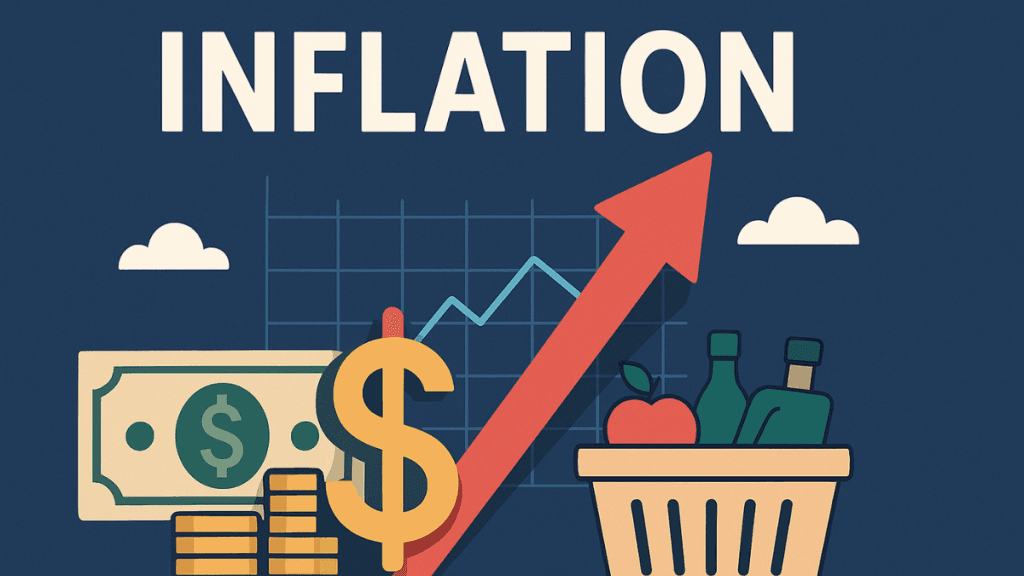
Inflation is one of the most important economic terms today, and it affects everyone—businesses, governments, and ordinary people. Inflation refers to the rise in the general prices of goods and services over time. When inflation goes up, your money buys less than before. This article explains inflation in a simple, clear way while maintaining expert accuracy, trustworthiness, and authority.
What Is Inflation?
Inflation is an economic situation where the prices of everyday goods and services increase. This means that the value of money declines. Even though price changes are normal, inflation becomes a concern when prices rise faster than income.
Economists measure inflation using tools such as the Consumer Price Index (CPI), which tracks the cost of a basket of common products like food, fuel, rent, and healthcare.
Why Inflation Happens: The Main Causes
Inflation does not happen by accident. It usually occurs due to several key factors.
1. Demand-Pull Inflation
This happens when demand for goods and services is higher than supply. When more people want to buy something than what is available, prices increase.
Common causes include:
- Higher consumer spending
- Lower interest rates
- Economic growth
- Government spending
2. Cost-Push Inflation
This occurs when the cost of producing goods increases. When production becomes more expensive, companies raise prices to stay profitable.
Common triggers include:
- Rising fuel prices
- Higher wages
- Supply chain disruptions
- Increased cost of raw materials
3. Built-In Inflation
This is also known as the wage-price spiral. When workers demand higher pay due to increased living costs, companies respond by raising prices to cover payroll, creating a cycle of rising wages and prices.
4. Monetary Inflation
This happens when a country’s money supply grows too quickly. If more money is circulating in the economy without a matching increase in goods and services, prices rise.
Types of Inflation
Not all inflation is bad. Economists classify inflation into different types based on intensity.
1. Creeping Inflation
A slow and steady rise in prices (1–3% per year).
Often considered healthy and a sign of economic stability.
2. Walking Inflation
Moderate inflation (3–10% per year).
This can start affecting savings and purchasing power.
3. Galloping Inflation
Rapid price increases (above 10% per year).
This harms investment and economic stability.
4. Hyperinflation
Extremely high inflation (over 50% per month).
Money becomes almost worthless, and economies collapse.
How Inflation Affects the Economy
Inflation has both positive and negative effects, depending on its level and speed.
1. Effects on Consumers
- Reduced purchasing power
- Increased cost of living
- Savings lose value over time
2. Effects on Businesses
- Higher production costs
- Difficulty planning long-term
- Increased borrowing costs if interest rates rise
3. Effects on Investors
- Inflation reduces real returns
- Some assets like real estate or commodities may rise in value
4. Effects on Governments
- Governments may raise interest rates
- Debt repayment becomes easier if inflation is high
- Policy adjustments become necessary to stabilize the economy
How Central Banks Control Inflation
Most countries rely on their central banks to manage inflation. They use different tools to keep inflation within a healthy range.
1. Raising or Lowering Interest Rates
Higher interest rates reduce borrowing and slow down economic activity, which helps control inflation.
2. Open Market Operations
Buying or selling government securities adjusts the amount of money circulating in the economy.
3. Adjusting Reserve Requirements
Banks may be required to hold more money in reserve, reducing lending and slowing inflation.
4. Communication and Guidance
Central banks often influence inflation simply by announcing policies that shape expectations.
How Inflation Impacts Your Daily Life
Inflation affects almost every part of modern living:
- Food prices go up
- Transport costs rise due to fuel price increases
- Rent and housing become more expensive
- Savings lose value if interest rates are low
- Loans become costlier when central banks raise interest rates
Because inflation affects so many areas, understanding it is important for making smart financial decisions.
How to Protect Yourself From Inflation
Although you cannot stop inflation, you can take smart steps to reduce its impact.
1. Invest in Assets That Grow Over Time
Examples include:
- Real estate
- Index funds
- High-yield savings
- Government bonds
- Precious metals like gold
2. Build an Emergency Fund
This protects you during periods of rising prices.
3. Reduce Unnecessary Spending
Keeping your budget lean helps maintain financial stability.
4. Increase Your Earning Potential
Skills, certifications, and business improvements can help your income grow faster than inflation.
Is Inflation Always Bad?
No. A small amount of inflation is healthy for the economy. It encourages:
- Spending
- Investment
- Business growth
It becomes harmful only when it grows too fast and out of control.
Final Thoughts
Inflation is a powerful force that shapes economies, businesses, and personal finances. A little inflation supports growth, but too much weakens purchasing power and slows economic progress. By understanding what causes inflation, how it works, and how to protect yourself, you can make better financial decisions and stay prepared for economic changes.
If you want to build long-term wealth, staying aware of inflation trends and adjusting your financial strategies is essential.
 Join Our Telegram Channel