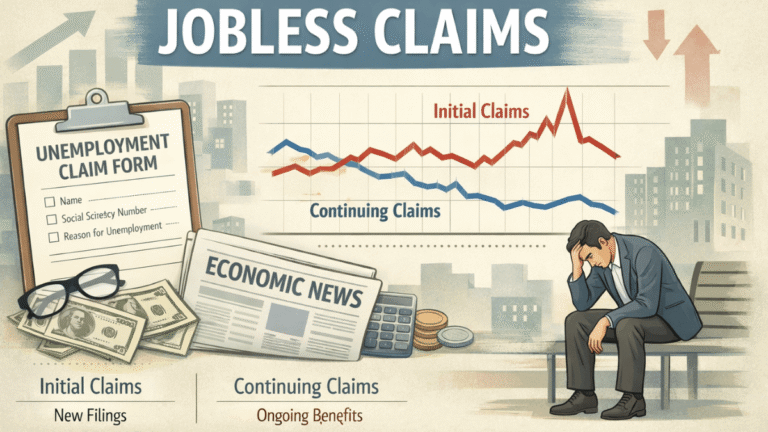
Economic indicators help people understand what is happening beneath the surface of the economy. Jobless claims are one of those signals, and traders often read to judge whether economic momentum is shifting. When layoffs rise or fall, jobless claims offer an early look at labor market stress before it appears in broader reports.
At their core, jobless claims measure how many people are applying for unemployment benefits. Because the data is released frequently and follows a clear method, it has become a trusted tool for policymakers, investors, and businesses.
Click here to connect with us on Telegram
What Are Jobless Claims?
To understand jobless claims properly, it helps to start with a simple definition. Jobless claims refer to the number of people who file for unemployment insurance after losing a job through no fault of their own.
These claims are reported regularly, most commonly on a weekly basis, in the United States. Since people tend to apply for benefits soon after losing work, the figures act as a near-real-time snapshot of labor market conditions.
Why Jobless Claims Are Important
Jobless claims matter because employment affects nearly every part of the economy. When people lose jobs, spending usually slows, and businesses often become more cautious.
Because of this link, economists and market participants treat jobless claims as an early warning signal. A sustained rise can hint at economic weakness ahead, while steady or falling claims often suggest stability in hiring.
Types of Jobless Claims Explained
Before interpreting the data, it is important to know that jobless claims are not a single number. They are usually broken into two main categories, each serving a different purpose.
Initial Jobless Claims
Initial jobless claims count people filing for unemployment benefits for the first time. This number reflects fresh layoffs and new job losses.
Since it reacts quickly to changes in the economy, initial claims are closely watched for sudden spikes. A sharp increase can signal that companies are cutting back due to slowing demand or financial pressure.
Continuing Jobless Claims
Continuing jobless claims track people who are still receiving unemployment benefits after their first claim. This measure focuses on how long individuals remain unemployed.
Higher continuing claims can suggest that finding new jobs is becoming harder. When this figure stays elevated, it may indicate deeper or longer-lasting labor market problems.
How Jobless Claims Are Collected and Reported
Understanding the reporting process helps avoid misreading the numbers. Jobless claims are gathered from state labor departments and compiled at the national level.
In the U.S., the Department of Labor releases the data every week, usually on Thursday. Because the data is frequent and standardized, it allows analysts to spot short-term trends more quickly than monthly employment reports.
How Markets React to Jobless Claims Data
Financial markets pay close attention to jobless claims because labor conditions influence interest rates and corporate profits. When claims come in lower than expected, markets may see it as a sign of economic strength.
On the other hand, higher-than-expected claims can lead to concerns about slower growth. This reaction can affect currencies, stock prices, and bond yields, especially when the trend persists over several weeks.
Jobless Claims vs the Unemployment Rate
Although they are related, jobless claims and the unemployment rate are not the same thing. Jobless claims show short-term changes, while the unemployment rate reflects a broader picture.
The unemployment rate is calculated monthly and includes people actively looking for work. Jobless claims focus only on those applying for benefits, which means each indicator serves a different analytical role.
Limitations of Jobless Claims
Like any economic indicator, jobless claims have limits. Not everyone who loses a job qualifies for or applies for unemployment benefits.
Seasonal factors can also affect the numbers, especially during holidays or weather disruptions. For this reason, analysts often look at trends over time rather than reacting to a single week’s data.
How Traders and Analysts Use Jobless Claims
To use jobless claims effectively, context matters. Analysts often compare current data with historical averages and expectations.
Jobless claims are frequently combined with other indicators, such as wage growth or manufacturing data. When several signals point in the same direction, confidence in the economic outlook becomes stronger.
Real-World Example of Jobless Claims in Action
During economic downturns, jobless claims often rise before official recession announcements. This early movement gives policymakers time to respond with stimulus or support programs.
In contrast, during recoveries, a steady decline in claims usually confirms that hiring is improving. This pattern makes jobless claims a practical tool for both short-term and long-term economic analysis.
Final Thoughts
Jobless claims offer a clear and timely window into the health of the labor market. While they should not be used in isolation, they remain one of the most reliable indicators for tracking employment trends.
By understanding what jobless claims measure, how they are reported, and how to interpret them, readers can make more informed judgments about the economy and financial markets.
 Join Our Telegram Channel