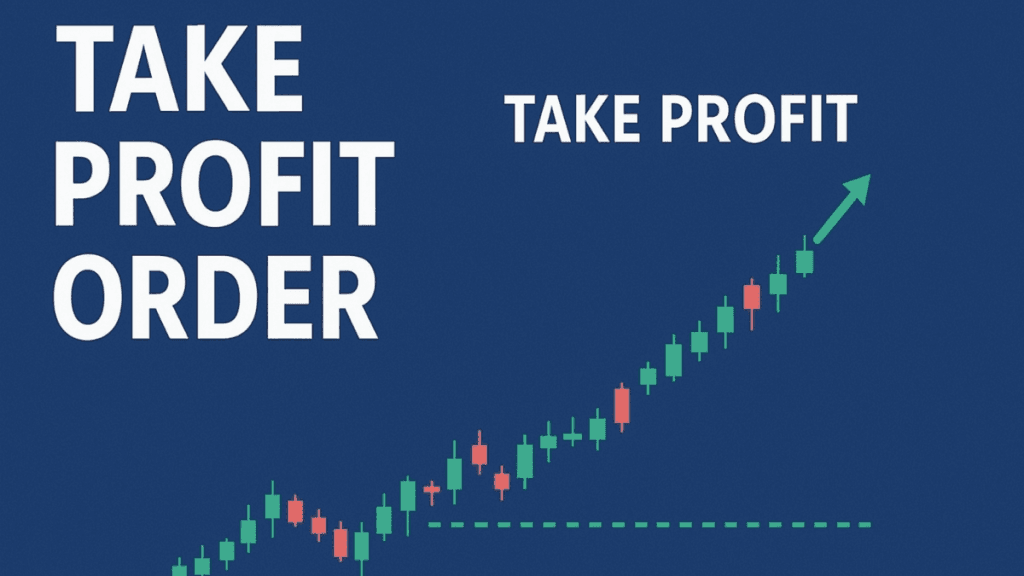
A Take Profit Order is one of the most important tools in trading. It helps traders lock in profits automatically once the market hits a chosen price level. Understanding how a Take Profit Order works is essential for managing trades, protecting gains, and avoiding emotional decisions.
In this guide, you’ll learn what a Take Profit Order is, how to set it, when to use it, and why it matters for both beginner and professional traders.
What Is a Take Profit Order?
A Take Profit Order (TP) is a pre-set instruction that automatically closes a trade when the market reaches a specific profit target.
It tells your broker or trading platform to exit your position once the price hits the level you have chosen.
This means:
- You do not need to monitor the chart all day.
- You secure your gains without second-guessing.
- Your trading becomes more disciplined and consistent.
A Take Profit Order is often paired with a Stop Loss Order, which controls potential losses. Together, they form the foundation of professional risk management.
How a Take Profit Order Works
A Take Profit Order sits on your trading platform as a pending instruction. Once the market price touches your profit level, the broker instantly closes your trade.
Example:
If you buy EUR/USD at 1.1000 and place your Take Profit at 1.1050, your trade will automatically close once the price reaches 1.1050, securing your 50-pip profit.
This happens even if:
- You are offline
- The market moves fast
- Your emotions might tempt you to change your mind
The order acts as your automated exit strategy.
Why Traders Use Take Profit Orders
1. To Lock In Profits Automatically
Markets move quickly. A TP ensures your gains are captured before prices reverse.
2. To Remove Emotions From Trading
Fear and greed make traders hold positions too long. A TP sets a clear, pre-planned exit.
3. To Improve Trading Discipline
You trade according to your analysis, not your feelings. This leads to more consistent decisions.
4. To Save Time
You don’t need to stare at charts waiting for the perfect moment to exit.
How to Set a Take Profit Order
Setting a TP order requires a clear trading plan. Traders usually set their TP levels based on:
1. Support and Resistance Levels
TP is placed near major resistance (in a buy) or support (in a sell).
2. Risk-to-Reward Ratio
A recommended minimum ratio is 1:2, meaning you aim to make twice the amount you risk.
3. Indicators
Many traders use tools such as:
- Moving Averages
- Fibonacci Levels
- RSI
- MACD
- Trendlines
4. Market Volatility
Highly volatile markets may require wider TP targets.
Take Profit Order vs. Stop Loss Order
Although they work together, they serve different purposes:
| Feature | Take Profit Order | Stop Loss Order |
| Purpose | Lock in profits | Limit losses |
| Trigger | Hits profit target | Hits loss threshold |
| Emotion Control | Prevents greed | Prevents fear |
| Effect | Closes trade in profit | Closes trade in loss |
Both are essential for responsible trading.
Take Profit Order in Different Markets
Take Profit Orders can be used in:
1. Forex Trading
Commonly used with pips-based targets.
2. Stock Trading
Used to capture gains when a stock reaches a target price.
3. Crypto Trading
Crypto markets are highly volatile, so TP helps secure profits before sudden pullbacks.
4. CFDs, Indices, and Commodities
Used across all leveraged trading platforms.
Common Mistakes Traders Make with Take Profit Orders
Even though TP orders are simple, traders often misuse them. Here are common mistakes to avoid:
1. Setting Unrealistic Targets
Too far → price never reaches it.
Too close → you miss larger opportunities.
2. Ignoring Market Structure
TP should align with trend direction, support/resistance, and market momentum.
3. Not Using a Stop Loss Together with TP
TP alone does not protect you from losses.
4. Moving TP out of Greed
Changing a TP level because you think “it will go further” often leads to reversals.
Best Practices for Using Take Profit Orders
To get the best results:
- Set TP based on solid analysis, not emotions.
- Aim for a healthy risk-to-reward ratio.
- Use both Stop Loss and Take Profit on every trade.
- Adjust TP only if market structure changes — not because of emotions.
- Combine TP with trailing stops for dynamic profit locking.
Example of a Take Profit Order in Action
Imagine you are trading gold (XAU/USD):
- Entry: Buy at 2,300
- Stop Loss: 2,285
- Take Profit: 2,330
- Risk: 15 points
- Potential reward: 30 points
This is a 1:2 risk-to-reward ratio, meaning you aim to earn double what you are risking — a key strategy used by professional traders.
Once the price reaches 2,330, your platform closes the trade with a profit, even if you’re not watching.
Pros and Cons of Take Profit Orders
Pros
- Automatic execution
- Removes emotional decisions
- Helps maintain a consistent trading plan
- Supports risk management
- Saves time and reduces screen-watching
Cons
- If the price moves beyond your TP, you miss extra profit
- Not ideal in unpredictable or news-driven markets
- Poorly set TP may limit your potential gains
FAQs About Take Profit Orders
1. What is a Take Profit Order in simple terms?
It is a tool that automatically closes your trade once the market reaches your target profit.
2. Is a Take Profit Order necessary?
Yes. It helps secure profits without emotional decisions or constant monitoring.
3. Can I change my Take Profit level after entering a trade?
Yes, most platforms allow you to adjust TP levels manually.
4. Do professional traders use TP orders?
Absolutely. TPs are a core part of risk management and trade planning.
5. What happens if the market gaps over my Take Profit level?
Your trade will still close, but the fill price may differ depending on your broker and market conditions.
Final Thoughts
A Take Profit Order is a simple yet powerful tool that every trader must understand. It helps you lock in profits, remove emotional decisions, and follow a consistent and disciplined trading strategy. Whether you trade forex, stocks, crypto, or commodities, a well-placed TP order can significantly improve your long-term results.
 Join Our Telegram Channel