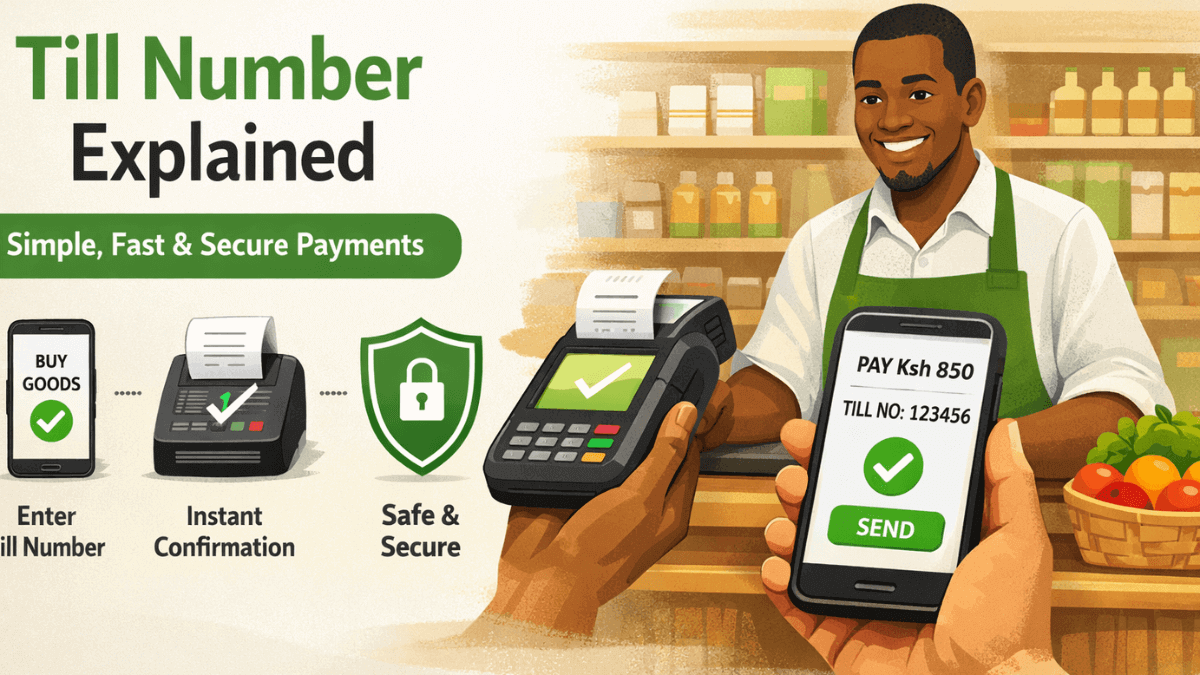
A Till Number is a unique payment identifier used by businesses to receive mobile money payments directly from customers. In Kenya, it is most commonly associated with M-Pesa and is widely used by shops, supermarkets, restaurants, and service providers for quick and secure transactions.
Unlike personal mobile money transfers, a Till Number is designed specifically for business use. It helps separate business income from personal funds while offering customers a simple and trusted way to pay without sharing phone numbers.
What Is a Till Number?
A Till Number is a merchant payment number issued by a mobile money provider to a business or trader. It allows customers to pay for goods or services by selecting the “Buy Goods” option on their mobile money menu.
This payment method is popular because it is fast, traceable, and does not require the business owner to expose personal contact details. Payments made to a Till Number are recorded automatically, making it easier to track sales.
How a Till Number Works
A Till Number works by linking customer payments directly to a merchant account rather than an individual mobile wallet. When a customer pays, the money reflects instantly in the merchant’s till balance.
The process is simple and reliable for both parties. It reduces errors, minimizes disputes, and provides a clear transaction record that can be reviewed later.
Step-by-Step Payment Process
The payment process using a Till Number follows a clear flow that customers quickly get used to. It is designed to be intuitive even for first-time users.
- The customer selects Buy Goods and Services on their mobile money menu
- They enter the merchant’s Till Number
- They input the amount to pay and confirm with their PIN
Once confirmed, both the customer and the merchant receive a payment notification.
Till Number vs Paybill Number
Many people confuse a Till Number with a Paybill number, yet they serve different purposes. Understanding the difference helps businesses choose the right option.
A Till Number is best suited for over-the-counter payments where customers are physically present. A Paybill number is more suitable for structured payments such as bills, subscriptions, or account-based transactions.
Key Differences Explained
The main differences lie in how payments are identified and used. Each option supports different business needs.
- Till Number: No account number required, ideal for retail and walk-in customers
- Paybill: Requires an account number, suitable for utilities, schools, and organizations
Choosing the wrong option can complicate payments, so it is important to match the solution to your business model.
Who Can Use a Till Number?
A Till Number is suitable for a wide range of businesses, from small traders to established enterprises. It is especially helpful for businesses that handle frequent daily transactions.
Retail shops, salons, restaurants, pharmacies, and market vendors commonly rely on Till Numbers. Even mobile traders and service providers can benefit from the simplicity it offers.
Benefits of Using a Till Number
Using a Till Number provides both operational and financial advantages for businesses. It simplifies payments while building customer trust.
One major benefit is the clear separation of business and personal funds. This makes accounting easier and supports better financial discipline.
Key Advantages for Businesses
The benefits extend beyond convenience and affect daily business efficiency.
- Faster checkout and reduced cash handling
- Automatic transaction records for tracking sales
- Improved security compared to cash payments
These advantages make Till Numbers a preferred choice in busy retail environments.
How to Get a Till Number in Kenya
Applying for a Till Number in Kenya is a straightforward process handled by mobile money providers. The requirements are designed to verify the business and protect customers.
Most providers allow applications through agents, customer care centers, or online platforms. Approval timelines may vary depending on documentation and verification.
Basic Requirements
While requirements can differ slightly, most applications ask for similar information.
- National ID or passport
- Business name and location
- Active mobile number
Once approved, the Till Number becomes active and ready for use.
Till Number Charges and Transaction Costs
Transaction charges for Till Numbers are usually paid by the customer, not the merchant. This makes it attractive for businesses that want to receive full payment amounts.
Charges depend on the mobile money provider and the transaction amount. Merchants are advised to confirm current rates, as fees may change over time.
Security and Trust When Using a Till Number
Security is a key reason Till Numbers are widely trusted. Transactions are protected by PIN verification and instant confirmations.
Merchants should still take basic precautions. Displaying the correct Till Number clearly and verifying payment messages helps prevent fraud and misunderstandings.
Common Mistakes Businesses Make with Till Numbers
Some businesses fail to use their Till Number effectively due to simple mistakes. These errors can affect customer experience and payment accuracy.
Common issues include displaying incorrect numbers or not reconciling daily transactions. Regular checks help maintain trust and financial accuracy.
When a Till Number Is the Best Choice
A Till Number is the best choice for instant, in-person payments. It works especially well in environments where speed and simplicity matter.
For businesses that do not need customer account references, it provides a clean and efficient payment solution.
Final Thoughts
A Till Number is a powerful tool for modern businesses that want fast, secure, and organized mobile payments. It supports better record-keeping while offering customers a familiar and trusted way to pay.
By understanding how a Till Number works and using it correctly, businesses can improve efficiency, reduce cash risks, and build stronger customer confidence.
 Join Our Telegram Channel