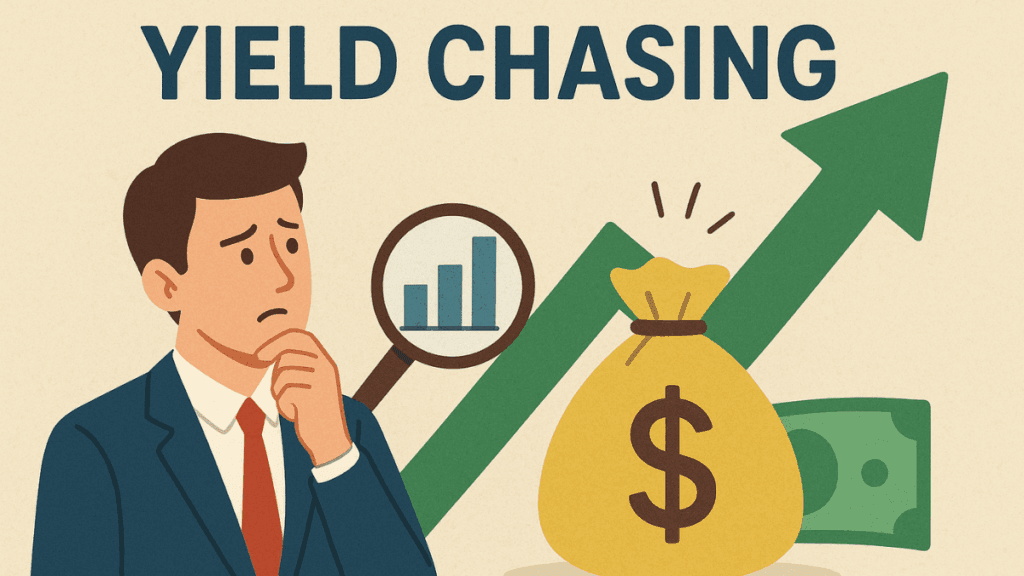
Investors often hear stories of significant returns, which creates pressure to grow money quickly. This is where yield chasing shows up, as people try to jump into investments that promise unusually high returns without fully understanding the risks. This behavior can be tempting, but it often leads to losses, stress, and poor long-term decisions.
To understand this better, let’s break down what yield chasing really means, why it happens, and how savvy investors avoid it.
What Is Yield Chasing?
Before diving deeper, it is crucial to define the term clearly. Yield chasing is the act of pursuing investments solely because they offer high interest rates or returns, while ignoring the underlying risks. It usually happens when investors focus more on potential profit than on safety or long-term strategy.
This behavior is common in both beginner and experienced investors, especially during low-interest environments or economic uncertainty.
Why Do Investors Engage in Yield Chasing?
To understand the dangers of yield chasing, we must first understand why it happens. Many investors do not realize when they are chasing yield because it often feels like a brilliant opportunity.
1. Low Interest Rates
When banks or bonds offer low returns, people look for alternatives. They shift to riskier products, hoping to earn more.
2. Fear of Missing Out (FOMO)
Seeing others make money from high-yield investments can trigger emotional decisions. This fear of missing out pushes people to jump in without proper research.
3. Lack of Financial Knowledge
Many investors do not fully understand how risk and return are connected. They assume high returns mean better investments, but this is rarely true.
4. Marketing Hype
Some financial products are aggressively marketed with promises of exceptional returns. Without careful analysis, investors fall for these claims.
The Hidden Risks Behind Yield Chasing
Now that we understand the causes, it is vital to explore the risks. High yields always come with higher risks, and ignoring these can damage an investor’s financial future.
1. Loss of Capital
Risky investments may fail, leading to significant losses. Many yield-chasing investors often lose more money than they expected.
2. Illiquidity Problems
Some high-yield opportunities lock in funds for long periods. When investors need money urgently, they cannot access it.
3. Market Volatility
High-yield assets tend to fluctuate more. This makes them stressful to hold and difficult to predict.
4. Scams and Fraud
Fraudsters use the promise of high returns to lure unsuspecting investors. Ponzi schemes and fake investment platforms often target those chasing yield.
5. Poor Diversification
When people focus only on high returns, they ignore diversification. This leads to an unbalanced portfolio that can collapse under market pressure.
Examples of Yield Chasing in Real Life
Understanding real-world examples can make the concept clearer. While these examples vary, they all highlight the same mistake ignoring risk while chasing big returns.
High-Dividend Stocks
Some companies offer extremely high dividends but are financially unstable. Investors buy them for the payout, only to watch share prices collapse.
Junk Bonds
These bonds pay higher interest because the issuing companies have a higher chance of default. Many yield chasers ignore this danger.
Unregulated Crypto Projects
Crypto markets are filled with coins and tokens that promise huge returns. Many of them fail or turn out to be scams.
High-Yield Online Investment Schemes
Some platforms promise daily or weekly profits. These often show early returns, only to disappear later.
How to Avoid Yield Chasing
After seeing the risks, the question becomes: how can investors protect themselves?
1. Understand the Risk–Return Relationship
High returns come with high risks. This basic rule should guide every investment decision.
2. Research Before Investing
Look at the company’s financial health, market performance, and credibility. Avoid investments that lack transparent information.
3. Set Long-Term Goals
Focus on long-term growth instead of short-term excitement. This helps reduce emotional decision-making.
4. Diversify Your Portfolio
Spread investments across different asset classes. This protects you from large losses in one area.
5. Avoid Emotional Trading
Fear and greed are dangerous. Keep your decisions based on facts, not feelings.
6. Consult a Financial Advisor
Experts can help identify risky investments and recommend safer alternatives.
Smart Alternatives to Yield Chasing
For those who want steady growth without unnecessary risk, there are better options. These alternatives may offer lower returns, but they are more stable.
Balanced Investment Funds
These funds combine stocks, bonds, and other assets to spread risk.
Index Funds and ETFs
They track market indexes and offer slow but consistent growth.
Government Bonds
They offer lower yields but are far safer and more predictable.
Blue-Chip Stocks
These companies are well-established with strong performance histories.
When Yield Chasing Can Be Part of a Strategy
Not all high-yield investments are bad. The key is doing them with awareness and planning. Some experienced investors allocate a small portion of their portfolio to high-risk, high-reward opportunities.
This approach is only safe when the investor can handle the potential losses and has done thorough research.
Conclusion
Yield chasing is tempting because it promises quick profits, but it usually leads to disappointment and avoidable losses. Smart investing requires patience, research, and a solid plan. When investors focus on long-term value instead of chasing high yields, they build wealth that is stable and sustainable.
By understanding the dangers and making informed decisions, anyone can avoid the trap of yield chasing and move toward a more secure financial future.
 Join Our Telegram Channel