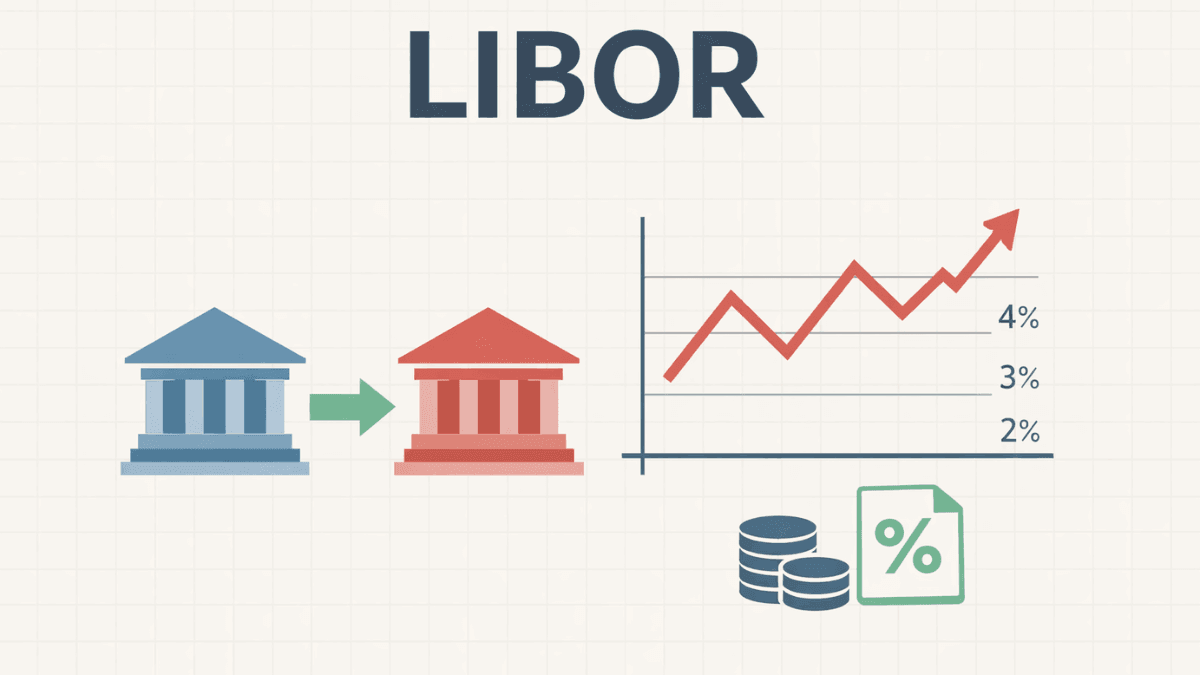
LIBOR, short for the London Interbank Offered Rate, was one of the most important interest rate benchmarks in the world. It represented the average rate at which major global banks were willing to lend money to each other on a short-term basis.
At its peak, LIBOR influenced trillions of dollars in financial products, including mortgages, student loans, credit cards, and complex derivatives. It acted as a reference point that helped determine how much interest people and institutions would pay or earn.
How LIBOR Worked
To understand LIBOR, it helps to look at how it was calculated and used in practice. Each day, a group of large banks submitted estimates of how much it would cost them to borrow funds from other banks.
These submissions were then processed to produce an average rate across different currencies and time periods. The final LIBOR rates were published daily and used globally as a benchmark.
Key Features of LIBOR
LIBOR was structured in a way that made it flexible and widely applicable across markets. It covered multiple currencies and loan durations, making it a universal reference.
- Calculated daily based on bank submissions
- Available in several major currencies (USD, GBP, EUR, JPY, CHF)
- Published for multiple maturities (overnight, 1 month, 3 months, etc.)
Because of this structure, LIBOR became deeply embedded in global finance.
Why LIBOR Was So Important
LIBOR’s importance came from its widespread use in pricing financial products. It provided a common reference that made it easier to set interest rates across different markets and countries.
Financial institutions relied on LIBOR to maintain consistency and transparency when lending or borrowing money. For individuals, it often determined how much they paid on loans like adjustable-rate mortgages.
Common Uses of LIBOR
LIBOR was used in a wide range of financial instruments. Its influence extended far beyond interbank lending.
- Adjustable-rate mortgages
- Corporate loans
- Derivatives such as swaps and futures
- Credit cards and student loans
Because of its reach, even small changes in LIBOR could have a significant impact on the global economy.
The LIBOR Scandal and Loss of Trust
Despite its importance, LIBOR faced serious credibility issues. Investigations revealed that some banks manipulated their rate submissions to benefit trading positions or to appear financially stronger.
This manipulation undermined trust in LIBOR as a reliable benchmark. Regulators and financial authorities around the world responded with stricter oversight and eventually decided to replace it.
What Went Wrong
The core issue with LIBOR was that it relied on estimates rather than actual transactions. This made it vulnerable to manipulation.
Banks could submit rates that did not reflect real borrowing costs. Over time, this weakness became too significant to ignore.
Why LIBOR Was Phased Out
Following the scandal and declining confidence, regulators began planning a transition away from LIBOR. The goal was to replace it with more transparent and reliable benchmarks.
LIBOR officially began its phase-out process in the late 2010s, with most major currencies discontinued by 2021 and the U.S. dollar LIBOR ending in 2023.
Key Reasons for the Transition
The decision to replace LIBOR was driven by both structural and ethical concerns.
- Lack of transparency in rate submissions
- Declining interbank lending activity
- Vulnerability to manipulation
- Need for transaction-based benchmarks
This marked one of the most significant changes in modern financial history.
What Replaced LIBOR?
As LIBOR was phased out, different countries introduced alternative reference rates. These new benchmarks are based on actual market transactions rather than estimates.
Each replacement rate reflects overnight borrowing costs in its respective currency, making them more reliable and harder to manipulate.
Major LIBOR Replacements
Different regions adopted their own alternatives to LIBOR.
- SOFR (Secured Overnight Financing Rate) – United States
- SONIA (Sterling Overnight Index Average) – United Kingdom
- €STR (Euro Short-Term Rate) – Eurozone
- TONAR (Tokyo Overnight Average Rate) – Japan
These rates are now widely used in financial contracts and continue to gain adoption.
How the Transition Affected Borrowers and Businesses
The shift away from LIBOR had a direct impact on both individuals and organizations. Contracts tied to LIBOR had to be updated or replaced with new benchmarks.
For borrowers, this sometimes meant changes in how interest rates were calculated. For businesses, it requires careful planning to manage financial risk and ensure compliance.
Key Impacts
The transition introduced both challenges and opportunities.
- Existing contracts needed renegotiation
- New systems and pricing models were required
- Greater transparency improved long-term trust
While the transition was complex, it ultimately strengthened the financial system.
LIBOR vs. New Benchmark Rates
Understanding the difference between LIBOR and its replacements helps explain why the change was necessary. The two systems operate on fundamentally different principles.
LIBOR relied on estimates, while new rates are based on real transactions. This shift improves accuracy and reduces the risk of manipulation.
Main Differences
Here’s how LIBOR compares to modern benchmarks:
- LIBOR: Forward-looking, estimate-based
- New Rates: Backward-looking, transaction-based
- LIBOR: Included bank credit risk
- New Rates: Typically risk-free or near risk-free
These differences make new benchmarks more resilient and trustworthy.
Is LIBOR Still Used Today?
LIBOR is no longer widely used in new financial contracts. Most markets have fully transitioned to alternative rates, especially for major currencies.
Some legacy contracts may still reference LIBOR, but they are gradually being updated or allowed to expire. The financial system has largely moved on from LIBOR.
Final Thoughts
LIBOR played a central role in global finance for decades, shaping how interest rates were determined across countless products. Its influence was massive, but its weaknesses eventually led to its decline.
The move away from LIBOR represents a shift toward greater transparency and reliability in financial markets. While the transition required effort, it laid the foundation for a more stable and trustworthy system.
Trade on the Go. Anywhere, Anytime
If you’re ready to apply what you’ve learned, consider trading with a globally recognized forex and CFD broker like XM .
The platform offers competitive spreads, fast execution, and access to advanced trading tools, including real-time charts and flexible account types, making it suitable for both beginners and experienced traders. Open a trading account for free and start trading today and join millions of traders and investors on the global forex market.
Trading involves risk. Ensure you understand how the markets work before investing.