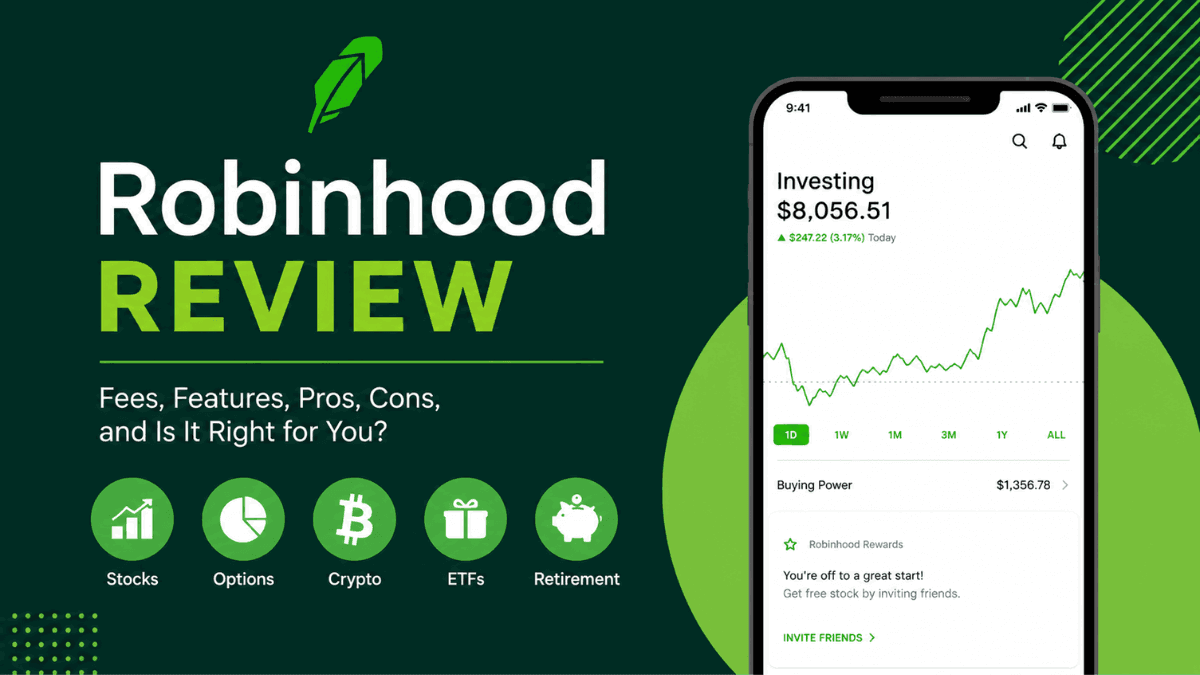
Robinhood changed the online trading industry by making commission-free investing mainstream. What started as a simple mobile app for stock trading has grown into a platform offering stocks, ETFs, options, cryptocurrencies, retirement accounts, and cash management features.
This Robinhood Review takes a detailed look at how the platform works, who it’s best suited for, its strengths, limitations, fees, safety, and whether it deserves a spot in your investing toolkit in 2026. If you’re considering opening an account, understanding both the convenience and the trade-offs matters more than ever.
Click Here To Join our Telegram Community
Robinhood Overview
Robinhood is a U.S.-based financial services platform that allows users to trade financial assets without paying traditional commission fees. The platform became especially popular among beginner investors because of its clean design, fast account setup, and low barrier to entry.
Unlike older brokerage firms that were built around desktop platforms and phone-based support, Robinhood was designed for mobile-first users. The app focuses heavily on simplicity, which can be both an advantage and a limitation depending on your experience level.
Today, Robinhood offers access to:
- U.S. stocks
- ETFs
- Options trading
- Cryptocurrency trading
- Fractional shares
- Retirement accounts
- Cash management services
The platform primarily targets retail traders and casual investors rather than professional or institutional clients.
Robinhood Key Features
Robinhood’s popularity comes from its accessibility, but the platform also includes several features that appeal to active traders and long-term investors alike.
Commission-Free Trading
One of Robinhood’s biggest selling points remains commission-free trading. You can buy and sell stocks and ETFs without paying standard trading commissions.
For smaller investors, this matters. Paying $5–$10 per trade at traditional brokers can quickly eat into profits, especially if you invest frequently or use dollar-cost averaging strategies.
Robinhood also supports commission-free options trading, although regulatory fees still apply in certain cases.
Fractional Shares
Fractional investing allows users to buy portions of expensive stocks instead of whole shares. For example, if a company’s stock costs $1,000 per share, you can still invest $20 or $50 into it.
This feature makes portfolio diversification much easier for beginners who may not have large amounts of capital.
Robinhood Gold
Robinhood Gold is the platform’s premium subscription service. It includes additional tools and features designed for more active investors.
Some benefits include:
- Professional market research
- Level II market data
- Higher instant deposits
- Margin investing access
- Better interest rates on uninvested cash
For traders who want more analytical tools without moving to a professional platform, Robinhood Gold can add value.
Cryptocurrency Trading
Robinhood supports crypto trading directly inside the app, allowing users to buy and sell popular cryptocurrencies alongside stocks.
Supported crypto assets typically include:
- Bitcoin
- Ethereum
- Solana
- Dogecoin
- Litecoin
The convenience of managing both crypto and traditional investments in one app appeals to many younger investors.
Still, crypto traders should understand that Robinhood’s crypto tools remain simpler than dedicated crypto exchanges.
Account Types Available
Robinhood has expanded beyond individual brokerage accounts and now supports several account options for different financial goals.
Individual Brokerage Accounts
These are standard taxable investment accounts designed for everyday trading and investing.
Users can buy stocks, ETFs, options, and cryptocurrencies through a single interface.
Retirement Accounts
Robinhood now offers retirement investing through IRA accounts. This was a major step forward because many investors previously viewed the platform as only suitable for short-term trading.
Available retirement options may include:
- Traditional IRA
- Roth IRA
- Rollover IRA
This addition makes Robinhood more competitive with established brokers.
Cash Management
Robinhood also provides cash management features that function similarly to online banking services.
Users may receive:
- Debit cards
- Interest on cash balances
- FDIC insurance protections
- Spending and transfer tools
For some users, Robinhood has evolved into an all-in-one financial app rather than just a trading platform.
Trading Platforms and User Experience
Robinhood’s user interface remains one of the cleanest in the industry. Even someone completely new to investing can usually navigate the app within minutes.
That simplicity is intentional. Robinhood removes many advanced tools and technical complexities found on professional trading platforms.
Mobile App Experience
The mobile app is where Robinhood performs best. Navigation feels fast, modern, and intuitive.
Users can:
- Monitor watchlists
- Execute trades
- View charts
- Manage deposits
- Track portfolio performance
The design avoids overwhelming beginners with excessive data.
Web Platform
Robinhood also offers a browser-based platform for desktop users. While functional, it remains more basic compared to platforms from brokers like Fidelity, Interactive Brokers, or thinkorswim.
Advanced charting and deep analytical tools are limited compared to professional-grade competitors.
Robinhood Fees and Costs
Robinhood built its reputation around zero-commission trading, but that doesn’t mean the platform is completely free.
Understanding the actual cost structure is important before opening an account.
Trading Fees
Robinhood generally charges:
- $0 commissions for stocks and ETFs
- $0 base commissions for options
- No account minimums
This makes the platform attractive for small investors.
Margin Rates
Users with Robinhood Gold can access margin trading, which allows borrowing money to trade larger positions.
Margin trading increases both profit potential and risk. Beginners should approach leverage carefully because losses can grow quickly during volatile markets.
Payment for Order Flow
Robinhood generates revenue partly through something called payment for order flow (PFOF). This means market makers compensate the broker for routing trades through them.
While common across many brokers, critics argue this model may sometimes affect execution quality.
Robinhood states it aims to provide competitive trade execution despite this arrangement.
Is Robinhood Safe?
Safety is one of the most important considerations when choosing a broker.
Robinhood is regulated in the United States and operates under financial oversight from organizations such as:
- SEC
- FINRA
- SIPC
SIPC protection helps cover customer securities up to certain limits if a brokerage firm fails.
Robinhood also uses security features like:
- Two-factor authentication
- Biometric login support
- Encryption protocols
That said, the platform has faced regulatory scrutiny and operational controversies over the years, especially during periods of extreme market volatility.
Investors should separate platform convenience from platform perfection. No broker is completely risk-free.
Robinhood Crypto Review
Robinhood’s crypto offering attracts users who want simple exposure to digital assets without learning a separate exchange interface.
The crypto experience is straightforward:
- Buy and sell crypto quickly
- Monitor prices in real time
- Use the same app as stock investing
For beginners, this simplicity can be helpful.
However, advanced crypto traders may find limitations in areas like:
- Advanced order types
- Detailed analytics
- Extensive coin selection
- Staking options
- Advanced charting
Robinhood works better as a beginner-friendly crypto gateway than as a professional crypto trading platform.
Pros and Cons of Robinhood
Every broker has strengths and weaknesses. Robinhood is no exception.
Pros
Robinhood stands out in several important areas:
- Easy-to-use mobile interface
- Commission-free trading
- Fractional shares support
- Fast account setup
- Beginner-friendly experience
- Integrated crypto trading
- No account minimums
These features make investing feel approachable for newer users.
Cons
The platform also comes with limitations:
- Limited advanced research tools
- Fewer investment products than full-service brokers
- Basic charting functionality
- Limited educational depth
- Customer support criticisms during high-volume periods
Experienced traders may eventually outgrow the platform as their needs become more sophisticated.
Who Should Use Robinhood?
Robinhood works best for a specific type of investor.
Best for Beginners
New investors often appreciate Robinhood because it removes many of the barriers traditionally associated with investing.
The platform simplifies:
- Opening an account
- Buying shares
- Managing small portfolios
- Learning market basics
For someone investing their first $100, Robinhood can feel much less intimidating than traditional brokerage software.
Suitable for Casual Investors
Long-term investors who mainly buy ETFs, index funds, or large-cap stocks may also find Robinhood sufficient for their needs.
If you value simplicity more than advanced analytics, the platform performs well.
Less Ideal for Advanced Traders
Professional traders and active technical analysts may find Robinhood restrictive.
Platforms like Interactive Brokers, TradeStation, or thinkorswim provide significantly deeper functionality for:
- Advanced charting
- Algorithmic trading
- Complex order management
- Professional research
Robinhood prioritizes accessibility over complexity.
Robinhood vs Traditional Brokers
Comparing Robinhood to traditional brokers helps clarify where it fits in the market.
Older brokerage firms often provide:
- More investment products
- Better retirement planning tools
- Stronger customer support
- Advanced research platforms
Robinhood counters with:
- Faster onboarding
- Cleaner design
- Simpler investing experience
- Lower friction for beginners
The choice largely depends on your investing goals and experience level.
Customer Support and Education
Customer support has historically been one of Robinhood’s weaker areas, although improvements have been made over time.
The platform now offers:
- In-app support
- Help center articles
- Chat assistance
- Limited phone support options
Educational content exists, but it remains lighter than what many established brokers provide.
Investors who want deep educational resources may need supplemental learning materials elsewhere.
Final Verdict
Robinhood remains one of the most beginner-friendly investment platforms available in 2026. Its simple interface, commission-free trading, and accessible design continue to attract millions of users.
For new investors, casual traders, and users who prioritize convenience, Robinhood delivers a smooth experience that removes many traditional investing barriers.
At the same time, the platform still has limitations. Advanced traders may eventually need stronger charting tools, broader research capabilities, and more sophisticated order management systems.
The key question is not whether Robinhood is good or bad universally. It’s whether the platform matches your investing style, experience level, and long-term goals.
If you want a clean, straightforward way to start investing without overwhelming complexity, Robinhood remains a strong option worth considering.
Frequently Asked Questions About Robinhood
Is Robinhood good for beginners?
Yes. Robinhood is widely considered beginner-friendly because of its simple interface, low account barriers, and commission-free trading model.
Does Robinhood charge trading fees?
Robinhood generally offers commission-free stock, ETF, and options trading, though certain regulatory fees and margin costs may still apply.
Can you trade crypto on Robinhood?
Yes. Robinhood supports cryptocurrency trading for several major digital assets, including Bitcoin and Ethereum.
Is Robinhood safe to use?
Robinhood is regulated in the United States and provides security protections such as SIPC coverage, encryption, and two-factor authentication.
Does Robinhood offer retirement accounts?
Yes. Robinhood now offers retirement account options, including Traditional IRAs and Roth IRAs.
Is Robinhood better than traditional brokers?
It depends on your needs. Robinhood excels in simplicity and accessibility, while traditional brokers often provide stronger research tools and broader investment features.
Trade on the Go. Anywhere, Anytime
If you’re ready to apply what you’ve learned, consider trading with a globally recognized forex and CFD broker like XM .
The platform offers competitive spreads, fast execution, and access to advanced trading tools, including real-time charts and flexible account types, making it suitable for both beginners and experienced traders. Open a trading account for free and start trading today and join millions of traders and investors on the global forex market.
Trading involves risk. Ensure you understand how the markets work before investing.

Our financial editorial team covers global markets, economic policy, and investment trends. We combine real-time research with AI-powered writing assistants to deliver accurate, timely, and easy-to-read articles. Our editors review all content to ensure quality, neutrality, and clarity for our readers.