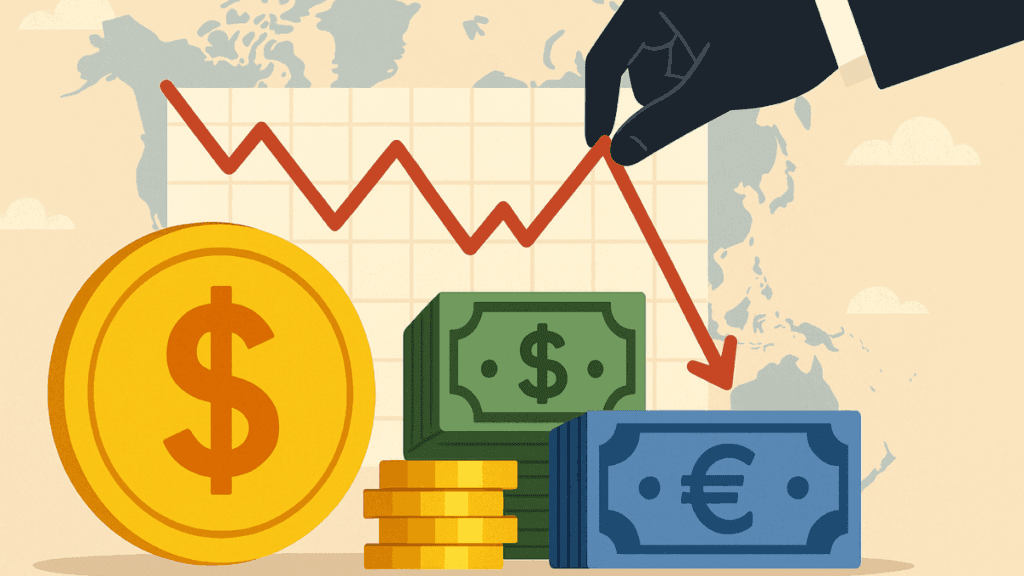
Currency manipulation is one of those economic terms that sounds technical but affects real life in very practical ways. It influences how much countries trade with each other, how expensive imported goods become, and how stable financial markets remain over time. Despite its importance, the concept is often misunderstood or oversimplified.
At its core, currency manipulation involves deliberate actions taken by a government or central bank to influence the value of its national currency. While exchange rates normally move based on supply, demand, and investor confidence, manipulation occurs when authorities actively step in to push the currency in a direction that serves their economic goals.
Click Here To Join our Telegram Community
Understanding currency manipulation is essential for traders, investors, policymakers, and even ordinary consumers who feel its effects through prices and inflation.
What Is Currency Manipulation?
Currency manipulation refers to intentional measures taken by a country to weaken or strengthen its currency relative to others. These measures are not accidental outcomes of normal economic management. Instead, they are planned actions meant to influence trade, investment flows, or economic growth.
Governments often argue that their actions are meant to stabilize markets or protect the economy during difficult times. Critics, however, see currency manipulation as a way to gain an unfair advantage in international trade by distorting natural exchange rate movements.
The challenge is that intent is difficult to prove. Many policies that affect currencies can be defended as legitimate economic tools, even when their real impact favors one country over others.
Why Governments Manipulate Their Currencies
Before looking at how currency manipulation happens, it is important to understand why countries choose to do it. The motivations are usually tied to economic pressure, political priorities, or long-term development goals.
Supporting Export Growth
A weaker currency makes exports cheaper for foreign buyers. This can boost demand for locally produced goods, helping factories stay competitive and workers remain employed. Export-driven economies often see currency weakness as a strategic advantage.
Managing Trade Imbalances
Countries with large trade deficits sometimes try to weaken their currency to discourage imports and encourage domestic consumption. Over time, this can help narrow the gap between what a country buys from abroad and what it sells.
Shielding Key Industries
During economic downturns, governments may intervene in currency markets to protect industries that are struggling to compete globally. This is especially common in sectors that employ large numbers of people or are politically sensitive.
Common Ways Currency Manipulation Occurs
Currency manipulation does not rely on a single technique. Instead, governments use a range of tools depending on their financial system, economic structure, and level of market openness.
Foreign Exchange Market Intervention
This is the most direct method. Central banks buy or sell currencies in large volumes to influence exchange rates. Selling the domestic currency increases its supply and can push its value lower, while buying it can support or strengthen the currency.
Interest Rate Adjustments
Interest rates strongly affect currency values. Lower rates tend to reduce foreign investment inflows, weakening the currency. While interest rate policy is a normal central bank function, it can cross into manipulation if the exchange rate effect is the main objective.
Capital Flow Restrictions
Some governments limit how money moves in and out of their country. By controlling capital flows, authorities can reduce upward or downward pressure on the currency, especially during periods of financial stress.
Building Large Foreign Currency Reserves
By consistently purchasing foreign currencies and holding them as reserves, central banks can prevent their own currency from appreciating too much. This approach is often subtle and long-term, making it harder to identify but equally influential.
Currency Manipulation vs Legitimate Monetary Policy
Not every policy that affects exchange rates qualifies as currency manipulation. Central banks routinely adjust interest rates, manage liquidity, and respond to inflation or unemployment concerns. These actions naturally influence currency values.
The difference lies in purpose. If the primary goal of a policy is to control inflation or stabilize the economy, its impact on the exchange rate is considered a side effect. If the main intention is to gain a trade advantage through currency weakness or strength, the policy begins to resemble manipulation.
This gray area explains why accusations of currency manipulation often lead to political disputes rather than clear legal judgments.
Economic Effects of Currency Manipulation
Currency manipulation rarely affects only one country. Its consequences often ripple across global markets and economies.
Impact on Global Trade
Artificially cheap currencies can distort trade by making one country’s goods unfairly competitive. This often leads to trade tensions, tariffs, and retaliatory actions that harm global cooperation.
Effects on Financial Markets
Investors dislike uncertainty. Sudden currency interventions or unexpected policy shifts can increase volatility in foreign exchange, bond, and equity markets, making long-term planning more difficult.
Consequences for Consumers
While exporters may benefit from a weaker currency, consumers often pay the price. Imported goods become more expensive, which can raise inflation and reduce purchasing power, especially in countries that rely heavily on imports.
How Currency Manipulation Is Monitored Internationally
Because currency manipulation can destabilize the global economy, international institutions play a role in monitoring and discouraging it.
The Role of the International Monetary Fund (IMF)
The IMF closely tracks exchange rate policies and macroeconomic data. Although it cannot directly punish countries, its assessments carry significant weight and can influence investor confidence and diplomatic relations.
Trade Agreements and Political Pressure
Some trade agreements include commitments to avoid competitive currency devaluation. Countries accused of manipulation may also face diplomatic criticism or economic pressure from major trading partners.
Is Currency Manipulation Ever Justified?
The issue is not always black and white. In times of crisis, temporary intervention may help prevent financial collapse or restore confidence in a rapidly falling currency.
Problems arise when manipulation becomes persistent. Long-term interference can create global imbalances, weaken trust between nations, and increase the risk of financial and political conflict.
Currency Manipulation in Today’s Global Economy
In an increasingly connected world, currency manipulation is harder to hide but easier to feel. Financial markets react instantly to policy signals, and capital moves across borders at unprecedented speed.
Understanding how currency manipulation works helps investors manage risk, businesses plan pricing strategies, and policymakers evaluate trade relationships. Transparency, cooperation, and clear communication remain critical for reducing conflict and maintaining stability in the global financial system.
Frequently Asked Questions About Currency Manipulation
Currency manipulation happens when a government or central bank deliberately influences its currency’s value to gain an economic advantage, usually in trade.
There is no clear international law that makes currency manipulation illegal. However, institutions like the IMF discourage it because of its negative global effects.
Common methods include foreign exchange intervention, adjusting interest rates, restricting capital flows, and accumulating large foreign currency reserves.
It can make exports cheaper and imports more expensive, leading to trade imbalances and economic tensions between countries.
Yes. A weaker currency can raise the cost of imported goods, contributing to inflation and reducing purchasing power.
Organizations like the IMF monitor exchange rate policies, while major economies also track and respond to suspected manipulation through diplomacy and trade policy.
 Join Our Telegram Channel