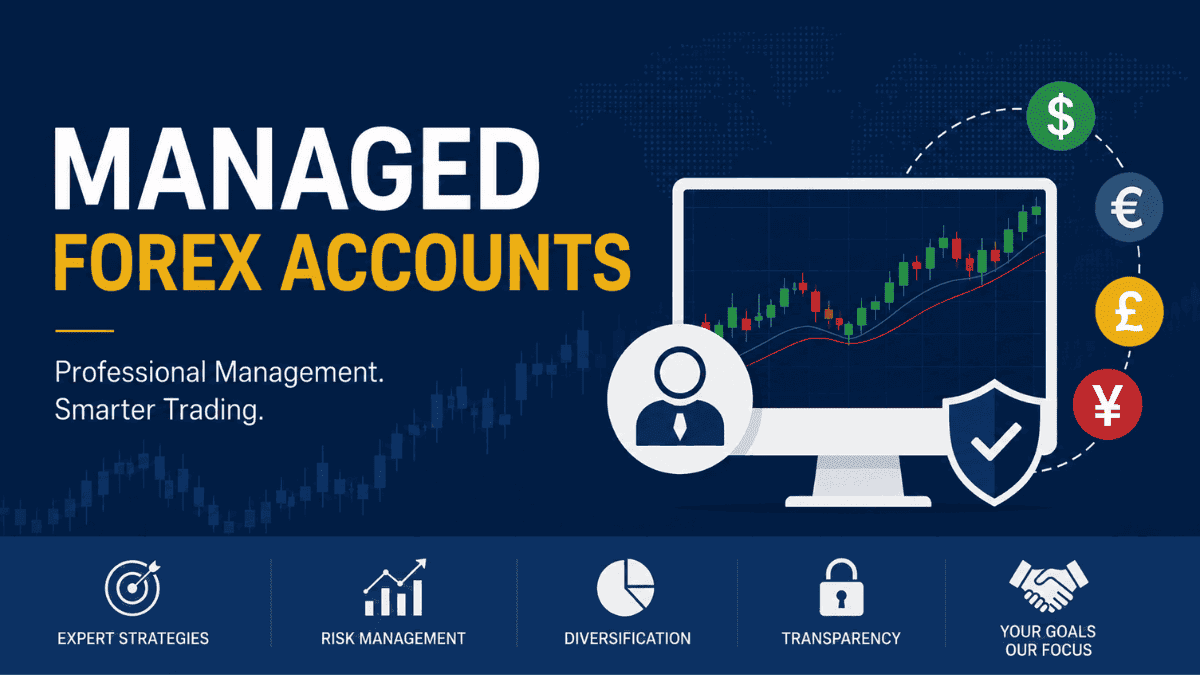
Managed forex accounts attract traders and investors who want exposure to the foreign exchange market without actively placing trades themselves. Instead of monitoring charts, studying economic news, or learning technical analysis, the investor gives a professional trader or money manager permission to trade on their behalf.
That sounds convenient, but managed forex accounts are not as simple as handing over money and waiting for profits. There are risks, fees, legal considerations, and performance questions that every investor should understand before opening one. A well-managed account can provide diversification and access to professional trading expertise, while a poorly managed account can quickly lead to heavy losses.

This guide breaks down how managed forex accounts work, the different types available, their advantages and disadvantages, common warning signs, and what you should look for before trusting anyone with your capital.
What Are Managed Forex Accounts?
Managed forex accounts allow investors to place their trading capital under the control of a professional trader or portfolio manager. In simple terms, the account manager makes trading decisions while the investor provides the funds.
The forex market also called the foreign exchange market is the global marketplace where currencies are bought and sold. Because it operates 24 hours a day and involves significant volatility, many people prefer to outsource trading decisions to experienced professionals rather than trade themselves.
In most cases, the investor still owns the trading account. The manager receives limited authority to execute trades but cannot directly withdraw funds if the setup is done correctly through a regulated broker.
Managed accounts are commonly used by:
- Busy professionals with limited time to trade
- Beginners who lack trading experience
- Investors seeking portfolio diversification
- Traders looking to learn from professionals
- High-net-worth individuals pursuing alternative investments
Some managed forex accounts target conservative growth, while others focus on aggressive returns using high leverage. Understanding that difference is critical before investing.
How Managed Forex Accounts Work
Before investing in a managed forex account, it helps to understand the structure behind the arrangement. While details vary between providers, the process usually follows a similar framework.
An investor opens a trading account with a broker that supports managed account services. The investor then signs a Limited Power of Attorney (LPOA), which authorizes the account manager to trade on the account without granting withdrawal access.
The account manager trades currencies, commodities, indices, or sometimes gold CFDs, depending on the strategy. Profits and losses are reflected directly in the investor’s trading account balance.
The Role of the Account Manager
The account manager is responsible for:
- Market analysis
- Risk management
- Trade execution
- Position sizing
- Strategy development
- Monitoring economic events
Professional managers may use technical analysis, fundamental analysis, algorithmic trading systems, or a combination of methods.
Experienced managers usually have strict risk controls in place because protecting capital matters just as much as generating returns. A strategy producing 20% annual growth with controlled drawdowns is often healthier than one chasing unrealistic monthly profits.
The Role of the Investor
The investor mainly provides capital and monitors account performance. Depending on the arrangement, the investor may also choose:
- Risk levels
- Maximum drawdown limits
- Trading preferences
- Asset exposure
- Profit-sharing structures
A responsible investor should never treat managed forex accounts as passive “guaranteed income” products. Ongoing monitoring remains essential.
Types of Managed Forex Accounts
Managed forex accounts come in several forms, and understanding the differences can help you choose the right setup for your goals and risk tolerance.
PAMM Accounts
PAMM stands for Percentage Allocation Management Module. In a PAMM system, multiple investors pool their money together under one manager.
The manager trades a master account, and profits or losses are distributed proportionally among investors based on their contribution size.
PAMM accounts are popular because they simplify management and allow smaller investors to participate with relatively low starting deposits.
MAM Accounts
MAM stands for Multi-Account Manager. This structure is similar to PAMM accounts, but it offers more flexibility.
The manager can customize trade allocations for different investors based on risk preferences, account size, or trading objectives. MAM systems are often used by professional money managers handling multiple clients simultaneously.
Copy Trading Accounts
Copy trading allows investors to automatically replicate another trader’s positions in real time. Instead of handing full control to a manager, the investor chooses traders to follow through on a trading platform.
This setup gives investors more transparency and flexibility. They can usually pause copying, adjust trade sizes, or switch traders whenever they want.
Copy trading has become increasingly popular because it lowers the barrier to entry for beginners.
Individually Managed Accounts
Some high-net-worth investors prefer individually managed forex accounts. These are customized arrangements in which a dedicated manager handles a single client account directly.
This approach may include personalized strategies, private consultations, and tailored risk management plans. Minimum deposits are usually much higher than standard PAMM or copy trading services.
Benefits of Managed Forex Accounts
Managed forex accounts appeal to investors for several practical reasons. The biggest advantage is access to professional trading expertise without requiring years of personal trading experience.
Access to Experienced Traders
Successful forex trading requires discipline, strategy testing, emotional control, and constant market monitoring. Many beginners underestimate how difficult consistent profitability can be.
A skilled account manager already understands market behavior, economic events, volatility conditions, and risk management techniques. That expertise can save investors from costly beginner mistakes.
Time Savings
Trading forex actively takes time. Markets move quickly, and opportunities can appear during different global trading sessions.
Managed accounts remove the need to:
- Watch charts all day
- Study economic calendars
- Analyze price patterns
- Manage trades manually
This makes them attractive for professionals or business owners who cannot dedicate hours to trading.
Diversification
Forex can act as an alternative investment class alongside stocks, bonds, real estate, or cryptocurrency.
Some investors use managed forex accounts to diversify their portfolios because currency markets often react differently to global economic conditions compared to equities.
Emotional Discipline
Emotions ruin many retail traders. Fear causes early exits, while greed encourages excessive risk-taking.
Professional managers usually follow predefined systems and rules. That structure can reduce emotional decision-making and improve consistency over time.
Risks of Managed Forex Accounts
While the upside can sound attractive, managed forex accounts also carry serious risks. Investors who ignore these risks often become targets for scams or unrealistic marketing promises.
Market Risk
Forex trading involves leverage, which magnifies both profits and losses. Even experienced managers experience losing periods.
No strategy wins all the time. Currency markets can become unpredictable during major economic announcements, geopolitical events, or periods of extreme volatility.
Fraud and Scams
The forex industry, unfortunately, attracts dishonest operators. Some so-called “fund managers” advertise fake performance records, manipulate screenshots, or promise guaranteed returns.
A major warning sign is any manager claiming:
- Guaranteed profits
- Zero risk
- Extremely high monthly returns
- Secret insider systems
- “Never losing” strategies
Legitimate trading always involves risk.
Lack of Regulation
Not all account managers operate under financial regulation. Some work offshore without investor protections.
Using an unregulated manager increases the risk of fraud, fund mismanagement, or disappearing capital. Investors should always verify licensing and broker credibility before depositing money.
High Drawdowns
Drawdown refers to the decline from an account’s peak balance to its lowest point during losing periods.
Aggressive managers sometimes generate impressive short-term gains while exposing accounts to massive risk. A strategy earning 40% monthly returns could still wipe out the account during one bad market cycle.
Fees Associated With Managed Forex Accounts
Before opening a managed account, you should understand how managers get paid. Fee structures vary widely across providers.
Performance Fees
Performance fees are the most common compensation model. The manager receives a percentage of profits generated on the account.
For example, a manager charging a 30% performance fee would keep $300 from a $1,000 profit.
Many reputable managers use a high-water mark system. This means they only earn fees after recovering previous losses and reaching new account highs.
Management Fees
Some managers charge fixed annual or monthly management fees regardless of profitability.
This fee compensates the manager for overseeing the account, conducting research, and maintaining the strategy.
Brokerage Commissions and Spreads
Investors also pay regular trading costs through the broker, including:
- Spreads
- Swap fees
- Commissions
- Slippage costs
These expenses can significantly affect long-term profitability, especially for high-frequency strategies.
How to Choose a Managed Forex Account
Choosing the right managed forex account requires careful research. Rushing into a decision based on marketing promises can be expensive.
Verify Regulation and Licensing
Start by checking whether the broker and money manager operate under recognized financial authorities.
Depending on the region, this may include regulators such as:
- Financial Conduct Authority
- Australian Securities and Investments Commission
- Cyprus Securities and Exchange Commission
Regulation does not eliminate risk, but it improves transparency and accountability.
Review Verified Performance Records
Reliable managers provide independently verified performance statistics rather than edited screenshots.
Pay attention to:
- Total return
- Maximum drawdown
- Average monthly gain
- Risk-to-reward ratio
- Trade history length
- Consistency over time
A steady track record over several years is generally more trustworthy than explosive short-term profits.
Understand the Trading Strategy
You do not need to know every technical detail, but you should understand the basic approach.
Ask questions like:
- Is the strategy aggressive or conservative?
- Does it use high leverage?
- Are stop losses used?
- What assets are traded?
- How are risks managed?
If the manager refuses to explain anything about the strategy, that is a concern.
Evaluate Risk Management
Risk management matters more than flashy returns.
Some investors focus entirely on profit percentages while ignoring drawdown levels. A strategy generating smaller but stable returns is often safer than one producing extreme gains with huge volatility.
Red Flags to Avoid
Many investors lose money because they ignore obvious warning signs. Learning to spot red flags early can protect your capital.
Guaranteed Returns
No legitimate forex manager can guarantee profits. Markets are unpredictable, and losses are part of trading.
Promises like “10% daily returns” or “risk-free trading” should immediately raise suspicion.
Unverified Results
Screenshots can be manipulated easily. Serious managers use verified third-party tracking platforms or audited records.
If performance data cannot be independently confirmed, proceed carefully.
Pressure Tactics
Scammers often create urgency using phrases like:
- “Limited slots available”
- “Deposit today or miss out.”
- “VIP access ending soon”
Professional investment managers rarely pressure investors aggressively.
Withdrawal Restrictions
You should maintain control over your funds through a regulated broker account whenever possible.
Be cautious if a manager asks you to send cryptocurrency directly to a personal wallet or refuses transparent withdrawal procedures.
Are Managed Forex Accounts Suitable for Beginners?
Managed forex accounts can help beginners gain market exposure without actively trading themselves. They also provide an opportunity to observe how professional traders manage positions and risk.
That said, beginners should not view managed accounts as shortcuts to easy wealth. Even professional traders experience losing periods, and forex remains a high-risk market.
For many new investors, it makes sense to start with smaller amounts while learning basic forex concepts alongside the investment. Understanding leverage, volatility, spreads, and drawdowns helps you make better decisions and evaluate managers more realistically.
Managed Forex Accounts vs Copy Trading
These two concepts are closely related, but there are important differences worth understanding.
Managed accounts typically involve direct discretionary control by a professional manager. The investor hands over trading authority under predefined terms.
Copy trading, on the other hand, allows investors to mirror another trader’s activity automatically while maintaining greater control over settings and allocations.
Copy trading usually offers:
- More transparency
- Easier strategy switching
- Lower minimum deposits
- More flexibility
Managed accounts may offer:
- Personalized management
- Advanced institutional-style strategies
- Dedicated support
- Tailored risk controls
The better option depends on your investment goals and comfort level.
Tax and Legal Considerations
Before investing, it is important to understand the legal and tax implications in your country.
Profits from managed forex accounts may be taxable depending on local regulations. Investors should keep accurate records of deposits, withdrawals, profits, and fees.
It is also wise to review:
- Account agreements
- Power of attorney documents
- Fee disclosures
- Risk statements
- Broker regulations
If large sums are involved, consulting a licensed financial advisor or tax professional can help avoid future complications.
Final Thoughts
Managed forex accounts can offer a practical way to participate in the forex market without trading independently. For investors lacking time, experience, or emotional discipline, professional account management may provide structure and market access that would otherwise be difficult to achieve alone.
Still, success depends heavily on choosing the right manager and understanding the risks involved. Forex trading is never guaranteed, and even skilled professionals face losing periods. Investors who focus only on promised returns often overlook the far more important factors: risk control, transparency, consistency, and regulation.
Take your time before committing funds. Ask questions, verify records, understand the strategy, and avoid managers making unrealistic promises. A cautious approach may not sound exciting, but in trading, protecting capital is often what separates long-term investors from short-lived speculation.
Trade on the Go. Anywhere, Anytime
If you’re ready to apply what you’ve learned, consider trading with a globally recognized forex and CFD broker like XM .
The platform offers competitive spreads, fast execution, and access to advanced trading tools, including real-time charts and flexible account types, making it suitable for both beginners and experienced traders. Open a trading account for free and start trading today and join millions of traders and investors on the global forex market.
Trading involves risk. Ensure you understand how the markets work before investing.