Choosing a broker is one of the most important decisions any trader or investor will make. Whether you’re trading forex, stocks, commodities, cryptocurrencies, or contracts for difference (CFDs), understanding what broker regulation is can help you avoid scams, protect your funds, and trade with greater confidence.
Broker regulation is often overlooked by beginners who focus mainly on spreads, leverage, bonuses, or trading platforms. Yet regulation is one of the strongest indicators of a broker’s credibility and trustworthiness. A well-regulated broker operates under strict rules designed to protect clients, maintain fair market practices, and ensure financial stability.
Click Here To Join our Telegram Community
This guide explains broker regulation in simple terms, how regulatory authorities operate, why regulation matters, and how to verify that a broker is properly licensed before opening an account.
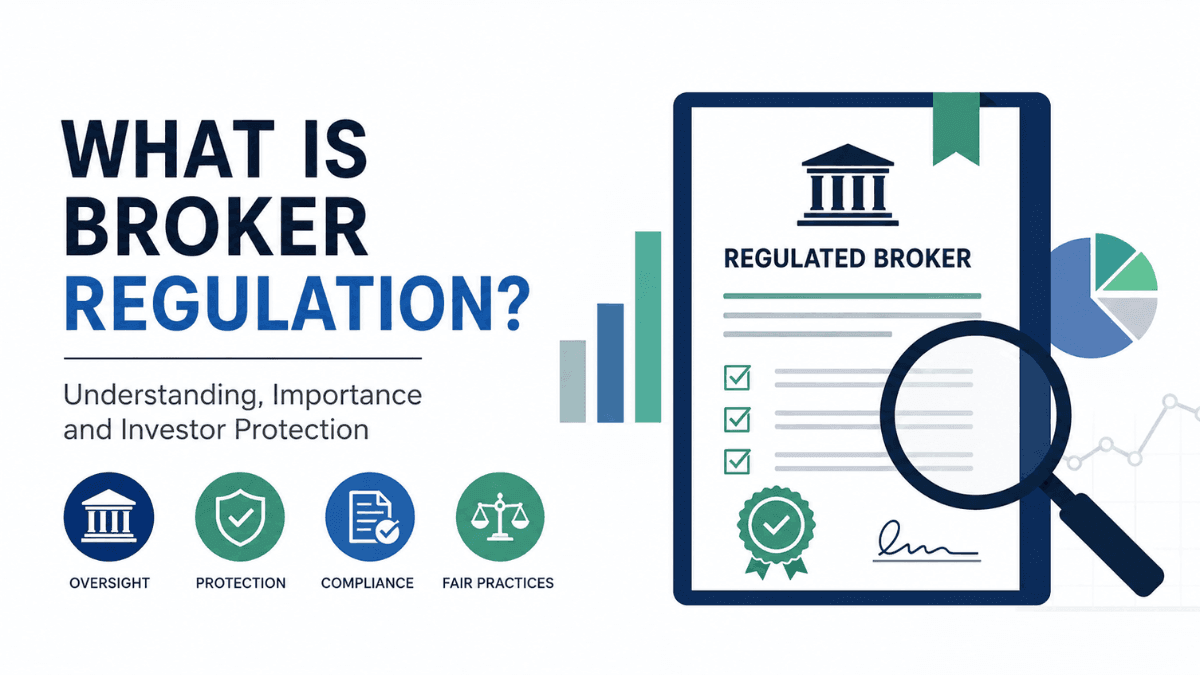
What is Broker Regulation?
Broker regulation refers to the legal oversight and supervision of financial brokers by government-authorized regulatory bodies. These regulators establish rules that brokers must follow to operate legally and protect their clients.
A broker acts as an intermediary between traders and financial markets. Because brokers handle client deposits, execute trades, and provide market access, regulators monitor their activities to reduce fraud, manipulation, and unethical business practices.
When a broker is regulated, it must comply with specific requirements related to capital adequacy, client fund protection, reporting standards, and operational transparency. Failure to meet these standards can result in fines, license suspension, or permanent closure.
In simple terms, broker regulation establishes a framework to help ensure that brokers treat clients fairly and operate responsibly.
Why Broker Regulation Matters
Understanding the importance of broker regulation can save traders from significant financial losses. Regulation provides several layers of protection that unregulated brokers often lack.
Without regulation, a broker could potentially manipulate prices, refuse withdrawals, misuse client funds, or disappear entirely. While regulation cannot eliminate all risks, it significantly reduces the chances of such problems occurring.
Key benefits of broker regulation include:
- Protection of client funds
- Increased transparency
- Fair trading practices
- Regular financial audits
- Dispute resolution mechanisms
- Stronger operational oversight
- Reduced fraud risk
Think of regulation as a safety net. It doesn’t guarantee profits, but it helps ensure that the broker itself isn’t the source of unnecessary risk.
How Broker Regulation Works
To understand the value of regulation, it helps to know what happens behind the scenes. Regulators impose strict requirements that brokers must continuously meet.
Before receiving a license, brokers typically undergo extensive reviews of their finances, ownership structure, business practices, and internal controls. The approval process can be lengthy and expensive.
After licensing, brokers remain under ongoing supervision. Regulators may conduct audits, require regular reports, and investigate customer complaints.
Licensing Requirements
Most regulators require brokers to demonstrate financial stability before granting a license.
Requirements often include:
- Minimum operating capital
- Financial reporting systems
- Risk management procedures
- Qualified management teams
- Anti-money laundering policies
These standards help ensure that brokers can withstand market volatility and fulfill their obligations to clients.
Ongoing Monitoring
Regulation doesn’t stop after licensing. Regulatory bodies continue monitoring broker activities to ensure compliance.
This supervision may include routine audits, transaction reviews, compliance inspections, and investigations into customer complaints.
Enforcement Actions
When brokers violate regulations, authorities can take corrective action.
Penalties may include:
- Monetary fines
- Trading restrictions
- License suspension
- License revocation
- Legal prosecution
These enforcement measures help maintain trust in financial markets.
What Protections Do Regulated Brokers Provide?
One of the biggest advantages of regulated brokers is the protection offered to clients.
Different jurisdictions have different requirements, but many regulated brokers must implement safeguards designed specifically to protect customer assets.
Segregated Client Funds
Segregation means client money is held separately from the broker’s operational funds.
This prevents brokers from using customer deposits to pay business expenses or cover losses. If the broker encounters financial difficulties, client funds are generally better protected.
Negative Balance Protection
Some regulators require brokers to offer negative balance protection.
This safeguard ensures that traders cannot lose more money than they have deposited into their accounts. During extreme market volatility, this protection can be especially valuable.
Compensation Schemes
Certain jurisdictions operate investor compensation programs.
If a regulated broker becomes insolvent, eligible clients may receive compensation up to specified limits. The amount varies depending on the regulator and country.
Fair Pricing and Execution
Regulated brokers are often required to provide transparent pricing and execute trades fairly.
This reduces the risk of price manipulation, unfair order execution, and deceptive trading practices.
Major Financial Regulatory Authorities
Not all regulators offer the same level of protection. Some are known for strict oversight, while others have less demanding standards.
Below are some of the most respected financial regulators worldwide.
Financial Conduct Authority (FCA)
The FCA regulates financial services firms in the United Kingdom.
It is widely regarded as one of the strictest regulators globally. FCA-regulated brokers must meet high standards regarding client fund protection, transparency, and financial reporting.
Australian Securities and Investments Commission (ASIC)
ASIC oversees financial markets and brokers operating in Australia.
The regulator is known for its strong enforcement actions and comprehensive regulatory framework.
Cyprus Securities and Exchange Commission (CySEC)
CySEC regulates investment firms in Cyprus.
Many international forex and CFD brokers operate under CySEC licenses because Cyprus is a member of the European Union, allowing firms to serve clients across various European markets.
Commodity Futures Trading Commission (CFTC)
The CFTC regulates derivatives markets in the United States.
Its regulatory standards are among the strictest in the world, particularly for forex brokers serving U.S. clients.
National Futures Association (NFA)
The NFA works alongside the CFTC to oversee forex and futures brokers in the United States.
The organization maintains strict compliance requirements and provides transparency through public registration databases.
Financial Sector Conduct Authority (FSCA)
The FSCA regulates financial service providers in South Africa.
Many brokers serving African traders operate under FSCA authorization.
Different Tiers of Broker Regulation
Experienced traders often categorize regulators into tiers based on their reputations and levels of oversight.
Tier-1 Regulators
Tier-1 regulators are considered highly reputable and enforce strict standards.
Examples include:
- FCA (United Kingdom)
- ASIC (Australia)
- CFTC (United States)
- Monetary Authority of Singapore (MAS)
- Investment Industry Regulatory Organization of Canada (IIROC)
Brokers regulated by Tier-1 authorities are generally viewed as lower-risk.
Tier-2 Regulators
Tier-2 regulators provide reasonable oversight but may have slightly less stringent requirements.
Examples include:
- CySEC
- FSCA
- Dubai Financial Services Authority (DFSA)
Many reputable international brokers hold licenses from both Tier-1 and Tier-2 regulators.
Tier-3 Regulators
Tier-3 regulators often have lighter regulatory requirements.
While regulation remains in place, investor protections may not be as comprehensive as those offered by Tier-1 authorities.
Traders should carefully evaluate brokers regulated exclusively by lower-tier jurisdictions.
Regulated vs Unregulated Brokers
Understanding the differences between regulated and unregulated brokers can help you make safer decisions.
| Feature | Regulated Broker | Unregulated Broker |
|---|---|---|
| Licensed by the authorities | Yes | No |
| Client fund protection | Usually required | Often absent |
| Financial audits | Regularly conducted | Rare or nonexistent |
| Dispute resolution | Available | Limited |
| Compliance standards | Strict | Minimal |
| Transparency | High | Often unclear |
| Investor protection | Stronger | Weaker |
An unregulated broker may offer attractive bonuses or extremely high leverage, but these benefits often come with increased risk.
How to Verify a Broker’s Regulation
Never rely solely on claims displayed on a broker’s website. Verification is essential.
Legitimate brokers typically display their license number and regulatory information clearly.
Follow these steps:
- Locate the broker’s regulatory details.
- Find the license number.
- Visit the regulator’s official website.
- Search the regulator’s public database.
- Confirm the broker’s name and registration status.
- Verify that the license is active.
This process only takes a few minutes and can help you avoid fraudulent brokers.
Common Warning Signs of Unregulated Brokers
Knowing the warning signs can help you spot potentially risky brokers before depositing money.
Be cautious if a broker:
- Cannot provide a valid license number
- Promises guaranteed profits
- Offers unrealistic returns
- Pressures you to deposit immediately
- Makes withdrawals difficult
- Provides vague company information
- Lacks transparent contact details
- Operates from unknown jurisdictions
Legitimate brokers understand that trading involves risk and will never guarantee profits.
Does Regulation Guarantee Safety?
Broker regulation is important, but it is not a guarantee against every possible problem.
Even regulated brokers can face operational issues, financial challenges, or compliance violations. Regulation reduces risk rather than eliminating it completely.
That’s why experienced traders also evaluate factors such as:
- Company reputation
- Years in operation
- Financial stability
- Customer support quality
- Trading conditions
- Withdrawal reliability
- Independent reviews
A broker with strong regulation and a solid track record is generally a safer choice than one that excels in only one area.
How Regulation Affects Forex Traders
Forex traders are particularly affected by regulatory requirements because forex markets operate globally and involve significant leverage.
Many regulators impose rules designed to reduce excessive risk. These may include leverage limits, mandatory risk warnings, and restrictions on certain promotional practices.
While some traders view these rules as limiting, they are often intended to protect retail investors from substantial losses.
When comparing forex brokers, regulation should be considered alongside spreads, commissions, execution quality, and available trading tools.
Choosing a Regulated Broker
Selecting a regulated broker requires more than simply checking for a license.
Look for brokers that combine strong regulation with competitive trading conditions and a proven reputation.
A good regulated broker should offer:
- Clear regulatory information
- Transparent fees
- Secure fund protection
- Reliable withdrawals
- Responsive customer support
- Stable trading platforms
- Strong industry reputation
Taking time to research a broker before opening an account can help you avoid costly mistakes later.
Frequently Asked Questions
What is broker regulation in simple terms?
Broker regulation is government-authorized oversight of financial brokers. It ensures brokers follow rules designed to protect clients and maintain fair market practices.
Why is broker regulation important?
Regulation helps protect client funds, promotes transparency, reduces the risk of fraud, and ensures that brokers operate under established legal standards.
Can I trust a regulated broker?
Regulation generally increases trustworthiness, but it should not be the only factor you consider. Always research a broker’s reputation, history, and customer reviews.
Which broker regulator is considered the best?
Many traders view regulators such as the FCA, ASIC, and CFTC as among the strongest due to their strict compliance standards and enforcement practices.
How do I check if a broker is regulated?
Visit the broker’s website, obtain its license number, and verify the information through the regulator’s official public database.
Are all regulated brokers equally safe?
No. Regulatory standards vary between jurisdictions. Brokers regulated by Tier-1 authorities typically offer stronger protections than those regulated by lower-tier authorities.
Is it illegal to use an unregulated broker?
The legality depends on your country and the broker’s jurisdiction. Even when legal, trading with an unregulated broker usually involves significantly higher risk.
Final Thoughts
Broker regulation is one of the most important factors to evaluate before opening a trading account. It provides oversight, accountability, and essential protections that help reduce the risks associated with online trading.
Understanding broker regulation helps you distinguish trustworthy brokers from questionable operators. While regulation cannot guarantee success or eliminate every risk, it creates a safer trading environment and gives you greater confidence that your broker is operating under established legal and ethical standards.
Before depositing funds with any broker, take a few minutes to verify its regulatory status. That simple step can make a significant difference in protecting your capital and your overall trading experience.
Trade on the Go. Anywhere, Anytime
If you’re ready to apply what you’ve learned, consider trading with a globally recognized forex and CFD broker like XM .
The platform offers competitive spreads, fast execution, and access to advanced trading tools, including real-time charts and flexible account types, making it suitable for both beginners and experienced traders. Open a trading account for free and start trading today and join millions of traders and investors on the global forex market.
Trading involves risk. Ensure you understand how the markets work before investing.

Vincent Nyagaka is the founder of Chweya, where he breaks down complex financial topics into simple insights. A trader since 2015, he uses his market experience to help readers better understand investing, trading, and personal finance.