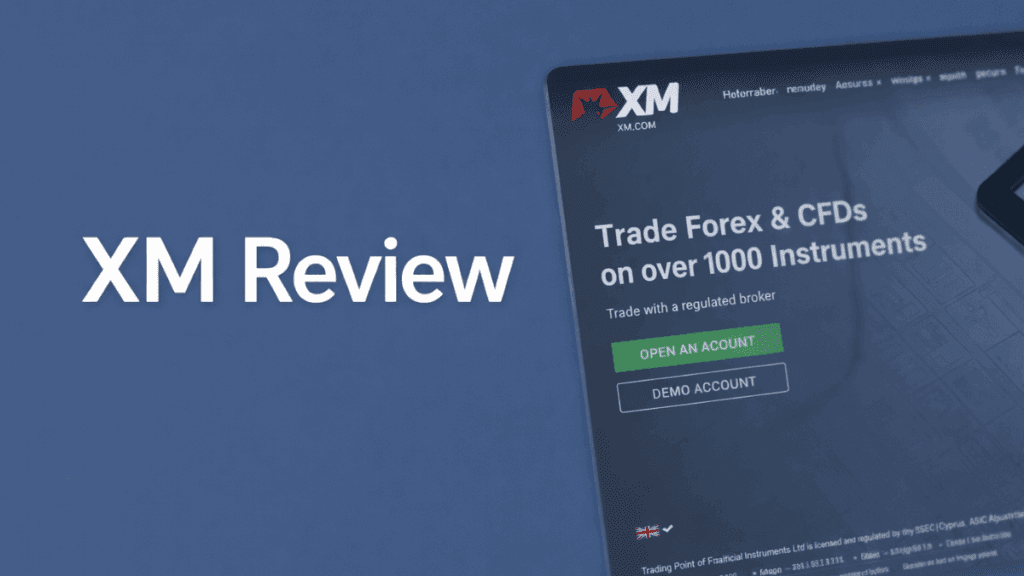
Most XM review articles often focus on spreads or bonuses, but many traders want a full, practical picture before opening an account. But this XM review takes a detailed look at XM as a forex and CFD broker, covering regulation, costs, platforms, and real trading conditions. The goal is to help you decide whether XM fits your trading style, risk tolerance, and experience level.
XM is a well-known global broker that serves traders from many regions, including Africa, Asia, and parts of Europe. However, popularity alone does not guarantee suitability. Therefore, this review explains both strengths and limitations in clear, simple language.
Click Here To Join our Telegram Community
XM Overview
XM operates as an online forex and CFD broker offering access to global financial markets through popular trading platforms. It focuses on retail traders, but it also attracts experienced traders due to its platform stability and range of instruments.
Company History
XM was founded in 2009 under the Trading Point Group. Over time, the broker expanded from a small forex offering into a multi-asset CFD provider. This growth was driven by platform reliability, multilingual support, and a strong presence in emerging markets.
Since its launch, XM has positioned itself as a broker that prioritizes accessibility. For example, it offers low minimum deposits and multiple account types. However, this approach also means its trading conditions may differ from institutional-style brokers.
Global Presence
XM serves clients in more than 190 countries, depending on regulatory restrictions. It operates through several regulated entities, each responsible for a specific region. This structure allows XM to comply with local laws while offering similar core services worldwide.
That said, trading conditions can vary by jurisdiction. Therefore, traders should always check which XM entity they are registering under before opening an account.
Target Markets
XM primarily targets retail traders, including beginners and intermediate-level traders. Its low entry requirements and educational focus appeal to new traders. At the same time, professional traders may use XM for specific strategies or instruments.
However, XM is not designed as a prime broker. High-frequency or institutional traders may find certain limitations in execution or pricing models.
Trading Model
XM operates as a forex and CFD broker. Clients trade contracts for difference rather than owning the underlying assets. This model allows traders to speculate on price movements using leverage.
The broker uses a hybrid execution model, combining elements of market execution and instant execution, depending on the account type. This affects spreads, slippage, and order handling.
Regulation and Licensing
Regulation plays a central role in broker credibility and trader protection. XM operates under multiple regulatory authorities, which adds a layer of oversight and accountability.
Why Regulation Matters
Regulated brokers must follow strict rules on fund handling, reporting, and risk disclosures. These rules reduce the risk of fraud and misuse of client funds. However, regulation does not eliminate trading risk, which always remains with the trader.
XM’s regulatory structure allows it to serve different regions while maintaining compliance standards.
Regulatory Licenses
Below is a WordPress-ready table outlining XM’s main regulatory entities.
| Regulator | Country / Jurisdiction | License Number | Legal Entity Name |
| CySEC | Cyprus (EU) | 120/10 | Trading Point of Financial Instruments Ltd |
| ASIC | Australia | 443670 | Trading Point of Financial Instruments Pty Ltd |
| DFSA | Dubai (DIFC) | F003484 | Trading Point MENA Limited |
| FSC | Belize | 000261/158 | XM Global Limited |
Each entity follows the rules set by its regulator. However, protections such as compensation schemes may differ between regions.
Is the XM Global Broker Safe?
Safety is one of the most important considerations when choosing a forex broker. XM scores reasonably well in this area, although protection levels depend on the regulatory entity.
Regulation Strength
XM is regulated by several well-known authorities, including CySEC and ASIC. These regulators require capital adequacy, regular audits, and clear risk disclosures. This reduces the likelihood of unethical practices.
However, offshore entities, such as those regulated in Belize, offer fewer protections. Traders should be aware of this difference when selecting an account.
Fund Segregation
XM keeps client funds in segregated accounts, separate from company operating funds. This structure helps protect client money if the broker faces financial difficulties.
Segregation does not guarantee full recovery in all scenarios, but it is a standard and essential safety measure.
Negative Balance Protection
XM offers negative balance protection for retail traders. This means clients cannot lose more than their deposited funds, even during extreme market volatility.
This feature is especially important for leveraged trading, where losses can escalate quickly.
Risk Disclosures
XM provides clear risk warnings and educational content explaining leverage and margin risks. However, understanding these risks remains the trader’s responsibility.
Transparency and Compliance
The broker publishes legal documents, execution policies, and fee disclosures on its website. While the information is available, some details require careful reading to fully understand cost structures.
Account Types and Trading Conditions
XM offers several account types designed to suit different trader profiles. Each account has distinct pricing and execution characteristics.
Account Overview
XM keeps its account structure relatively simple. This helps beginners choose an account without confusion. However, advanced traders may find fewer customization options compared to ECN-style brokers.
Account Comparison Table
| Account Name | Minimum Deposit | Spreads | Commissions | Execution Type | Best-Suited Trader |
| Micro | $5 | From 1.0 pips | None | Market / Instant | Beginners, small accounts |
| Standard | $5 | From 1.0 pips | None | Market / Instant | Casual retail traders |
| XM Ultra Low | $5 | From 0.6 pips | None | Market | Cost-sensitive traders |
| Shares | Varies | Market-based | Yes | Market | Equity-focused traders |
Micro Account
The Micro account allows very small position sizes. This makes it suitable for beginners who want to practice with minimal risk. However, spreads are wider than on more advanced accounts.
Standard Account
The Standard account removes the micro-lot restriction while keeping commission-free pricing. It suits traders who want simplicity without worrying about separate commission charges.
XM Ultra Low Account
This account offers tighter spreads but still avoids commissions. Therefore, it appeals to traders who focus on cost control but prefer straightforward pricing.
Shares Account
The Shares account is separate from forex and CFD accounts. It allows trading of individual stocks with commission-based pricing. This account is more suitable for traders interested in equities rather than short-term speculation.
Assets and Markets
XM provides access to a broad range of CFD instruments. This allows traders to diversify across asset classes from a single account.
Forex Pairs
XM offers more than 50 forex pairs, including majors, minors, and exotics. Major pairs generally have the tightest spreads and best liquidity.
Exotic pairs carry wider spreads and higher risk. Therefore, they are better suited for experienced traders.
Indices
Traders can access major global indices, such as the S&P 500, FTSE 100, and DAX. Index CFDs are popular for trading macroeconomic themes.
Commodities
XM offers commodities like gold, silver, oil, and agricultural products. Gold trading is particularly popular due to tight spreads during active sessions.
Stocks (CFDs)
Stock CFDs cover companies from the US, Europe, and other regions. Availability depends on the trader’s location and regulatory entity.
Cryptocurrencies
XM provides limited cryptocurrency CFDs, such as Bitcoin and Ethereum. These products are subject to higher margin requirements and may not be available in all regions.
Spreads, Commissions, and Fees
Understanding trading costs is essential for long-term profitability. XM uses a spread-based pricing model for most accounts.
Spread Models
Most XM accounts are commission-free. Trading costs are built into the spread. For example, EUR/USD spreads typically start around 1.0 pip on Standard accounts.
Ultra Low accounts offer reduced spreads, often starting from 0.6 pips. However, spreads can widen during volatile periods.
Commission Structures
Forex and CFD accounts do not charge commissions. The Shares account uses commission-based pricing, which varies by market.
Swap Fees and Swap-Free Conditions
XM applies overnight swap fees on leveraged positions held overnight. Swap-free accounts are available for eligible traders, mainly for religious reasons.
However, swap-free accounts may include alternative charges after a certain holding period.
Non-Trading Fees
XM does not charge deposit fees for most payment methods. However, inactivity fees may apply after a long period without trading activity.
Real Trading Cost Example
If a trader opens a 1-lot EUR/USD position on a Standard account with a 1.0 pip spread, the cost is approximately $10. This cost applies when entering the trade and must be overcome before reaching profit.
Trading Platforms and Tools
XM relies on established trading platforms rather than proprietary software. This approach prioritizes stability and familiarity.
MetaTrader 4 (MT4)
MT4 remains popular among forex traders. XM’s MT4 offering includes multiple chart types, indicators, and automated trading support.
Execution quality is generally reliable, although slippage can occur during high volatility.
MetaTrader 5 (MT5)
MT5 expands on MT4 with more timeframes, indicators, and asset classes. XM supports MT5 for traders who want a more modern interface.
MT5 is better suited for multi-asset trading, including stocks and indices.
Mobile Trading
XM offers mobile versions of MT4 and MT5. These apps allow basic trading and monitoring on the go. However, advanced analysis is easier on desktop platforms.
Trading Tools
XM provides economic calendars, basic research, and technical analysis tools. These tools support decision-making but should not replace independent analysis.
Deposits and Withdrawals
Funding and withdrawing from an account should be straightforward and reliable. XM generally performs well in this area.
Payment Methods
XM supports bank transfers, credit and debit cards, and various local payment options. Availability depends on the trader’s country.
Processing Times
Deposits are usually processed instantly or within one business day. Withdrawals typically take one to three business days, depending on the method.
Fees
XM does not charge withdrawal fees for most methods. However, third-party providers or banks may apply their own charges.
Verification Requirements
Account verification is mandatory before withdrawals. Traders must submit identification and proof of address documents.
Customer Support and Education
Support quality can significantly affect the trading experience, especially for beginners.
Customer Support Channels
XM offers support via live chat, email, and phone. Support is available in multiple languages, which helps international clients.
Response times are generally fast, although complex issues may take longer to resolve.
Educational Resources
XM provides webinars, tutorials, and market analysis. These resources are helpful for beginners learning basic concepts.
However, advanced traders may find the educational content somewhat basic.
Pros and Cons
A balanced review must clearly outline advantages and disadvantages.
Pros and Cons Table
| Pros | Cons |
| Multiple strong regulations | Conditions vary by entity |
| Low minimum deposit | No true ECN account |
| MT4 and MT5 support | Limited advanced tools |
| Negative balance protection | Spreads widen in volatility |
Comparison Table
Comparing XM with other brokers helps put its offering into context.
| Broker | Regulation | Spreads | Platforms | Min Deposit | Best For |
| XM | CySEC, ASIC | Medium | MT4, MT5 | $5 | Beginners |
| IC Markets | ASIC, CySEC | Low | MT4, MT5, cTrader | $200 | Scalpers |
| Pepperstone | ASIC, FCA | Low | MT4, MT5, cTrader | $200 | Active traders |
| FXTM | CySEC, FCA | Medium | MT4, MT5 | $10 | Retail traders |
| Exness | CySEC, FCA | Low | MT4, MT5 | $10 | High-volume traders |
Who Should Use This Broker?
XM is not a one-size-fits-all broker. Suitability depends on trading goals and experience.
Beginners
XM is well-suited for beginners due to low minimum deposits, simple accounts, and educational support. Micro accounts allow learning with limited risk.
Professional Traders
Professional traders may use XM for certain markets. However, those requiring deep liquidity and raw spreads may prefer ECN brokers.
Scalpers
Scalpers can trade with XM, but spreads are not the tightest in the industry. Therefore, scalping strategies may perform better elsewhere.
High-Volume Traders
High-volume traders should carefully assess spread costs. While execution is stable, pricing may not be optimal for large volumes.
Frequently Asked Questions About XM
Yes, XM is regulated by several authorities, including CySEC and ASIC. Regulation depends on the entity you register under.
The minimum deposit is typically $5 for most account types. This makes XM accessible to new traders.
No, XM uses spread-based pricing for forex and CFD accounts. Commissions apply only to the Shares account.
Yes, XM is suitable for beginners due to low minimum deposits, educational resources, and simple account options.
XM offers a limited range of cryptocurrency CFDs. Availability depends on your region and regulatory entity.
Yes, retail traders receive negative balance protection, meaning losses cannot exceed deposited funds.
Final Verdict
XM is a regulated and widely used forex and CFD broker with a strong focus on accessibility. It offers a safe trading environment, low entry barriers, and reliable platforms. These features make it attractive to beginners and casual traders.
However, advanced traders seeking ultra-tight spreads or institutional-style execution may find limitations. Overall, XM delivers solid value for retail traders who prioritize simplicity and regulation over advanced pricing models.
XM vs Other Brokers
Compare XM with any other broker by selecting the other broker below.
The most popular XM comparisons:
- HFM vs XM
- AvaTrade vs XM
- XM vs Expert Option
- OctaFX vs XM
- Vantage vs XM
- XM vs Pepperstone
- Deriv.com vs XM
- XM vs Olymp Trade
- IC Markets vs XM
- XM vs JustForex
- Exness vs XM
- XM vs IronFX
- IQ Option vs XM
- FXPro vs XM
 Join Our Telegram Channel

Vincent Nyagaka is the founder of Chweya, where he breaks down complex financial topics into simple insights. A trader since 2015, he uses his market experience to help readers better understand investing, trading, and personal finance.