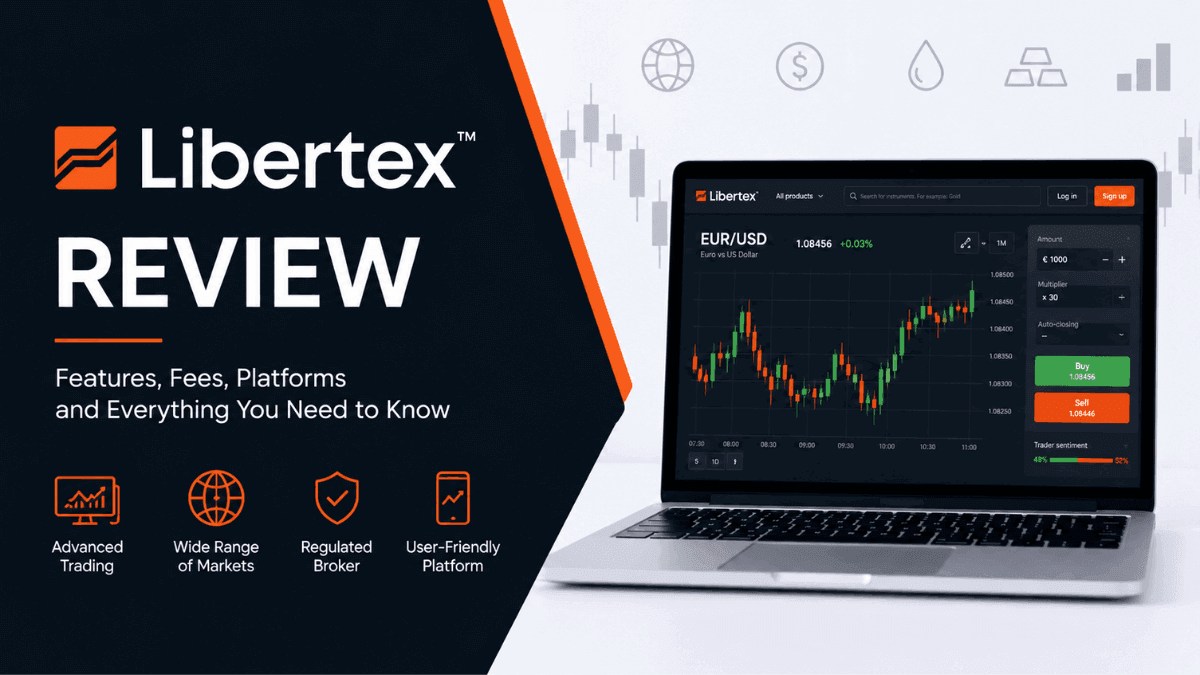
Choosing the right broker can shape your entire trading experience, especially if you trade forex, stocks, or cryptocurrencies regularly. This Libertex Review takes a close look at the broker’s trading platforms, fees, regulation, available assets, account features, and overall user experience to help you decide whether it fits your trading style.
Libertex has been around for years and has built a recognizable name in the online trading industry. The broker is known for its simplified CFD trading model, proprietary trading platform, and access to a wide range of financial instruments. Still, reputation alone is not enough. You need to know how the broker performs in real trading conditions, what costs are involved, and whether it can meet your expectations as a beginner or experienced trader.

What Is Libertex?
Libertex is an online CFD and forex broker that allows traders to speculate on price movements across multiple financial markets. The broker offers access to forex pairs, stocks, indices, commodities, ETFs, and cryptocurrencies through Contracts for Difference (CFDs).
The company behind Libertex has operated in the financial industry for more than two decades. Over the years, it has expanded its services across different regions while maintaining a strong focus on retail traders. One thing that makes Libertex stand out is its simplified interface, which aims to make trading less intimidating for new users.
Unlike some brokers that overwhelm beginners with dozens of account types and complicated pricing structures, Libertex tries to keep things relatively straightforward. That simplicity can be appealing, especially for traders who prefer a cleaner trading experience.
Libertex Regulation and Safety
Regulation is one of the first things you should examine before opening a trading account. A broker may offer attractive spreads and fancy features, but without proper oversight, your funds could face unnecessary risks.
Libertex operates under regulated entities in different jurisdictions. Its European operations are regulated by the Cyprus Securities and Exchange Commission (CySEC), a well-known financial regulator within the European Union. CySEC-regulated brokers must comply with strict rules related to client fund segregation, transparency, and investor protection.
Client funds are typically held in segregated bank accounts, meaning company operating funds are separated from trader deposits. This reduces the risk of misuse of client money. Libertex also participates in investor compensation schemes where applicable under regulation.
That said, regulation does not eliminate trading risks. CFDs and leveraged products remain high-risk instruments, and traders can still lose money quickly if risk management is ignored.
Libertex Account Types
Libertex keeps its account structure fairly simple compared to many competitors. Instead of offering numerous confusing account tiers, the broker focuses on accessibility and usability.
Retail Trading Account
The standard retail account is designed for most traders. It gives access to CFDs across different markets and includes the broker’s proprietary platform alongside MetaTrader support in some regions.
Retail traders are subject to leverage restrictions under European regulations. While this may feel limiting to some traders, lower leverage can also help reduce excessive risk exposure.
Demo Account
Libertex offers a demo account that allows users to practice trading without risking real money. This is particularly useful for beginners who want to understand how CFDs work before trading live markets.
A demo account can also help experienced traders test strategies, indicators, or trading systems under simulated market conditions.
Professional Account
In some jurisdictions, eligible traders can apply for professional account status. Professional clients may access higher leverage levels and fewer trading restrictions.
However, professional status usually comes with reduced regulatory protections. Traders considering this option should understand both the advantages and the trade-offs involved.
Tradable Markets on Libertex
One reason traders consider Libertex is the broad range of financial instruments available on the platform. Diversification matters because it allows traders to spread risk and explore different opportunities across global markets.
Forex Trading
Libertex provides access to major, minor, and exotic currency pairs. Popular pairs like EUR/USD, GBP/USD, and USD/JPY are available alongside less commonly traded currencies.
Forex traders generally look for tight spreads, fast execution, and stable platform performance. Libertex performs reasonably well in these areas, particularly for retail traders seeking straightforward market access.
Stock CFDs
The broker offers CFDs on shares from major companies listed in the United States and Europe. Traders can speculate on price movements of companies such as Tesla, Apple, Amazon, and Microsoft without owning the underlying shares.
This appeals to short-term traders who want exposure to stock market volatility without the complexities of direct stock ownership.
Cryptocurrency CFDs
Cryptocurrency trading has become increasingly popular, and Libertex includes a decent range of crypto CFDs. Traders can access Bitcoin, Ethereum, Litecoin, Ripple, and other digital assets.
Crypto CFDs allow traders to speculate on price movements without needing a crypto wallet or exchange account. Still, volatility in cryptocurrency markets can be extreme, especially during major news events.
Commodities and Indices
Libertex also provides CFDs on commodities such as gold, silver, oil, and natural gas. Major stock indices like the S&P 500, NASDAQ, DAX, and FTSE are available as well.
These instruments are useful for traders who focus on macroeconomic events, inflation trends, or global market sentiment.
Libertex Trading Platforms
A trading platform plays a major role in execution speed, analysis capabilities, and overall trading comfort. Libertex offers both proprietary and third-party trading platforms.
Libertex Proprietary Platform
The broker’s in-house platform is designed with simplicity in mind. The interface is clean, modern, and beginner-friendly without sacrificing core functionality.
New traders often appreciate the simplified layout because it reduces the learning curve. Opening trades, adjusting stop-loss levels, and monitoring positions can be done quickly from both desktop and mobile devices.
The platform also includes:
- Technical indicators
- Real-time charts
- Risk management tools
- Market news updates
- Mobile trading support
While advanced traders may prefer more customizable platforms, the proprietary platform is efficient for everyday trading.
MetaTrader Platforms
In some regions, Libertex supports MetaTrader 4 (MT4) and MetaTrader 5 (MT5). These platforms remain industry favorites because of their flexibility and advanced charting features.
MT4 is especially popular among forex traders and algorithmic traders using Expert Advisors (EAs). MT5 expands functionality with additional order types, more timeframes, and broader asset support.
Traders who rely heavily on custom indicators or automated systems may feel more comfortable using MetaTrader instead of the proprietary platform.
Libertex Fees and Trading Costs
Understanding trading costs is critical because fees directly affect profitability over time. Libertex uses a slightly different pricing approach compared to traditional spread-only brokers.
Instead of relying purely on spreads, Libertex often charges commissions on trades. Depending on the asset, spreads may remain relatively tight while commissions vary.
Key trading costs may include:
- Spread costs
- Trading commissions
- Overnight swap fees
- Currency conversion fees
- Withdrawal fees in certain cases
For active traders, commissions can sometimes become expensive if trading frequently or holding large positions. On the other hand, some traders prefer transparent commissions over heavily marked-up spreads.
Always compare total trading costs rather than focusing only on spreads.
Leverage on Libertex
Leverage allows traders to control larger positions with smaller deposits. While leverage can amplify profits, it also increases losses significantly.
Retail leverage on Libertex depends on the regulatory jurisdiction. Under CySEC regulations, leverage limits generally follow European Securities and Markets Authority (ESMA) guidelines.
Typical leverage limits include:
- Major forex pairs: up to 1:30
- Minor forex pairs: lower limits
- Commodities and indices: varying limits
- Cryptocurrencies: usually lower leverage
Professional traders may qualify for higher leverage if they meet eligibility requirements.
Using high leverage without proper risk management is one of the fastest ways traders lose capital. Position sizing and stop-loss placement remain essential regardless of leverage availability.
Deposits and Withdrawals
Funding an account on Libertex is relatively straightforward. The broker supports multiple payment methods depending on your country and region.
Common payment options include:
- Bank transfers
- Credit and debit cards
- E-wallets
- Online payment systems
Processing times vary based on the payment method used. Card deposits are usually faster, while bank transfers can take several business days.
Withdrawal experiences may differ depending on verification status and banking procedures. As with most regulated brokers, identity verification is required before processing withdrawals.
Mobile Trading Experience
Mobile trading has become essential for modern traders, especially those who monitor markets throughout the day. Libertex offers mobile apps for both Android and iOS devices.
The mobile app mirrors much of the desktop experience and allows users to:

- Open and close trades
- Monitor charts
- Deposit funds
- Access account history
- Receive price alerts
The app is generally smooth and responsive. For traders who prefer managing positions while away from their computers, the mobile experience is practical and user-friendly.
Educational Resources and Research Tools
Education matters, particularly for beginner traders entering leveraged markets for the first time. Libertex provides educational content that includes tutorials, articles, webinars, and market analysis.
The educational material covers topics such as:
- Forex basics
- CFD trading
- Technical analysis
- Risk management
- Trading psychology
While the educational section may not be as extensive as some specialized learning platforms, it provides enough foundational material for many retail traders.
Research tools and market insights can also help traders stay informed about economic events and price movements.
Customer Support
Reliable customer support becomes important when dealing with account verification, deposits, platform issues, or trade-related concerns.
Libertex provides customer support through multiple channels, including:
- Live chat
- Email support
- Help center resources
Response times are generally reasonable during business hours. Support quality can vary depending on region and complexity of the issue, but overall, the broker maintains a fairly accessible support system.
Pros and Cons of Libertex
Every broker has strengths and weaknesses, and Libertex is no exception. Understanding both sides helps you make a balanced decision.
Pros
- User-friendly proprietary platform
- Regulated broker with a long operating history
- Access to multiple financial markets
- Mobile trading support
- Demo account available
- Supports MetaTrader platforms in some regions
Cons
- CFD trading involves high risk
- The commission structure may not suit all traders
- Limited advanced tools on proprietary platform
- Professional account protections may be reduced
- Some assets may have higher overnight fees
Who Should Use Libertex?
Libertex may appeal to beginner and intermediate traders looking for a relatively simple trading environment without excessive platform complexity.
The broker works particularly well for traders who:
- Prefer simplified interfaces
- Want exposure to multiple asset classes
- Trade CFDs actively
- Need mobile trading flexibility
- Value regulation and broker longevity
Advanced traders focused heavily on automation or institutional-grade tools may prefer brokers with deeper platform customization and broader analytical infrastructure.
Is Libertex Good for Beginners?
For many beginners, Libertex offers a manageable entry point into online trading. The platform design reduces clutter, and the demo account allows users to practice without immediate financial pressure.
Still, beginners should understand that simplicity does not remove market risk. CFDs remain leveraged products, and inexperienced traders can lose money quickly if they trade emotionally or use excessive leverage.
Starting small, using proper risk management, and learning gradually is usually the smarter approach.
Final Verdict
Libertex has built a solid reputation as a regulated CFD broker with a beginner-friendly approach to online trading. Its simplified platform, broad market access, and straightforward account setup make it appealing to retail traders who want a cleaner trading experience.
The broker is not perfect. Commission-based pricing may not fit every strategy, and advanced traders may eventually seek more sophisticated trading infrastructure. Even so, Libertex remains a credible option for traders looking for regulated CFD trading with accessible tools and multi-asset exposure.
If your priority is ease of use, broad asset access, and a broker with years of industry experience, Libertex is worth considering. Just remember that successful trading depends less on the broker itself and more on your discipline, strategy, and risk management approach.
Frequently Asked Questions About Libertex
Is Libertex a regulated broker?
Yes, Libertex operates under regulated entities, including regulation by the Cyprus Securities and Exchange Commission (CySEC) in Europe. Regulation helps ensure that the broker adheres to financial standards for transparency, client fund protection, and operational practices. Client funds are usually held in segregated accounts separate from company funds. Still, regulation does not remove trading risk, especially when using leveraged CFD products.
Does Libertex support MetaTrader 4 and MetaTrader 5?
Libertex supports MetaTrader platforms in certain regions, including MT4 and MT5. These platforms are widely used because they offer advanced charting tools, custom indicators, and automated trading capabilities through Expert Advisors (EAs). Traders who prefer more technical analysis tools often choose MetaTrader over proprietary platforms. Availability may depend on your country and regulatory jurisdiction.
What can you trade on Libertex?
Libertex offers access to multiple financial markets through CFDs. Traders can access forex pairs, stocks, cryptocurrencies, commodities, ETFs, and stock indices from a single account. This variety allows traders to diversify their strategies and explore different market opportunities. However, market availability can vary depending on local regulations.
Is Libertex good for beginners?
Libertex is considered beginner-friendly because of its simplified trading interface and accessible platform design. The broker also provides a demo account where users can practice trading without risking real money. Educational materials and market guides can help new traders understand basic concepts before trading live. Even so, beginners should still approach leveraged trading carefully and use proper risk management.
Does Libertex charge commissions?
Yes, Libertex mainly uses a commission-based pricing model instead of relying only on spreads. The exact commission depends on the asset being traded and market conditions at the time. Some traders appreciate this transparent pricing structure, while others prefer brokers with spread-only accounts. It is important to compare total trading costs rather than focusing on a single fee type.
Can you trade cryptocurrencies on Libertex?
Yes, Libertex offers cryptocurrency CFDs, allowing traders to speculate on digital asset price movements without owning the actual coins. Popular cryptocurrencies like Bitcoin and Ethereum are usually available on the platform. Crypto CFDs can provide opportunities during volatile market conditions, but they also carry substantial risk due to rapid price fluctuations.
Trade on the Go. Anywhere, Anytime
If you’re ready to apply what you’ve learned, consider trading with a globally recognized forex and CFD broker like XM .
The platform offers competitive spreads, fast execution, and access to advanced trading tools, including real-time charts and flexible account types, making it suitable for both beginners and experienced traders. Open a trading account for free and start trading today and join millions of traders and investors on the global forex market.
Trading involves risk. Ensure you understand how the markets work before investing.

Vincent Nyagaka is the founder of Chweya, where he breaks down complex financial topics into simple insights. A trader since 2015, he uses his market experience to help readers better understand investing, trading, and personal finance.