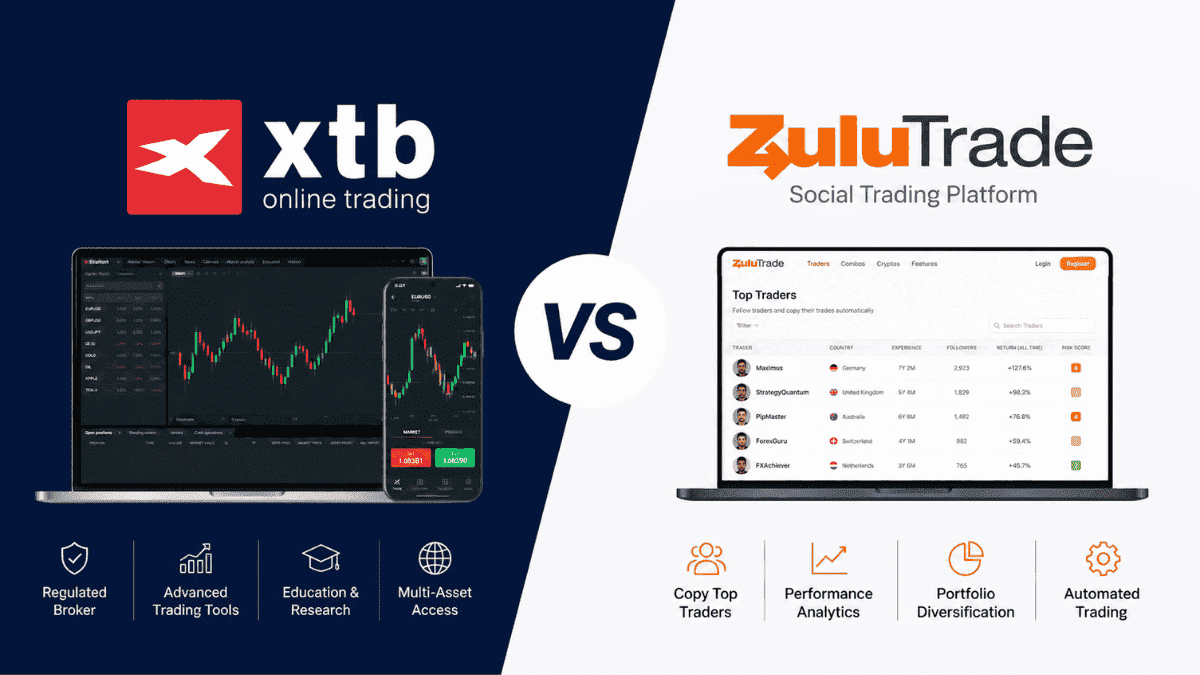
When comparing XTB vs ZuluTrade, it’s important to understand that you’re not evaluating two identical services. XTB is a regulated online broker that provides direct access to financial markets, while ZuluTrade is primarily a social and copy trading platform that connects traders with signal providers and brokers.
This distinction matters because your trading goals will determine which option makes more sense. If you want a complete brokerage solution with powerful trading tools, XTB may be the stronger choice. If you’re interested in copying experienced traders and building a passive trading strategy, ZuluTrade offers a unique ecosystem designed specifically for that purpose.
Click Here To Join our Telegram Community
In this detailed comparison, we’ll examine regulation, platforms, fees, copy trading capabilities, assets, education, and overall user experience to help you choose the right platform.
| Feature | XTB | ZuluTrade |
|---|---|---|
| Regulation | Regulated by FCA (UK), CySEC (Cyprus), KNF (Poland), and other regional regulators | Platform regulated in applicable jurisdictions; fund security depends on the connected broker |
| Minimum Deposit | No minimum deposit requirement in most regions | Depends on the partner broker used |
| Trading Platforms | xStation 5 (Web, Desktop, Mobile) | ZuluTrade Social Trading Platform (Web & Mobile) |
| Account Types | Standard Account, Demo Account | Varies by connected broker |
| Spread | From approximately 0.5 pips on major forex pairs | Depends on the broker and the selected trading account |
| Leverage | Up to 1:30 (retail clients in regulated regions), higher in some jurisdictions | Depends on the partner broker and regulatory jurisdiction |
| Commission (If Available) | Generally commission-free on many instruments; commissions may apply to certain CFDs | Varies according to broker and account type |
| Copy Trading | Limited copy trading functionality | Yes – Advanced social and copy trading platform |
| Deposit/Withdrawal Methods | Bank Transfer, Credit/Debit Cards, E-wallets (availability varies by region) | Depends on the connected broker |
| Customer Support | Live Chat, Email, Phone Support | Email, Live Chat, Support Center |
| ✅ Get Started | ✅ Trade with XTB | ✅ Open Account with ZuluTrade |
XTB vs ZuluTrade Overview
Before diving deeper, let’s look at the fundamental difference between these two providers.
What Is XTB?
XTB is a globally recognized online broker founded in 2002. It offers access to forex, stocks, indices, commodities, ETFs, and cryptocurrencies through its proprietary xStation trading platform.
The company is regulated by multiple financial authorities and serves clients across Europe, Asia, Africa, and other regions. XTB is particularly known for its intuitive trading platform, educational resources, and commission-free stock investing in many jurisdictions.
What Is ZuluTrade?
ZuluTrade is a social trading and copy trading platform established in 2007. Rather than functioning primarily as a broker, it acts as a bridge between traders and signal providers.
Users can browse performance statistics, analyze trading histories, and automatically copy trades from experienced traders. ZuluTrade partners with multiple brokers, allowing traders to use the platform while maintaining an account with a participating brokerage firm.
Regulation and Security
Trust should always be a major consideration when choosing any trading platform.
XTB Regulation
XTB operates under strict regulatory oversight from several respected financial authorities. Depending on your location, you may be onboarded through different regulated entities.
Key regulatory licenses include:
- Financial Conduct Authority (FCA) in the United Kingdom
- Cyprus Securities and Exchange Commission (CySEC)
- Polish Financial Supervision Authority (KNF)
- Other regional regulatory bodies
Client funds are generally held in segregated accounts, providing an additional layer of protection.
ZuluTrade Regulation
ZuluTrade itself operates as a technology and investment services provider. While it maintains regulatory oversight for its operations, the actual safety of your funds depends heavily on the broker you choose through the platform.
This means traders must evaluate both:
- ZuluTrade’s platform security
- The regulatory status of the connected broker
As a result, the overall safety experience can vary significantly depending on which brokerage partner you select.
Winner: XTB
XTB offers a more straightforward regulatory structure and direct accountability for client funds, making it easier for traders to assess risk.
Trading Platforms and User Experience
The trading platform often determines how enjoyable and efficient your trading experience becomes.
XTB’s xStation Platform
XTB’s proprietary xStation platform consistently ranks among the most user-friendly trading platforms available.
Key features include:
- Advanced charting tools
- Fast trade execution
- Integrated market news
- Trading calculator
- Economic calendar
- Risk management tools
- Mobile and desktop compatibility
The platform is designed to be intuitive enough for beginners while offering sufficient analytical capabilities for experienced traders.
ZuluTrade Platform
ZuluTrade’s platform focuses heavily on social trading and trader discovery.
Users can:
- Browse thousands of signal providers
- Analyze historical performance
- View risk scores
- Follow top-performing traders
- Automate copy trading strategies
The interface emphasizes performance analytics rather than traditional technical analysis.
Which Platform Is Easier to Use?
For active traders who perform their own analysis, xStation generally provides a better overall trading experience.
For investors who prefer copying strategies rather than creating their own, ZuluTrade’s specialized interface offers clear advantages.
Available Markets and Instruments
Asset selection can significantly impact your trading opportunities.
Markets Available Through XTB
XTB offers a broad range of instruments, including:
- Forex pairs
- Global stocks
- ETFs
- Indices
- Commodities
- Cryptocurrencies
- CFDs
This extensive selection allows traders to diversify across multiple asset classes from a single account.
Markets Available Through ZuluTrade
ZuluTrade’s available instruments depend largely on the broker connected to the platform.
Most users gain access to:
- Forex
- Indices
- Commodities
- Cryptocurrencies
- Stocks (depending on broker)
Because offerings vary by brokerage partner, the trading universe may differ from one user to another.
Winner: XTB
The broker provides a more consistent and transparent range of markets regardless of where you trade.
Copy Trading and Social Trading
This category represents the biggest distinction between the two platforms.
XTB’s Copy Trading Capabilities
Historically, XTB has focused more on self-directed trading than social trading.
While traders can access market insights, educational content, and research tools, dedicated copy trading functionality remains limited compared to specialized social trading networks.
ZuluTrade’s Copy Trading Ecosystem
Copy trading is ZuluTrade’s core strength.
The platform enables users to:
- Automatically mirror professional traders
- Filter traders by risk level
- Compare long-term performance
- Allocate custom capital amounts
- Diversify among multiple strategy providers
For traders seeking a hands-off approach, this functionality can be highly attractive.
Winner: ZuluTrade
No surprise here. ZuluTrade was built specifically for social and copy trading and remains one of the industry’s most recognized platforms in this area.
Fees, Spreads, and Costs
Understanding trading costs is essential because fees directly affect profitability.
XTB Fees
XTB generally offers competitive pricing through:
- Tight spreads on major forex pairs
- Commission-free stock investing in eligible regions
- No account maintenance fees in many cases
- Transparent pricing structure
Trading costs vary by instrument but remain competitive with major global brokers.
ZuluTrade Fees
ZuluTrade’s cost structure is more complex because it depends on:
- The connected broker
- Signal provider fees
- Performance fees in some cases
- Spread markups
- Commission arrangements
Traders should carefully review both platform and broker costs before committing capital.
Winner: XTB
The pricing model is simpler, easier to understand, and generally more predictable.
Education and Market Research
Learning resources can accelerate your development as a trader.
XTB Educational Resources
XTB invests heavily in trader education.
Resources include:
- Trading courses
- Webinars
- Market analysis
- Educational articles
- Video tutorials
- Economic insights
The content caters to both beginners and advanced traders.
ZuluTrade Learning Resources
ZuluTrade focuses more on strategy selection than trader education.
While educational materials exist, the platform’s primary value comes from observing and copying experienced traders rather than learning through structured courses.
Winner: XTB
The quality and breadth of educational content make XTB a stronger choice for traders looking to improve their skills.
Mobile Trading Experience
Modern traders expect reliable mobile functionality.
XTB Mobile App
The xStation mobile app delivers:
- Full account management
- Advanced charts
- Trade execution
- News and analysis
- Market alerts
Many traders find the mobile experience remarkably close to the desktop platform.
ZuluTrade Mobile App
ZuluTrade’s mobile application focuses on:
- Monitoring copied traders
- Adjusting allocations
- Reviewing performance
- Managing social trading portfolios
It performs its intended role well but offers fewer traditional trading features.
Winner: Draw
Both apps excel within their intended purposes.
Account Types and Accessibility
Choosing the right account structure can affect both costs and flexibility.
XTB Accounts
XTB keeps things relatively simple with streamlined account options designed to suit most retail traders.
This approach reduces confusion and makes onboarding easier for beginners.
ZuluTrade Accounts
ZuluTrade account functionality depends on the selected partner broker.
As a result, available account types can vary considerably between users.
Winner: XTB
The broker’s standardized approach creates a more consistent user experience.
Who Should Choose XTB?
XTB is best suited for traders seeking a comprehensive brokerage solution.
You may prefer XTB if:
- You trade independently
- You value strong regulation
- You want access to multiple markets
- You need educational resources
- You prefer a powerful trading platform
- You want straightforward pricing
Active traders and investors will generally find more tools available within the XTB ecosystem.
Who Should Choose ZuluTrade?
ZuluTrade is ideal for traders seeking social investing opportunities.
You may prefer ZuluTrade if:
- You want to copy experienced traders
- You have limited time for market analysis
- You enjoy social trading communities
- You want strategy diversification
- You prefer semi-passive investing approaches
The platform can be particularly appealing to beginners who are not yet confident in developing their own trading strategies.
Pros and Cons
XTB Pros
- Strong regulatory oversight
- Excellent xStation platform
- Wide market selection
- High-quality educational content
- Transparent pricing
- User-friendly interface
XTB Cons
- Limited dedicated copy trading features
- Some products may vary by region
ZuluTrade Pros
- Industry-leading copy trading ecosystem
- Large community of signal providers
- Advanced performance analytics
- Flexible broker integration
- Strong social trading focus
ZuluTrade Cons
- Trading costs depend on broker selection
- More complex setup process
- Performance varies among signal providers
- Less emphasis on trader education
Final Verdict
The winner ultimately depends on what type of trader you are.
If you’re looking for a well-regulated broker with powerful trading tools, extensive market access, educational resources, and transparent pricing, XTB is the stronger all-around choice. It provides everything most traders need within a single ecosystem.
If your primary goal is copy trading and social investing, ZuluTrade remains one of the best specialized platforms available. Its ability to connect users with experienced strategy providers makes it a compelling option for traders who prefer to follow rather than actively analyze markets themselves.
For most traders, particularly those focused on learning, developing skills, and maintaining full control over trading decisions, XTB offers greater long-term value. For investors seeking automation and access to community-driven trading strategies, ZuluTrade has a clear advantage.
The best approach is to define your trading style first. Once you decide whether to trade independently or copy others, the choice between XTB and ZuluTrade becomes much easier.
Frequently Asked Questions
1. Is XTB better than ZuluTrade for beginners?
It depends on how you want to trade. XTB is often a better choice for beginners who want to learn market analysis and execute their own trades using a user-friendly platform. ZuluTrade, on the other hand, is ideal for those who prefer to copy experienced traders rather than make trading decisions themselves.
2. Can I use ZuluTrade without opening a broker account?
No. ZuluTrade is a social trading platform, not a standalone broker. To copy traders and place trades, you must connect a trading account from a supported broker that integrates with the ZuluTrade network.
3. Does XTB offer copy trading?
XTB primarily focuses on self-directed trading and investment services. While it provides market analysis, educational resources, and advanced trading tools, it does not specialize in copy trading the way ZuluTrade does. Traders looking specifically for social trading may find ZuluTrade more suitable.
4. Which platform has lower trading fees?
XTB generally offers a more transparent fee structure with competitive spreads and, in some regions, commission-free stock investing. ZuluTrade’s overall costs can vary because fees depend on the broker you connect to and the trading strategy you choose to follow.
5. Is ZuluTrade safe to use?
ZuluTrade is a well-established social trading platform, but the safety of your funds largely depends on the broker you select. Before opening an account, always verify that the connected broker is regulated by a reputable financial authority.
6. Who should choose XTB over ZuluTrade?
XTB is best suited for traders who want full control over their trading decisions and access to a wide range of financial instruments. It is also a strong choice for investors who value educational content, research tools, and a comprehensive trading platform.
Trade on the Go. Anywhere, Anytime
If you’re ready to apply what you’ve learned, consider trading with a globally recognized forex and CFD broker like XM .
The platform offers competitive spreads, fast execution, and access to advanced trading tools, including real-time charts and flexible account types, making it suitable for both beginners and experienced traders. Open a trading account for free and start trading today and join millions of traders and investors on the global forex market.
Trading involves risk. Ensure you understand how the markets work before investing.

Vincent Nyagaka is the founder of Chweya, where he breaks down complex financial topics into simple insights. A trader since 2015, he uses his market experience to help readers better understand investing, trading, and personal finance.