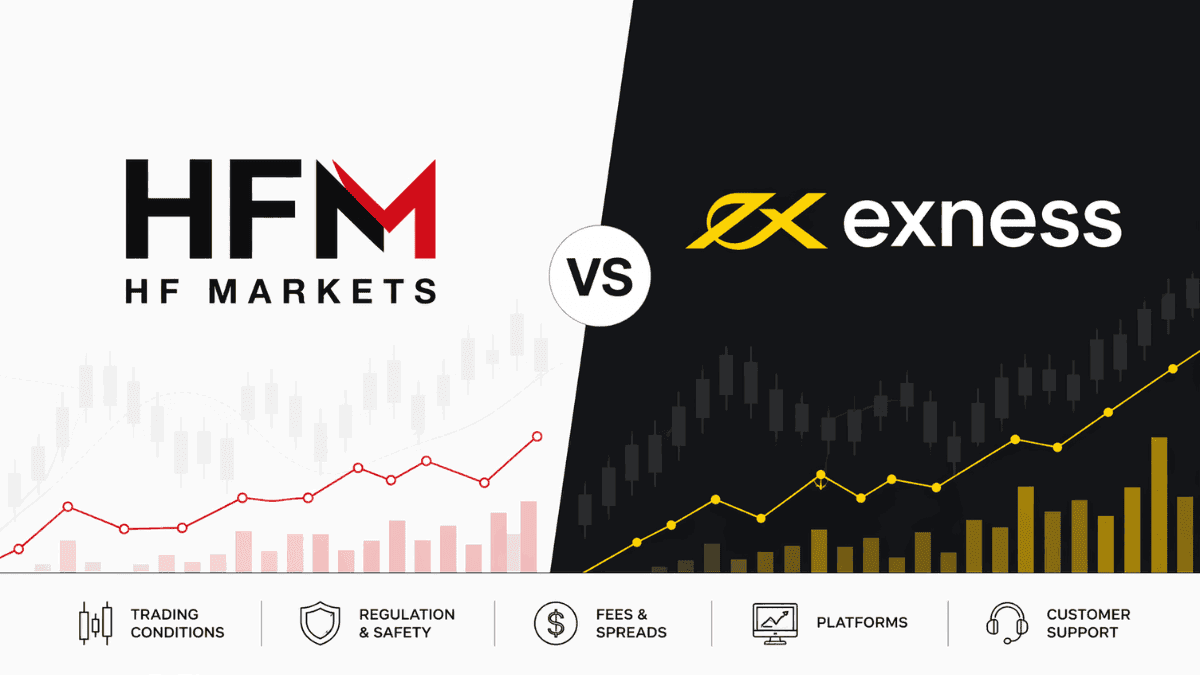
Choosing between HFM and Exness isn’t just about spreads or leverage; it’s about how each broker fits your trading style, risk tolerance, and long-term goals. Both are well-known in the forex space, but they serve slightly different types of traders.
This guide breaks down everything that actually matters: regulation, costs, platforms, execution, and real-world usability. By the end, you’ll have a clear idea of which broker deserves your money and why.

HFM vs Exness Comparison Table
This table gives you a fast snapshot before we dive deeper.
| Feature | HFM | Exness |
|---|---|---|
| Regulation | FCA, CySEC, FSCA, DFSA | FCA, CySEC, FSCA |
| Minimum Deposit | From $0–$5 | From $0 |
| Platforms | MT4, MT5, HFM App | MT4, MT5, Exness App |
| Account Types | Cent, Premium, Zero, Pro | Standard, Raw Spread, Zero |
| Spreads | From 0.0 pips | From 0.0 pips |
| Leverage | Up to 1:2000 | Up to Unlimited |
| Commission | From $3/lot (Zero account) | From $3.5/lot (Raw) |
| Copy Trading | Yes (HFM Copy) | Yes (Social Trading) |
| Deposits/Withdrawals | Cards, bank, e-wallets | Cards, bank, e-wallets, crypto |
| Customer Support | 24/5 | 24/7 |
Regulation and Safety
Trust is the foundation of any broker relationship, so let’s start with how well each company is regulated.
HFM has built a strong reputation through multiple top-tier regulators, including the UK’s FCA and Cyprus’s CySEC. This means client funds are segregated, and there are clear compliance rules the broker must follow. For traders who prioritize structure and oversight, HFM feels stable and conservative.
Exness is also well-regulated, but it takes a slightly different approach by combining strong regulation with aggressive trading conditions. While it holds licenses from respected bodies like the FCA and CySEC, its global structure allows it to offer features like unlimited leverage in certain regions.
In simple terms, both are safe, but HFM leans toward traditional security, while Exness blends safety with flexibility.
Trading Platforms and Tools
Your platform is where all decisions happen, so execution speed and usability matter more than most people think.
Both brokers support MetaTrader 4 (MT4) and MetaTrader 5 (MT5), which are industry standards. These platforms allow:
- Advanced charting tools
- Automated trading (Expert Advisors)
- Custom indicators
- Fast order execution
HFM adds its own mobile app, which is clean and beginner-friendly. It’s particularly useful if you want a simple interface without too many distractions.
Exness, on the other hand, has invested heavily in its proprietary app. It feels more modern and integrates account management, analytics, and trading in one place. If you prefer trading from your phone, Exness has a slight edge.
Account Types and Trading Conditions
This is where the real differences start to show, especially depending on your experience level.
HFM Accounts
HFM offers a wide range of accounts tailored to different traders:
- Cent account (great for beginners testing strategies)
- Premium account (balanced option)
- Zero account (tight spreads with commission)
- Pro account (for experienced traders)
The Cent account is a standout feature because it lets you trade with very small amounts while still experiencing real market conditions.
Exness Accounts
Exness keeps things simpler but highly competitive:
- Standard account (no commission, wider spreads)
- Raw Spread account (tight spreads + commission)
- Zero account (zero spreads on major pairs)
Exness is particularly attractive for scalpers and high-frequency traders because of its execution speed and consistent pricing.
Spreads, Fees, and Commissions
Costs directly affect your profitability, especially if you trade often.
HFM offers competitive spreads, but they tend to be slightly higher on standard accounts. Its Zero account compensates for this with raw spreads and a commission structure.
Exness is known for ultra-tight spreads, especially on major pairs like EUR/USD. In many cases, spreads remain low even during volatile market conditions, which is a big deal for active traders.
Here’s the practical takeaway:
- Casual traders may not notice much difference
- Scalpers and day traders will likely prefer Exness
Leverage: Conservative vs Aggressive
Leverage can amplify both profits and losses, so this is an area where your personal discipline matters more than the broker’s.
HFM offers leverage up to 1:2000, which is already very high. It’s more than enough for most traders and comes with fewer extreme risks.
Exness pushes the boundary further with “unlimited leverage” under specific conditions. While this sounds attractive, it’s not for beginners. Without strict risk management, it can wipe out an account quickly.
If you’re new, HFM’s approach feels more controlled. If you’re experienced and know how to manage exposure, Exness gives you more flexibility.
Deposits and Withdrawals
Access to your money should be fast and hassle-free, and both brokers perform well here.
HFM supports:
- Bank transfers
- Credit/debit cards
- E-wallets like Skrill and Neteller
Exness goes a step further by offering:
- Instant withdrawals in many cases
- Cryptocurrency payment options
- More localized payment methods
Exness is widely recognized for near-instant withdrawals, which is a major advantage if you need quick access to funds.
Copy Trading and Passive Options
Not everyone wants to trade actively, and both brokers cater to that.
HFM Copy allows you to follow experienced traders and replicate their trades automatically. It’s beginner-friendly and easy to set up.
Exness Social Trading offers a similar experience but with a slightly more modern interface and better analytics. You can evaluate strategy providers based on performance, risk level, and history.
If you’re exploring passive trading, both are solid, but Exness feels more refined.
Customer Support Experience
Support can make or break your experience when something goes wrong.
HFM offers 24/5 support via live chat, email, and phone. Response times are generally reliable, and the team is knowledgeable.
Exness provides 24/7 support, which is a clear advantage if you trade outside standard market hours or across different time zones. For global accessibility, Exness wins this round.
HFM vs Exness: Which One Should You Choose?
The right broker depends less on “which is better” and more on “which is better for you.”
Choose HFM if:
- You’re a beginner or intermediate trader
- You want structured risk and moderate leverage
- You like having multiple account options, including Cent accounts
Choose Exness if:
- You’re an active or advanced trader
- You need ultra-low spreads and fast execution
- You want flexible leverage and instant withdrawals
Final Thoughts
HFM vs Exness isn’t a one-size-fits-all decision. Both brokers are reputable, well-regulated, and competitive, but they cater to slightly different mindsets.
HFM feels like a steady, structured environment where you can learn and grow safely. Exness feels faster, sharper, and built for traders who already know what they’re doing.
If you’re still unsure, the smartest move is simple: open demo accounts with both and test them in real conditions. The differences become obvious once you actually start trading.
FAQs About HFM vs Exness
1. Which broker is better for beginners, HFM or Exness?
If you’re just starting, HFM is often the better choice. It offers Cent accounts, which let you trade with very small amounts while learning real market conditions. The overall environment feels more structured, making it easier to manage risk as you build experience.
2. Is Exness safer than HFM?
Both Exness and HFM are well-regulated brokers with licenses from reputable authorities like the FCA and CySEC. Neither is inherently “safer” than the other in a meaningful way. The difference comes down to how they operate—HFM leans conservative, while Exness offers more flexible trading conditions.
3. Which broker has lower spreads, HFM or Exness?
Exness generally offers lower spreads, especially on major currency pairs like EUR/USD. This makes it a strong choice for scalpers and day traders who rely on tight pricing. HFM is still competitive, but its standard accounts may have slightly higher spreads compared to Exness.
4. Can I withdraw money easily from HFM and Exness?
Yes, both brokers provide smooth deposit and withdrawal processes. However, Exness is particularly known for instant withdrawals in many cases, which gives it a slight advantage. HFM withdrawals are reliable as well, but may take longer depending on the payment method used.
5. Does HFM or Exness offer better leverage?
Exness stands out with its “unlimited leverage” feature under certain conditions, which can be attractive for experienced traders. HFM offers high leverage up to 1:2000, but with a more controlled approach. Beginners are generally better off with HFM’s limits, while advanced traders may prefer Exness flexibility.
6. Do both HFM and Exness support copy trading?
Yes, both brokers support copy trading. HFM provides HFM Copy, while Exness offers its Social Trading platform. Each allows you to follow and replicate trades from experienced traders, making them suitable options if you prefer a more passive approach.
Trade on the Go. Anywhere, Anytime
If you’re ready to apply what you’ve learned, consider trading with a globally recognized forex and CFD broker like XM .
The platform offers competitive spreads, fast execution, and access to advanced trading tools, including real-time charts and flexible account types, making it suitable for both beginners and experienced traders. Open a trading account for free and start trading today and join millions of traders and investors on the global forex market.
Trading involves risk. Ensure you understand how the markets work before investing.

Vincent Nyagaka is the founder of Chweya, where he breaks down complex financial topics into simple insights. A trader since 2015, he uses his market experience to help readers better understand investing, trading, and personal finance.